
The global intralogistics market is undergoing a transformative phase, driven by the rapid adoption of automation, robotics, and digital technologies across warehouses, distribution centers, and manufacturing facilities.
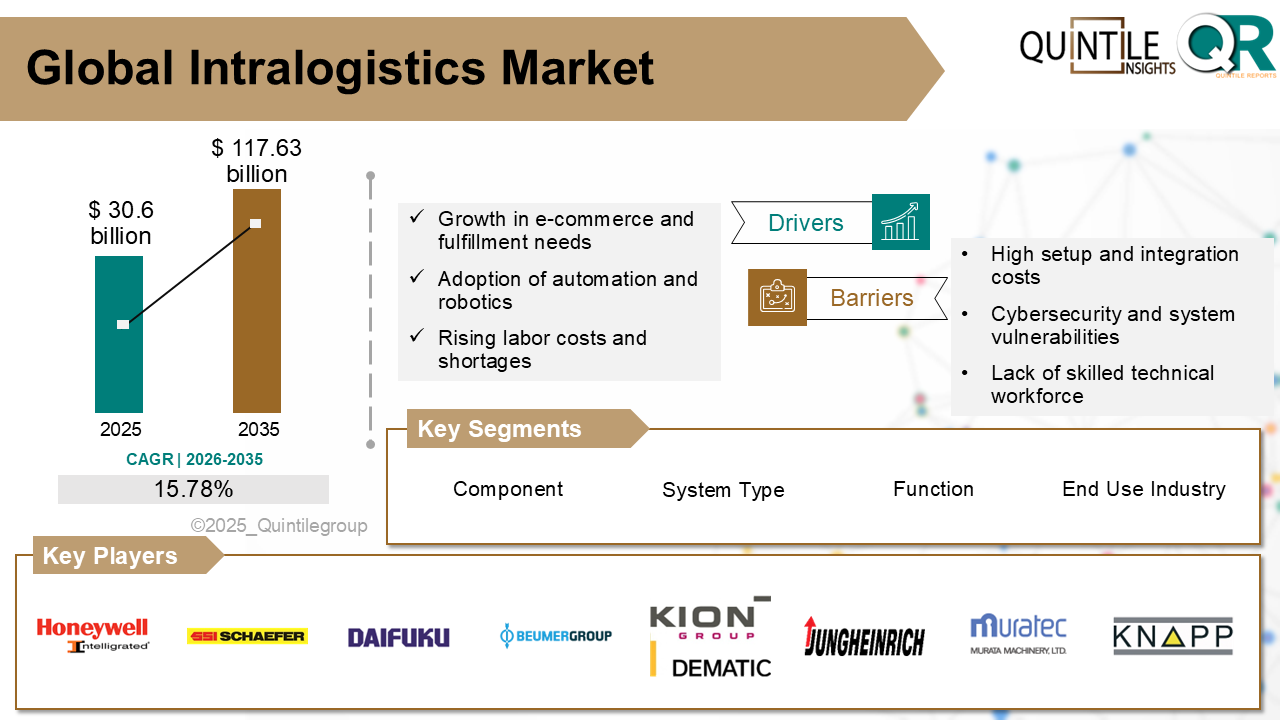
According to Quintile Reports, the global intralogistics market was valued at approximately USD 30.6 billion in 2025 and is projected to reach USD 117.63 billion by 2035, registering a robust compound annual growth rate (CAGR) of 15.78% during the forecast period from 2026 to 2035.
Intralogistics, which focuses on internal material handling, storage, and movement of goods within facilities, has become a strategic priority for organizations seeking operational efficiency, speed, and scalability. The surge in e-commerce, omnichannel retail, and just-in-time manufacturing has significantly increased the need for intelligent and automated intralogistics solutions.
Key Market Drivers Fueling Growth
One of the primary drivers of intralogistics market growth is the explosive rise of e-commerce and omnichannel retail models. Increasing online order volumes demand faster order fulfillment, higher accuracy, and real-time inventory visibility. As a result, companies are investing heavily in automated storage and retrieval systems (AS/RS), conveyor systems, autonomous guided vehicles (AGVs), sortation technologies, and warehouse management software.
Request Sample PDF Report: https://www.quintilereports.com/request-sample/1141-intralogistics-market/
The expansion of industrial automation and robotics is further accelerating market adoption. Rising robot density in warehouses and factories, combined with the growing use of collaborative robots (cobots), AI-driven sorters, and autonomous mobile robots (AMRs), is improving productivity while reducing dependency on manual labor. Labor shortages and escalating workforce costs have made automation a necessity rather than an option for many logistics-intensive industries.
Additionally, the increasing focus on digitalization and smart warehouses is reshaping intralogistics operations. Technologies such as IoT-enabled sensors, digital twins, predictive maintenance tools, real-time analytics, and AI-based decision systems are enabling data-driven material flow optimization. Sustainability considerations are also influencing investment decisions, with companies prioritizing energy-efficient equipment, electric automation systems, and optimized warehouse layouts to reduce carbon footprints.
Challenges Impacting Market Adoption
Despite strong growth prospects, the intralogistics market faces several challenges. High upfront investment costs associated with automated systems, software integration, infrastructure upgrades, and workforce training remain a key barrier, particularly for small and medium-sized enterprises (SMEs). Ongoing maintenance and lifecycle costs further add to the financial burden.
System integration complexity is another restraining factor. Intralogistics solutions must seamlessly connect with existing enterprise resource planning (ERP), warehouse management systems (WMS), and legacy infrastructure. Lack of standardization and interoperability can increase deployment risks and implementation timelines.
Cybersecurity and data privacy concerns also pose challenges as intralogistics systems become increasingly connected. Ensuring compliance with regulations such as GDPR and safeguarding operations from cyber threats require additional investments in secure digital infrastructure.
Regional Market Trends
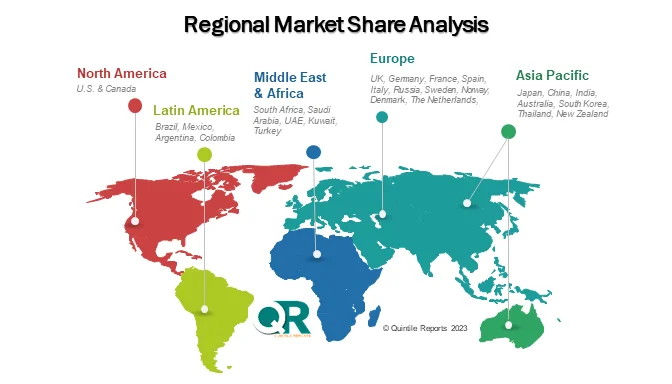
North America continues to dominate the intralogistics market, supported by advanced industrial infrastructure, strong e-commerce penetration, and aggressive adoption of automation technologies. Major players such as Amazon and Walmart are investing heavily in robotics, AI, and IoT-driven warehouses to meet fast delivery expectations.
Europe represents a mature intralogistics market, with countries such as Germany, the UK, and France leading automation adoption. Industry 4.0 initiatives, sustainability regulations, and labor shortages are driving demand for modular robotic systems and intelligent warehouse orchestration platforms.
Asia-Pacific is emerging as the fastest-growing regional market, driven by large-scale industrial expansion, booming e-commerce ecosystems, and government-backed digitization programs in China, India, Japan, and Southeast Asia. Meanwhile, Latin America and the Middle East & Africa are gradually gaining traction as infrastructure development and technology adoption improve.
Competitive Landscape and Future Outlook
The intralogistics market is highly competitive and innovation-driven. Leading companies including SSI Schäfer, Daifuku, Honeywell Intelligrated, Dematic, Jungheinrich, Swisslog, and Knapp AG are focusing on AI-powered robotics, software-driven automation, and flexible deployment models. Rental and subscription-based solutions are also gaining popularity, enabling cost-conscious firms to adopt automation with reduced capital expenditure.
Looking ahead, the intralogistics market is expected to evolve toward modular, software-centric, and highly scalable solutions. As companies prioritize speed, resilience, and sustainability, intralogistics will remain a critical pillar of modern supply chain and warehouse operations through 2035.
Our Latest Publication
Intralogistics Market Size, Share & Trends by Component, System Type, Function, Industry & Region, 20262035
Our Latest News:
Veterinary Incubators Market Poised for Steady Growth Through 2032 Amid Rising Demand for Advanced Animal Care

Adarsh
Business Strategy — Quintile Reports
Adarsh is a Business Strategy professional focused on transforming market insights into actionable growth plans. He supports strategic initiatives through market analysis, competitive intelligence, and data-driven decision-making to help drive long-term business success.
His core skills include strategic planning, market research, growth opportunity assessment, trend analysis, performance tracking, stakeholder communication, cross-functional collaboration, and critical problem-solving.