
The global CBD industry is rapidly transitioning from a niche wellness category into a highly regulated, technology-driven market with applications spanning pharmaceuticals, nutraceuticals, cosmetics, and food & beverages.
At the heart of this transformation lies the CBD extraction equipment market, a critical enabler responsible for ensuring product purity, consistency, and scalability.
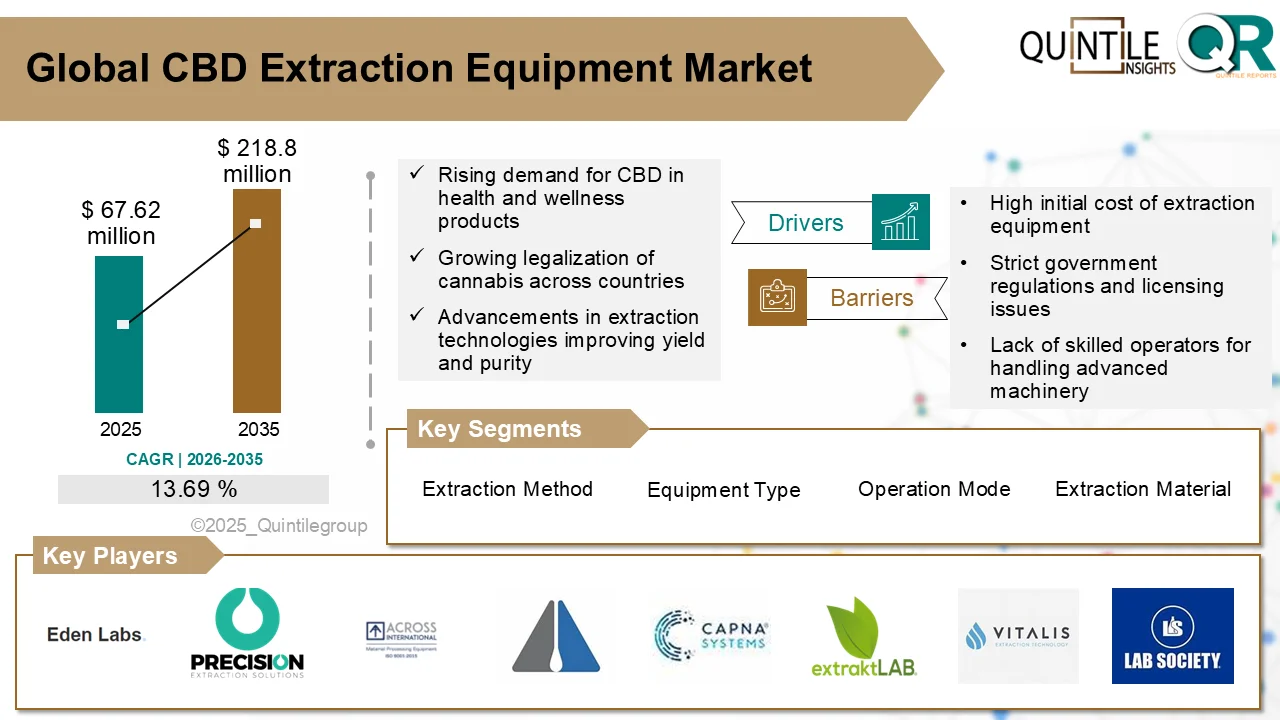
According to recent market insights, the global CBD extraction equipment market was valued at USD 67.62 million in 2025 and is expected to reach USD 218.8 million by 2035, growing at a compound annual growth rate (CAGR) of 13.69%. This growth reflects a powerful combination of regulatory support, increasing consumer demand, and rapid advancements in extraction technologies.
Request Sample PDF Report: https://www.quintilereports.com/request-sample/1221-cbd-extraction-equipment-market/
Understanding CBD Extraction Equipment
CBD extraction equipment refers to specialized machinery used to isolate cannabidiol (CBD) from hemp or cannabis plants. The efficiency and sophistication of these systems directly influence the quality and safety of CBD products.
The market includes a wide range of equipment such as:
- Supercritical CO₂ extraction systems
- Ethanol and hydrocarbon extraction units
- Filtration systems like vacuum pumps and molecular sieves
- Post-processing equipment including distillation units and solvent recovery systems
Among these, supercritical CO₂ extraction technology is widely considered the industry benchmark due to its ability to produce high-purity extracts without harmful residues.
Special Discount: https://www.quintilereports.com/request-discount/1221-cbd-extraction-equipment-market/
Key Market Drivers
1. Expanding Legalization Across Regions
One of the most significant factors fueling market growth is the progressive legalization of hemp and cannabis products across major global markets. Countries in North America and Europe have implemented regulatory frameworks that support medical and wellness-based CBD usage.
This regulatory clarity is encouraging investments in large-scale extraction facilities and boosting demand for advanced equipment.
2. Rising Demand for CBD Products
Consumer awareness regarding the therapeutic benefits of CBD is growing rapidly. CBD is increasingly used in:
- Pain management therapies
- Anxiety and stress relief products
- Skincare and cosmetic formulations
- Functional foods and beverages
This surge in demand is driving the need for efficient, scalable extraction technologies capable of maintaining consistent quality.
3. Technological Advancements
Innovation is reshaping the CBD extraction landscape. The integration of modern technologies such as:
- Artificial Intelligence (AI)
- Automation and robotics
- Industry 4.0 systems
Buying Now: https://www.quintilereports.com/request-enquiry/1221-cbd-extraction-equipment-market/
is improving extraction efficiency, reducing waste, and ensuring compliance with stringent quality standards. Automated and turnkey extraction systems are becoming increasingly popular among manufacturers.
4. Increasing Investments and Partnerships
The market is witnessing strong financial backing from venture capital firms and strategic collaborations with pharmaceutical and nutraceutical companies. These investments are helping companies:
- Scale production capabilities
- Develop continuous extraction systems
- Overcome high initial setup costs
Market Challenges and Restraints
Despite promising growth, the CBD extraction equipment market faces several hurdles:
High Capital Requirements
Advanced extraction systems, particularly supercritical CO₂ units, require substantial upfront investment. This limits accessibility for small and medium enterprises.
Regulatory Uncertainty
Regulations governing CBD production and distribution vary significantly across countries and regions, creating compliance challenges for manufacturers.
Shortage of Skilled Workforce
Operating advanced extraction machinery requires specialized training and expertise. The lack of skilled professionals can result in inefficiencies and compromised product quality.
Operational and Maintenance Costs
Ongoing expenses related to energy consumption, equipment maintenance, and regulatory compliance continue to impact profitability.
Regional Market Insights
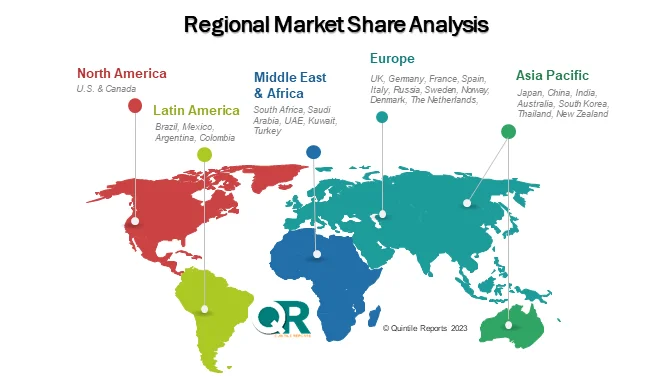
North America: Market Leader
North America dominates the CBD extraction equipment market, driven by early legalization and strong technological infrastructure. The United States, in particular, is a hub for innovation, with widespread adoption of automated extraction systems.
Europe: Rapid Expansion
Europe is emerging as a significant market, supported by strict regulatory frameworks and a focus on pharmaceutical-grade CBD production. Countries like Germany and the UK are leading this growth.
Asia Pacific: Emerging Opportunities
The Asia Pacific region is gradually adopting CBD technologies, with countries such as Australia and New Zealand driving demand. However, regulatory uncertainties still pose challenges in some markets.
Latin America: Cost-Effective Production
Latin American countries benefit from favorable agricultural conditions for hemp cultivation. Cost-efficient extraction methods such as ethanol and hydrocarbon extraction are widely used.
Middle East & Africa: Nascent Market
Although growth is currently limited due to strict regulations, increasing acceptance of medical cannabis is expected to create opportunities in the long term.
Competitive Landscape
The CBD extraction equipment market is becoming increasingly competitive, with companies focusing on innovation, scalability, and compliance.
Key Players Include:
- Eden Labs
- Precision Extraction Solutions
- Apeks Supercritical
- Delta Separations
- Capna Systems
- extraktLAB
- Root Sciences
- Vitalis Extraction Technology
- Across International
- Pope Scientific
These companies are investing heavily in research and development to enhance extraction efficiency and develop cost-effective solutions.
Emerging Trends
Automation and AI Integration
Automation is reducing human intervention and improving operational consistency, while AI-driven systems optimize extraction parameters for better yield.
Shift Toward Sustainable Solutions
Eco-friendly solvents and energy-efficient systems are gaining traction as companies focus on sustainability.
Growing Demand for Full-Spectrum Extracts
Consumers are increasingly preferring full-spectrum CBD products, driving innovation in extraction techniques.
Modular and Scalable Systems
Flexible systems that can adapt to varying production scales are becoming a preferred choice for both startups and established companies.
Future Outlook
The CBD extraction equipment market is poised for sustained growth over the next decade. Key factors shaping its future include:
- Continued legalization across global markets
- Increasing medical applications of CBD
- Rapid technological advancements
- Rising investments in research and development
Companies that prioritize innovation, compliance, and scalability will be best positioned to succeed in this evolving landscape.
Q1. Why is supercritical CO₂ extraction considered the industry benchmark?
Supercritical CO₂ extraction is widely preferred because it delivers high-purity CBD without leaving toxic solvent residues. It also allows precise control over temperature and pressure, enabling selective extraction of cannabinoids and terpenes, which is essential for pharmaceutical-grade products.
Q2. How does automation impact CBD extraction efficiency?
Automation minimizes human error, improves consistency, and increases throughput. Automated systems can monitor and adjust extraction parameters in real-time, leading to higher yields and reduced operational costs.
Q3. What role does AI play in modern extraction systems?
Artificial Intelligence helps optimize extraction processes by analyzing data such as temperature, pressure, and solvent ratios. AI-driven systems can predict outcomes, reduce waste, and enhance overall process efficiency.
Q4. Which end-use industries are driving demand for CBD extraction equipment?
The primary industries include pharmaceuticals, nutraceuticals, cosmetics & personal care, and food & beverages. Among these, pharmaceuticals and wellness products are the fastest-growing segments due to increasing therapeutic applications.
Q5. What is the difference between solvent-based and solventless extraction methods?
Solvent-based methods (CO₂, ethanol, hydrocarbon) use chemical solvents to extract CBD, offering higher yields and scalability. Solventless methods (such as rosin pressing) do not use chemicals and are preferred for clean-label, artisanal products, though they are less scalable.
Q6. How do regulatory frameworks impact equipment adoption?
Strict regulations require manufacturers to use GMP-compliant and standardized equipment. This drives demand for advanced, certified extraction systems but also increases compliance costs.
Q7. What are the key factors investors should evaluate before entering this market?
Investors should assess regulatory stability, technology adoption rates, scalability of equipment, operational costs, and the competitive landscape. Partnerships and innovation capabilities are also critical success factors.
Our Latest Publication:
CBD Extraction Equipment Market (2026 – 2035)
Liver Cancer Diagnostics Market Accelerates Toward $21.5 Billion by 2035 Amid AI and Early Detection Breakthroughs

Adarsh
Business Strategy — Quintile Reports
Adarsh is a Business Strategy professional focused on transforming market insights into actionable growth plans. He supports strategic initiatives through market analysis, competitive intelligence, and data-driven decision-making to help drive long-term business success.
His core skills include strategic planning, market research, growth opportunity assessment, trend analysis, performance tracking, stakeholder communication, cross-functional collaboration, and critical problem-solving.