
The global railway sector is entering a transformative phase where passenger comfort, sustainability, and intelligent transportation systems are becoming central to modernization strategies.
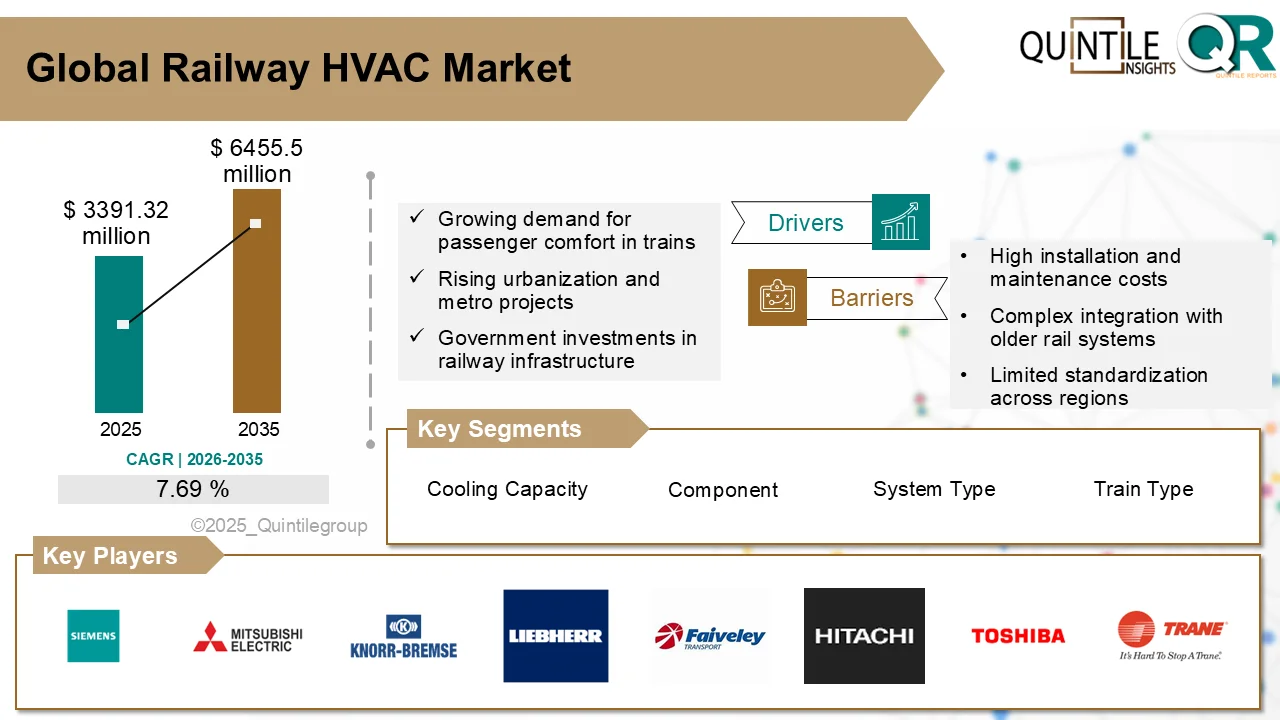
At the heart of this evolution lies the rapidly growing Railway HVAC market, which is projected to rise from USD 3.39 billion in 2025 to USD 6.45 billion by 2035, registering a CAGR of 7.69% during the forecast period.
As governments worldwide invest heavily in metro rail, high-speed rail, and electrified transportation infrastructure, advanced heating, ventilation, and air conditioning (HVAC) systems are becoming critical components of next-generation rail networks. Modern railway HVAC technologies now extend beyond simple temperature regulation. They integrate intelligent air filtration, real-time climate control, predictive maintenance, and energy optimization capabilities designed to improve passenger experience while reducing operational costs.
Request Sample PDF Report: https://www.quintilereports.com/request-sample/1287-railway-hvac-market/
The increasing emphasis on sustainable transportation and energy-efficient rail operations is significantly accelerating the adoption of eco-friendly HVAC technologies. Rail operators are actively replacing traditional systems with advanced solutions utilizing low-global-warming-potential refrigerants, inverter-driven compressors, IoT-enabled sensors, and AI-powered diagnostics.
Rising Passenger Expectations Reshape HVAC Standards
Passenger expectations have changed dramatically over the past decade. Comfort, hygiene, and air quality have become decisive factors influencing public transportation adoption, particularly after the global pandemic reshaped awareness around indoor air circulation and cleanliness.
Rail operators are increasingly installing HVAC systems equipped with HEPA filtration, UV sanitization technologies, and smart air-quality monitoring sensors to ensure healthier cabin environments. These systems help eliminate airborne contaminants while maintaining stable temperatures in varying climatic conditions.
High-speed trains and metro systems especially require advanced HVAC architectures capable of adjusting cooling and ventilation dynamically based on passenger density, outdoor weather conditions, and route duration. Intelligent climate control systems powered by AI algorithms are enabling operators to deliver more personalized and energy-efficient passenger experiences.
Get Special Discount: https://www.quintilereports.com/request-discount/1287-railway-hvac-market/
The demand for quieter HVAC systems is also growing rapidly. Improved acoustic engineering and vibration reduction technologies are now essential components in premium rail services, especially in Europe and Asia-Pacific, where passenger comfort standards continue to rise.
Infrastructure Expansion Accelerates Market Growth
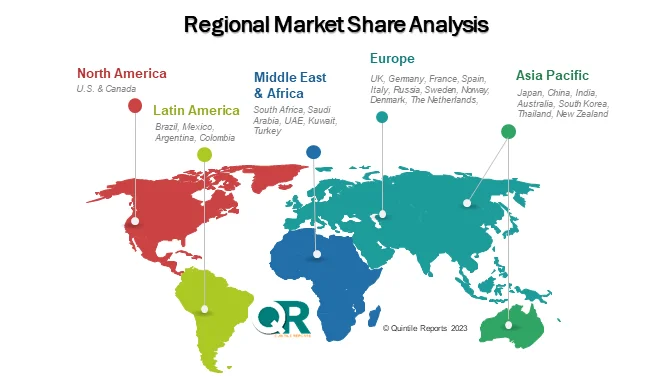
Massive investments in railway infrastructure worldwide are creating strong demand for modern HVAC systems. Countries across Asia-Pacific, Europe, and North America are aggressively expanding metro networks, upgrading passenger coaches, and investing in high-speed rail corridors.
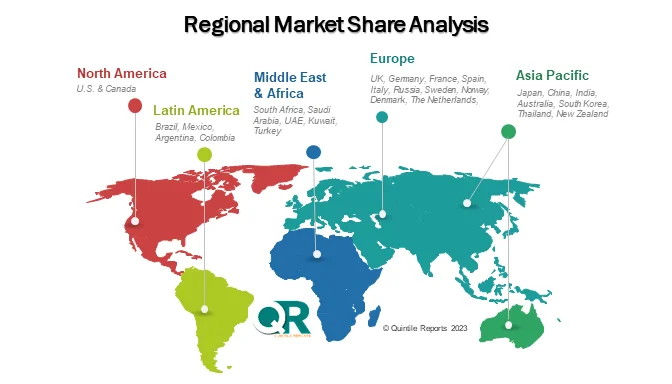
Asia-Pacific is expected to dominate the global Railway HVAC market due to large-scale rail electrification and urban transit projects in China, India, Japan, and Southeast Asia. Rapid urbanization and increasing public transportation usage are encouraging governments to prioritize energy-efficient rail solutions.
China continues to lead global high-speed rail expansion, while India is witnessing significant investments in metro rail development and semi-high-speed train projects. Japan remains a global innovation hub for compact, highly reliable HVAC systems optimized for varying climatic conditions.
Europe is also emerging as a major growth region due to strict environmental regulations and aggressive decarbonization targets. Countries such as Germany, France, and the United Kingdom are investing in climate-neutral railway systems supported by smart HVAC technologies.
Meanwhile, North America is modernizing aging freight and passenger rail systems with advanced HVAC solutions designed for extreme weather conditions and enhanced energy efficiency.
Buying Now: https://www.quintilereports.com/request-enquiry/1287-railway-hvac-market/
Sustainability Becomes a Core Industry Priority
Environmental regulations are fundamentally reshaping the Railway HVAC industry. Governments and transportation authorities are imposing stricter energy-efficiency standards and promoting low-emission technologies across rail operations.
Manufacturers are responding by developing HVAC systems that utilize low-GWP refrigerants such as R-290 and CO2. These alternatives significantly reduce environmental impact while maintaining cooling performance.
Energy efficiency is now a major competitive differentiator. Variable-speed compressors, regenerative energy compatibility, inverter systems, and smart thermal management solutions are helping operators lower electricity consumption and reduce carbon footprints.
The integration of renewable energy technologies and energy recovery systems is also gaining momentum. Advanced HVAC architectures are increasingly being designed to operate alongside regenerative braking systems and battery-powered rail technologies.
Modular and recyclable HVAC system designs are further supporting sustainability objectives. Manufacturers are emphasizing circular economy principles by creating service-friendly systems that simplify maintenance, upgrades, and component replacement.
Smart Technologies Transform Railway HVAC Operations
Digital transformation is revolutionizing railway HVAC operations globally. IoT-enabled sensors and AI-driven predictive maintenance platforms are improving system reliability while minimizing downtime.
Modern HVAC systems can now continuously monitor temperature, humidity, air quality, component health, and energy consumption in real time. Predictive analytics enable operators to detect maintenance requirements before system failures occur, significantly reducing operational disruptions and repair costs.
AI-powered climate control systems can dynamically optimize airflow and cooling capacity based on occupancy patterns and environmental conditions. This intelligent automation improves passenger comfort while enhancing overall energy efficiency.
Switzerland recently introduced a data-driven HVAC optimization system for regional trains capable of reducing energy consumption by 10% to 35% without compromising passenger comfort. Such innovations highlight the industry’s growing focus on intelligent, sustainable rail operations.
In February 2025, Liebherr Transportation Systems unveiled an eco-friendly HVAC platform utilizing propane-based refrigerant technology for electric multiple units ordered by VR Group. The development reflects increasing industry commitment toward greener transportation technologies.
Market Challenges Continue to Impact Growth
Despite strong growth prospects, the Railway HVAC market faces several operational and financial challenges.
High installation and retrofitting costs remain significant barriers, particularly for developing economies and smaller rail operators. Integrating modern HVAC systems into older trains often requires complex engineering modifications involving limited space, power compatibility, and structural constraints.
Supply chain dependency is another major concern. The industry relies heavily on specialized components such as compressors, inverters, and electronic control systems sourced from a limited supplier base. Global supply chain disruptions can therefore impact production timelines and increase system costs.
Energy consumption remains a persistent operational challenge as HVAC systems account for a substantial share of total train power usage. Manufacturers are under pressure to deliver ultra-efficient systems capable of maintaining performance while minimizing energy demand.
A shortage of skilled maintenance personnel in several emerging regions also creates operational challenges, particularly as HVAC systems become increasingly digitized and technologically advanced.
Competitive Landscape Intensifies
The global Railway HVAC market is highly competitive, with leading manufacturers focusing on technological innovation, sustainability, and strategic partnerships to strengthen market positioning.
Key industry participants include:
- Knorr-Bremse AG
- Liebherr-International AG
- Hitachi Rail
- Siemens AG
- Mitsubishi Electric Corporation
- Trane Technologies
- Thermo King Corporation
- Eberspächer Group
Manufacturers are prioritizing smart system integration, modular architecture, AI-powered diagnostics, and environmentally friendly refrigerants to stay competitive.
Strategic collaborations between HVAC providers, rail manufacturers, and government agencies are expected to increase further as rail modernization accelerates worldwide.
Future Outlook
The future of the Railway HVAC market appears highly promising as rail transportation becomes central to global sustainability and urban mobility initiatives.
The combination of intelligent climate management, predictive maintenance, greener refrigerants, and energy-efficient designs will continue transforming railway HVAC systems into highly sophisticated operational assets.
As passenger expectations evolve and governments intensify investments in clean transportation infrastructure, demand for smart HVAC technologies is likely to witness sustained long-term growth.
Companies capable of delivering innovative, sustainable, and cost-effective HVAC solutions tailored for modern rail networks are expected to emerge as long-term industry leaders in the coming decade.
Q1. What is the projected size of the global Railway HVAC market by 2035?
The global Railway HVAC market is projected to reach approximately USD 6.45 billion by 2035, growing from USD 3.39 billion in 2025 at a CAGR of 7.69% during the forecast period.
Q2. What does HVAC mean in the railway industry?
HVAC stands for Heating, Ventilation, and Air Conditioning. In railway applications, HVAC systems regulate temperature, humidity, ventilation, and air quality inside trains to ensure passenger comfort and operational efficiency.
Q3. Why is the Railway HVAC market growing rapidly?
The market is expanding due to increasing investments in high-speed rail and metro infrastructure, rising passenger comfort expectations, demand for energy-efficient systems, and growing adoption of smart railway technologies.
Q4. Which technologies are commonly used in modern railway HVAC systems?
Modern railway HVAC systems use technologies such as:
- AI-based climate control
- IoT-enabled predictive maintenance
- HEPA air filtration
- UV sanitization
- Variable-speed compressors
- Low-GWP refrigerants
- Smart air-quality monitoring systems
Q5. Which region dominates the Railway HVAC market?
Asia-Pacific currently dominates the market due to large-scale rail modernization projects in countries such as China, India, and Japan.
Q6. What are low-GWP refrigerants and why are they important?
Low-GWP (Global Warming Potential) refrigerants are environmentally friendly cooling agents that reduce greenhouse gas emissions. They are important because governments worldwide are enforcing stricter environmental regulations.
Q7. How does AI improve railway HVAC systems?
AI improves HVAC systems by optimizing temperature control, reducing energy consumption, predicting maintenance needs, and enhancing passenger comfort through real-time adjustments.
Q8. What are the major components of a railway HVAC system?
Key components include:
- Compressors
- Condensers
- Evaporators
- Blowers
- Control systems
- Air dampers
- Inverters
- Transformers
Our Latest Publication:
Railway HVAC Market (2026-2036)
EUV Pellicle Market Set for Explosive Growth as Advanced Chip Manufacturing Accelerates Worldwide

Adarsh
Business Strategy — Quintile Reports
Adarsh is a Business Strategy professional focused on transforming market insights into actionable growth plans. He supports strategic initiatives through market analysis, competitive intelligence, and data-driven decision-making to help drive long-term business success.
His core skills include strategic planning, market research, growth opportunity assessment, trend analysis, performance tracking, stakeholder communication, cross-functional collaboration, and critical problem-solving.