
The global logistics ecosystem is undergoing a rapid transformation, and at the center of this evolution is the cargo drones market. Once considered experimental technology, cargo drones are now becoming a viable and scalable solution for transporting goods across industries.
From delivering life-saving medical supplies to optimizing e-commerce logistics, these unmanned aerial vehicles (UAVs) are reshaping how the world moves products.
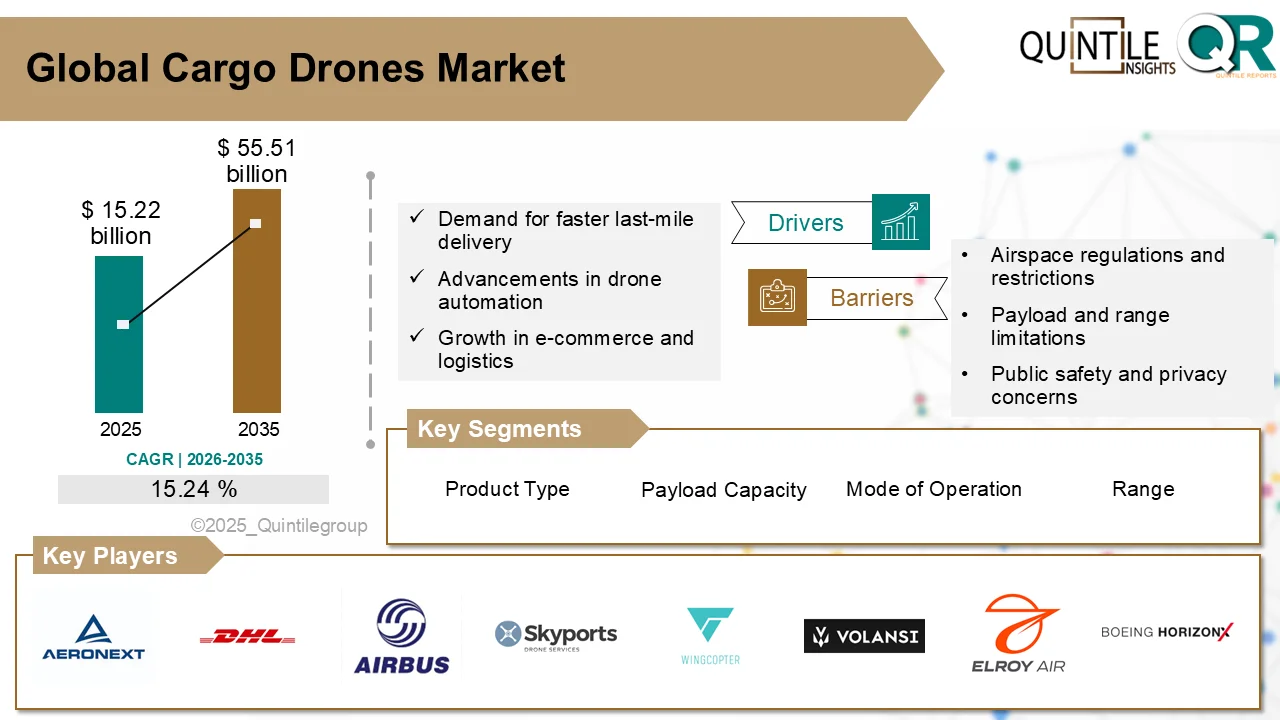
According to recent market insights, the cargo drones market was valued at USD 15.22 billion in 2025 and is projected to reach USD 55.51 billion by 2035, expanding at a robust CAGR of 15.24%. This growth reflects not only technological advancements but also a fundamental shift in supply chain strategies worldwide.
Request Sample PDF Report: https://www.quintilereports.com/request-sample/1145-cargo-drones-market/
The Rise of Cargo Drones in Modern Logistics
Cargo drones are designed specifically to transport goods, offering an alternative to traditional delivery methods such as trucks, ships, and manned aircraft. These drones vary in size and capability, from lightweight units carrying small packages to heavy-lift drones capable of transporting hundreds of kilograms over long distances.
Their appeal lies in their efficiency. Unlike ground transportation, drones can bypass traffic congestion, reduce delivery times, and access remote or hard-to-reach areas. This makes them particularly valuable in industries such as healthcare, agriculture, and disaster management.
For example, in rural or disaster-affected regions, cargo drones are already being used to deliver vaccines, blood samples, and emergency supplies. This ability to provide rapid, point-to-point delivery is a key driver behind their increasing adoption.
Special Discount: https://www.quintilereports.com/request-discount/1145-cargo-drones-market/
Key Drivers Fueling Market Growth
1. Demand for Faster Delivery Solutions
The modern consumer expects speed and convenience. E-commerce giants and logistics companies are under pressure to deliver goods faster than ever before. Cargo drones enable same-day or even same-hour deliveries, especially in urban and suburban environments.
2. Expansion into Remote and Underserved Areas
In regions with limited infrastructure, traditional delivery methods can be slow and unreliable. Cargo drones offer a practical solution by reaching isolated communities without the need for roads or extensive logistics networks.
Buy Now: https://www.quintilereports.com/request-enquiry/1145-cargo-drones-market/
3. Technological Advancements
Innovations in battery technology, GPS systems, artificial intelligence, and obstacle detection are significantly improving drone performance. Today’s drones can travel longer distances, carry heavier payloads, and operate more safely than ever before.
4. Increasing Investments and Partnerships
Governments and private companies are heavily investing in drone technology. Strategic partnerships between drone manufacturers and logistics providers are accelerating the development of drone delivery networks.
5. Sustainability and Environmental Benefits
With growing concerns about carbon emissions, cargo drones present a greener alternative. They consume less fuel compared to traditional vehicles and contribute to reducing the overall carbon footprint of supply chains.
Challenges Hindering Market Expansion
Despite its promising outlook, the cargo drones market faces several challenges:
Regulatory Barriers
Airspace regulations remain one of the biggest hurdles. Many countries have strict rules governing drone operations, particularly in urban areas. Obtaining permissions for large-scale deployment can be time-consuming.
Limited Payload Capacity and Range
While technology is improving, most drones still have limitations in terms of payload and flight duration. This restricts their use for heavy or long-distance shipments.
Infrastructure Gaps
The lack of dedicated infrastructure such as drone ports, charging stations, and maintenance facilities poses a significant challenge to scaling operations.
Safety and Privacy Concerns
Public concerns about drone safety, potential accidents, and privacy issues can slow adoption, especially in densely populated areas.
High Initial Costs
The upfront investment required for drone technology, including hardware, software, and regulatory compliance, can be a barrier for smaller businesses.
Regional Insights: Where Growth is Taking Off
North America
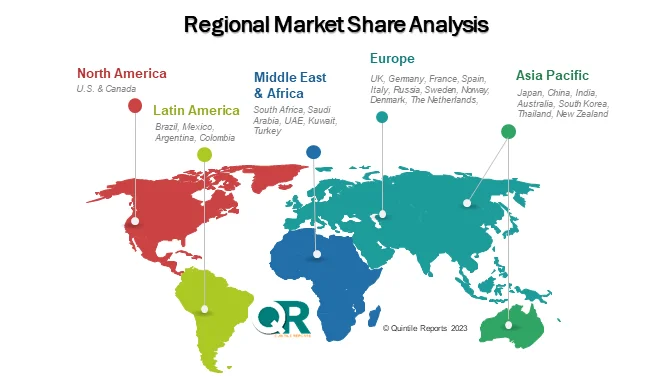
North America leads the cargo drones market, driven by strong investments and regulatory support. The United States, in particular, is at the forefront, with pilot programs enabling real-world testing of drone delivery systems.
Europe
Europe is witnessing steady growth, supported by government initiatives and innovation programs. Countries like Germany, the UK, and France are exploring drone applications in both urban and rural logistics.
Asia-Pacific
The Asia-Pacific region is experiencing rapid expansion, led by countries such as China, Japan, and South Korea. China dominates drone manufacturing, while Japan focuses on rural delivery solutions.
Latin America
Adoption is growing in Latin America, particularly for healthcare and agricultural applications. Countries like Brazil and Colombia are leveraging drones to overcome infrastructure challenges.
Middle East & Africa
Emerging markets in the Middle East and Africa are using cargo drones for healthcare delivery and smart city initiatives. Countries like Rwanda and Ghana are notable examples of successful drone-based medical supply systems.
Competitive Landscape: Innovation at Its Core
The cargo drones market is highly competitive, with a mix of established aerospace companies, logistics giants, and innovative startups.
Key players are focusing on:
- Developing heavy-lift and long-range drones
- Building integrated logistics ecosystems
- Offering drone-as-a-service (DaaS) models
- Enhancing software for navigation and air traffic management
Startups, in particular, are driving innovation by creating modular and customizable drone solutions tailored to specific industries.
Collaborations between governments, healthcare organizations, and private companies are also playing a crucial role in expanding the market.
Applications Transforming Industries
Healthcare
Cargo drones are revolutionizing medical logistics by enabling rapid delivery of critical supplies such as vaccines, blood, and medicines.
E-commerce and Retail
Retailers are exploring drone delivery to enhance customer experience and reduce delivery times.
Agriculture
Drones are used for transporting seeds, fertilizers, and tools across large farms.
Disaster Relief
In emergency situations, drones provide a reliable way to deliver aid quickly and efficiently.
Industrial Sectors
Industries such as mining, oil & gas, and construction are using drones for transporting equipment and supplies in challenging environments.
Future Outlook: The Sky is Not the Limit
The future of the cargo drones market looks promising, with continued advancements expected in automation, artificial intelligence, and battery technology. Fully autonomous drones capable of operating without human intervention are likely to become a reality in the coming years.
Integration with smart city infrastructure and the development of drone traffic management systems will further accelerate adoption. As regulations evolve and infrastructure improves, cargo drones are set to become a mainstream logistics solution.
1. How will cargo drones impact traditional logistics models over the next decade?
Cargo drones will not replace traditional logistics but will complement it by optimizing last-mile and time-sensitive deliveries. Hybrid logistics systems—where drones work alongside trucks and warehouses—will become standard, improving efficiency, reducing delivery times, and lowering operational costs.
2. What is the biggest bottleneck preventing large-scale commercialization?
The primary bottleneck is regulatory approval and airspace integration. Without unified global standards and drone traffic management systems, scaling operations—especially in urban environments—remains challenging.
3. How are companies monetizing cargo drone services today?
Companies are adopting multiple revenue models, including:
- Drone-as-a-Service (DaaS) subscriptions
- Pay-per-delivery pricing
- Long-term logistics contracts with enterprises
- Government and healthcare partnerships
This flexible monetization approach is accelerating adoption across industries.
4. What role does artificial intelligence play in cargo drone operations?
Artificial intelligence is central to drone functionality. It enables:
- Autonomous navigation
- Real-time route optimization
- Obstacle detection and avoidance
- Predictive maintenance
AI reduces human intervention and enhances operational safety and efficiency.
5. Which payload segment is expected to dominate the market?
Mid-range payload drones (10–50 kg and 50–250 kg) are expected to dominate due to their versatility. They are ideal for commercial logistics, healthcare deliveries, and industrial use cases, balancing capacity and operational efficiency.
6. How viable are cargo drones in densely populated urban areas?
Urban deployment is viable but complex. Challenges include:
- Airspace congestion
- Noise pollution
- Safety concerns
However, advancements in urban air mobility (UAM) frameworks and smart city infrastructure are expected to make urban drone logistics more practical in the coming years.
7. What are the key investment trends in the cargo drones market?
Investment is flowing into:
- Autonomous flight technologies
- Battery and energy systems
- Drone traffic management platforms
- Strategic partnerships between logistics and aerospace firms
Venture capital and government funding are both playing critical roles in market expansion.
8. How are cargo drones transforming healthcare delivery systems?
Cargo drones are enabling:
- Faster delivery of critical supplies (blood, vaccines, medicines)
- Improved access to remote healthcare services
- Reduced dependency on ground transportation
They are particularly impactful in regions with limited infrastructure.
9. What is the role of 5G and connectivity in drone operations?
5G technology enhances drone performance by enabling:
- Real-time communication and control
- Faster data transmission
- Improved navigation accuracy
- Seamless integration with IoT systems
This connectivity is essential for scaling autonomous drone networks.
10. How does the cargo drones market align with sustainability goals?
Cargo drones support sustainability by:
- Reducing fuel consumption
- Lowering greenhouse gas emissions
- Minimizing road congestion
They are increasingly being integrated into green logistics strategies by corporations.
Our Latest Publication:
Cargo Drones Market (2026 – 2035)
Water Ambulance Services Market Expands Rapidly with Rising Demand for Emergency Marine Healthcare

Adarsh
Business Strategy — Quintile Reports
Adarsh is a Business Strategy professional focused on transforming market insights into actionable growth plans. He supports strategic initiatives through market analysis, competitive intelligence, and data-driven decision-making to help drive long-term business success.
His core skills include strategic planning, market research, growth opportunity assessment, trend analysis, performance tracking, stakeholder communication, cross-functional collaboration, and critical problem-solving.