
The global marine industry is entering a pivotal phase of technological transformation, and at the heart of this evolution lies the rapidly expanding marine turbochargers market.
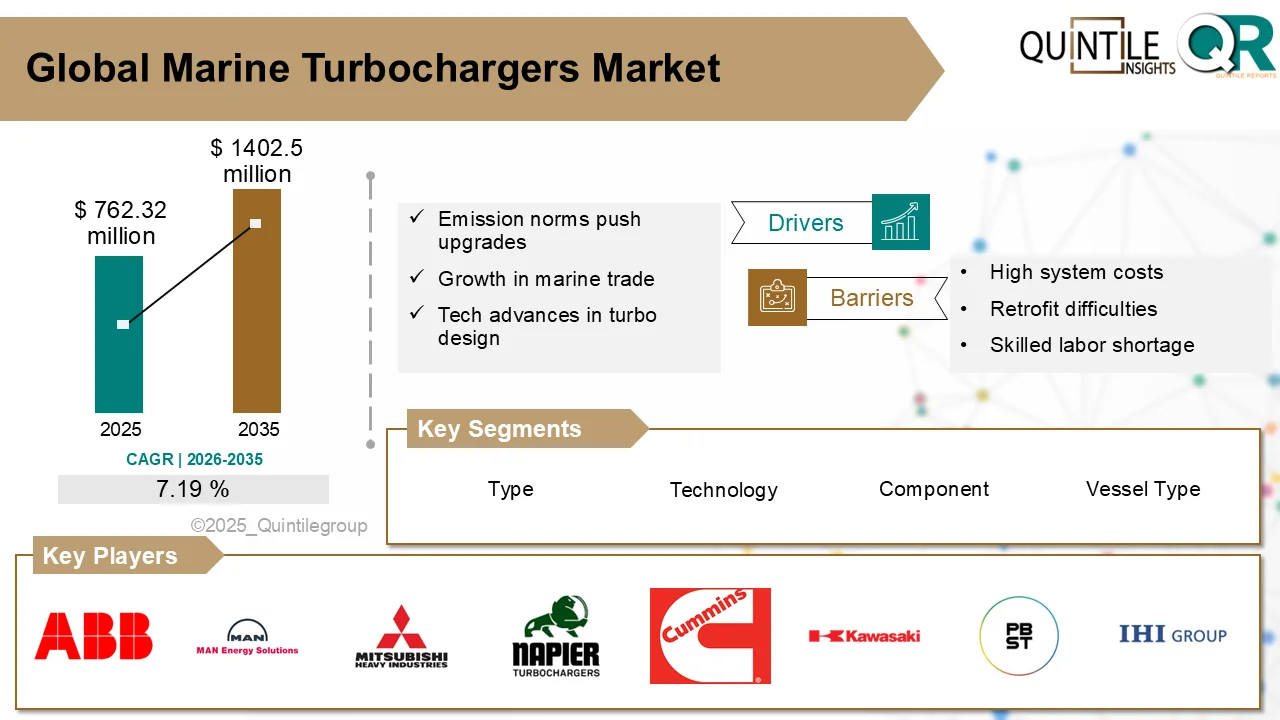
According to recent industry insights, the market was valued at USD 762.32 million in 2025 and is projected to reach USD 1,402.5 million by 2035, growing at a CAGR of 7.19% over the forecast period.
This growth trajectory reflects not only rising maritime trade but also the increasing urgency to adopt fuel-efficient and environmentally compliant propulsion systems. Marine turbochargers—once primarily used for boosting engine performance—are now critical tools in the shipping industry’s transition toward low-emission and sustainable operations.
⚙️ What Are Marine Turbochargers and Why Do They Matter?
Marine turbochargers are specialized systems designed to enhance the performance of marine engines by compressing and forcing more air into the combustion chamber. This leads to:
- Increased engine power output
- Improved fuel efficiency
- Reduced harmful emissions
They are widely used in cargo ships, tankers, naval vessels, offshore support ships, and passenger vessels, making them indispensable across both commercial and defense maritime sectors.
With growing regulatory pressure and rising fuel costs, turbochargers are no longer optional—they are mission-critical components in modern marine engineering.
Download Free Sample PDF of the Report: https://www.quintilereports.com/request-sample/1234-marine-turbochargers-market/
🌍 Key Growth Drivers Powering the Market
1. 🚀 Rising Demand for Fuel Efficiency
Fuel accounts for a significant portion of shipping operational costs. Marine turbochargers optimize combustion efficiency, helping shipowners reduce fuel consumption and operating expenses.
2. 🌱 Stringent Environmental Regulations
Global mandates such as IMO Tier III standards and emission control regulations are pushing the industry toward cleaner technologies. Turbochargers play a vital role in reducing NOx and SOx emissions, enabling compliance without sacrificing performance.
3. 📦 Expansion of Global Maritime Trade
As global trade volumes rise, the demand for high-performance vessels increases. New shipbuilding projects and fleet expansions are driving OEM demand for advanced turbocharging systems.
4. 🔄 Retrofit Opportunities in Aging Fleets
A large portion of the global fleet is undergoing modernization. Retrofitting older vessels with next-generation turbochargers is a cost-effective way to meet regulatory standards and improve efficiency.
5. 🔋 Shift Toward Alternative Fuels
The transition to LNG, dual-fuel, and hybrid propulsion systems requires precise air management—something turbochargers are uniquely positioned to deliver.
Get Discount On The Purchase Of This Report: https://www.quintilereports.com/request-discount/1234-marine-turbochargers-market/
⚠️ Challenges Restraining Market Growth
Despite strong momentum, the marine turbochargers market faces several critical challenges:
- High Initial Investment: Advanced turbocharging systems require significant capital expenditure.
- Maintenance Complexity: Regular servicing and specialized expertise increase lifecycle costs.
- Integration Issues: Retrofitting older engines with modern turbochargers can be technically complex.
- Skill Shortage: A lack of trained marine engineers limits adoption, particularly in emerging economies.
- Customization Requirements: Diverse vessel types and engine configurations hinder standardization.
These factors create barriers for smaller operators and slow down adoption in certain regions.
This study presents a complete evaluation of market dynamics, opportunities, and regional performance: https://www.quintilereports.com/request-enquiry/1234-marine-turbochargers-market/
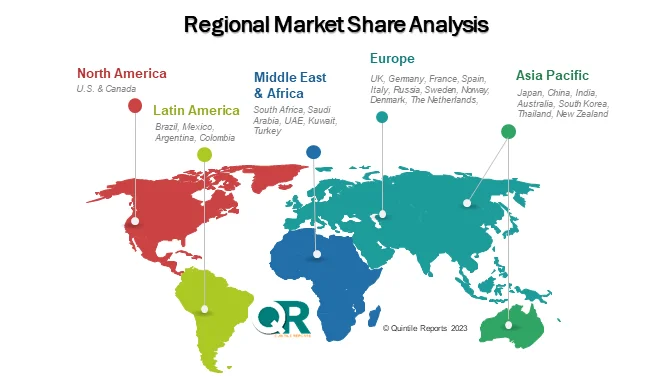
🌐 Regional Insights: Where Growth Is Happening
🇺🇸 North America
Driven by stringent environmental policies and fleet upgrades, the U.S. leads in retrofit demand and advanced turbocharger adoption.
🇪🇺 Europe
Countries like Germany and Norway are focusing on green shipping technologies, with strong adoption of VGT (Variable Geometry Turbochargers) and hybrid systems.
🌏 Asia-Pacific
The dominant region in the global market, led by China, Japan, and South Korea, due to strong shipbuilding capabilities and government-backed sustainability initiatives.
🌎 Latin America
Emerging growth driven by fleet modernization and increasing maritime trade, especially in Brazil and Mexico.
🌍 Middle East & Africa
Growth fueled by port expansion, offshore projects, and harsh operating conditions, driving demand for durable turbocharging solutions.
🔬 Technological Innovations Shaping the Future
Innovation is redefining the marine turbochargers landscape:
- Variable Geometry Turbochargers (VGT): Improve efficiency across different engine loads
- Digital Monitoring Systems: Enable predictive maintenance and real-time diagnostics
- Hybrid Turbochargers: Combine mechanical and electric boosting for better performance
- Advanced Materials: Improve thermal resistance and durability
- AI-Based Analytics: Optimize performance and reduce downtime
These innovations are making turbochargers smarter, more efficient, and increasingly aligned with Industry 4.0 standards.
🏭 Competitive Landscape: Key Industry Players
The marine turbochargers market is highly competitive, with global leaders focusing on innovation, partnerships, and product diversification. Key players include:
- ABB Ltd.
- MAN Energy Solutions SE
- Mitsubishi Heavy Industries
- BorgWarner Inc.
- Cummins Inc.
- IHI Corporation
- Kawasaki Heavy Industries
- Accelleron
- Garrett Motion Inc.
- Rolls-Royce Power Systems
These companies are investing heavily in R&D, alternative fuel compatibility, and digital integration to maintain a competitive edge.
🆕 Recent Developments
- Rolls-Royce Power Systems (Dec 2024): Launched upgraded turbochargers with digital monitoring and alternative fuel compatibility
- Accelleron (Dec 2024): Announced next-gen turbochargers for green fuels like hydrogen and methanol
- MAN Energy Solutions (Jan 2025): Introduced TCP series for high-efficiency dual-fuel engines
These developments highlight the industry’s shift toward sustainability and digital transformation.
📈 Market Segmentation Overview
By Type & Technology:
- Radial Turbochargers
- Axial Turbochargers
- Single & Twin Turbo
- Variable Geometry Turbochargers (VGT)
- Wastegate Systems
By Vessel Type:
- Cargo Ships
- Tankers
- Container Ships
- Offshore Support Vessels
- Naval Ships
By Fuel Type:
- Heavy Fuel Oil (HFO)
- Marine Diesel Oil (MDO)
- Marine Gas Oil (MGO)
- LNG
By End-Use:
- OEM
- Aftermarket
🔮 Future Outlook: What Lies Ahead?
The marine turbochargers market is poised for sustained growth, driven by:
- Decarbonization goals
- Adoption of alternative fuels
- Digitalization of marine systems
- Increasing global trade
By 2035, turbochargers will evolve from performance enhancers to core enablers of sustainable shipping ecosystems.
❓ FAQs for Key Opinion Leaders
1. What is driving the marine turbochargers market growth?
The primary drivers include fuel efficiency demands, environmental regulations, and increasing global maritime trade.
2. How do turbochargers help in emission reduction?
They improve combustion efficiency, reducing NOx and SOx emissions significantly.
3. Which region dominates the market?
Asia-Pacific leads due to strong shipbuilding activity and government support.
4. What are the biggest challenges in adoption?
High costs, maintenance complexity, and lack of skilled workforce are major barriers.
5. Are turbochargers compatible with alternative fuels?
Yes, modern turbochargers are designed for LNG, hydrogen, and dual-fuel engines.
6. What role does digital technology play?
Digital monitoring enables predictive maintenance and improves operational efficiency.
7. How important is the retrofit market?
Extremely important, as older vessels are being upgraded to meet new regulations.
8. Who are the key players?
Companies like ABB, MAN Energy Solutions, and Mitsubishi Heavy Industries dominate the market.
Our Latest Publication:
Marine Turbochargers Market 2026-2036
Self-Loading Concrete Mixer Market Accelerates Toward $24.18 Billion by 2035

Adarsh
Business Strategy — Quintile Reports
Adarsh is a Business Strategy professional focused on transforming market insights into actionable growth plans. He supports strategic initiatives through market analysis, competitive intelligence, and data-driven decision-making to help drive long-term business success.
His core skills include strategic planning, market research, growth opportunity assessment, trend analysis, performance tracking, stakeholder communication, cross-functional collaboration, and critical problem-solving.