
The global push toward sustainability, energy efficiency, and food security is reshaping agricultural and food processing technologies.
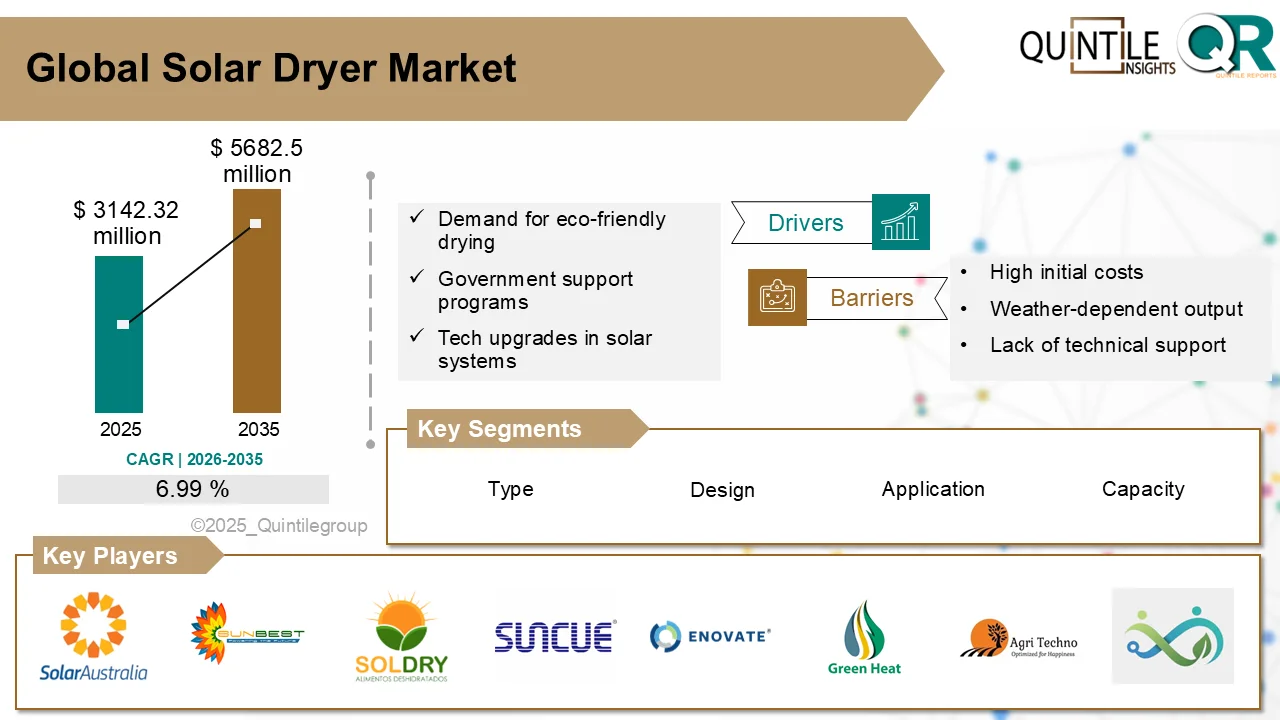
Among the emerging solutions gaining traction is solar drying—a method that combines environmental responsibility with economic efficiency. According to recent industry analysis, the Solar Dryer Market, valued at USD 3,142.32 million in 2025, is projected to reach USD 5,682.5 million by 2035, expanding at a CAGR of 6.99% during the forecast period.
This growth trajectory reflects a broader shift toward renewable energy-powered solutions in agriculture and food processing. As global supply chains face pressure from climate change, energy costs, and post-harvest losses, solar dryers are emerging as a practical, scalable alternative to conventional drying methods.
☀️ Understanding the Solar Dryer Revolution
Solar dryers utilize solar energy to remove moisture from agricultural and food products. Unlike traditional open-air drying, which exposes products to contamination and weather unpredictability, solar dryers provide controlled environments that improve product quality, hygiene, and shelf life.
The process is simple yet effective: solar energy heats the air inside a drying chamber, which then absorbs moisture from the product. The humid air is expelled, ensuring continuous drying. Depending on design, systems may rely on natural airflow or incorporate mechanical components such as fans.
Request Sample PDF Report: https://www.quintilereports.com/request-sample/1228-solar-dryer-market/
This method is especially valuable in sectors like:
- Fruits and vegetables drying
- Fish processing
- Herbal and spice preservation
- Nutraceutical ingredient preparation
📈 Key Drivers Fueling Market Expansion
1. Rising Demand for Sustainable Agriculture
As sustainability becomes a central theme in global agriculture, solar dryers offer a low-carbon alternative to fossil fuel-based drying systems. They significantly reduce energy consumption and operational costs, making them attractive for both small-scale farmers and commercial food processors.
Special Discount: https://www.quintilereports.com/request-discount/1228-solar-dryer-market/
2. Reduction in Post-Harvest Losses
Post-harvest losses remain a critical issue, especially in developing economies. Solar dryers enable consistent drying regardless of weather conditions, helping farmers preserve produce and improve income stability.
3. Government Incentives and Policy Support
Governments across Asia and Africa are promoting solar technologies through subsidies, grants, and rural development programs. These initiatives are accelerating adoption, particularly among smallholder farmers.
4. Technological Innovations
Modern solar dryers are no longer basic structures. Innovations include:
- IoT-enabled monitoring systems
- Forced-air circulation for faster drying
- Thermal energy storage for night-time operation
- Hybrid systems combining solar with auxiliary energy sources
These advancements are improving efficiency, reliability, and scalability.
Buying Now: https://www.quintilereports.com/request-enquiry/1228-solar-dryer-market/
5. Growing Demand for Value-Added Products
The global appetite for dried foods—such as fruits, spices, herbs, and organic snacks—is rising. Solar dryers enable producers to meet this demand while maintaining product quality and reducing costs.
⚠️ Challenges Limiting Market Growth
Despite strong momentum, the solar dryer market faces several challenges:
High Initial Investment
Advanced systems, particularly hybrid and active dryers, require significant upfront capital. This remains a barrier for small farmers without access to financing.
Weather Dependency
Solar dryers rely on sunlight availability. In regions with inconsistent weather, performance can fluctuate, necessitating backup systems.
Limited Technical Awareness
Many farmers lack knowledge about installation, operation, and maintenance. This knowledge gap slows adoption and reduces system efficiency.
Market Fragmentation
The absence of standardized designs and quality benchmarks leads to inconsistent product performance, affecting user trust and scalability.
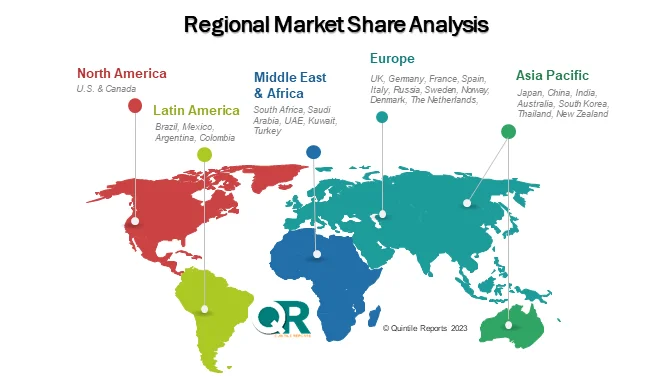
🌎 Regional Insights: Where Growth is Happening
Asia-Pacific: The Growth Engine
Asia-Pacific dominates the market, driven by large agricultural economies like India and China. Government subsidies and NGO initiatives are supporting widespread adoption in rural areas.
Europe: Innovation and Efficiency
European countries are focusing on high-tech hybrid dryers with advanced controls and energy efficiency. Sustainability regulations are driving innovation in this region.
North America: Niche but Growing
In North America, solar dryers are gaining traction in organic and specialty food markets. Pilot programs are exploring their commercial viability.
Middle East & Africa: Opportunity Meets Need
This region shows strong potential due to abundant sunlight and agricultural dependence. NGO-led projects are playing a key role in adoption.
Latin America: Emerging Adoption
Growth is steady but uneven, with applications in coffee and cocoa processing. Financing constraints remain a challenge.
🏭 Competitive Landscape: Innovation vs Affordability
The solar dryer market is highly decentralized, with players ranging from local manufacturers to global innovators.
- Local manufacturers focus on low-cost, passive dryers suitable for rural applications.
- Global companies are developing advanced hybrid systems with smart features and higher efficiency.
Key differentiation factors include:
- System efficiency and drying speed
- Integration with smart technologies
- Cost-effectiveness
- After-sales support and training
Partnerships with governments, NGOs, and research institutions are becoming crucial for scaling adoption.
🔬 Innovation Spotlight: The Future of Solar Drying
Recent developments highlight the direction of the industry:
- Polycarbonate-based solar dryers improving durability and efficiency
- Hybrid systems enabling round-the-clock drying
- Smart dryers with real-time monitoring and predictive maintenance
- Integration with agrivoltaic systems for dual land use
These innovations are transforming solar drying from a basic technique into a sophisticated agri-tech solution.
🔮 Future Outlook: A Decade of Opportunity
The next decade will be pivotal for the solar dryer market. As global food systems evolve, the need for sustainable, efficient, and scalable preservation methods will intensify.
Key trends shaping the future include:
- Expansion of rural solar infrastructure
- Increased funding for agri-tech startups
- Standardization of solar dryer designs
- Integration with digital agriculture platforms
Companies that invest in innovation, affordability, and user education will be best positioned to capitalize on this growth.
❓ FAQs for Key Opinion Leaders (KOLs)
1. What makes solar dryers a strategic investment in agriculture?
Solar dryers reduce energy costs, minimize post-harvest losses, and improve product quality, making them a high-impact investment for sustainable agriculture.
2. Which regions offer the highest growth potential?
Asia-Pacific and Africa present the strongest opportunities due to agricultural dependence and favorable solar conditions.
3. How do hybrid solar dryers improve efficiency?
Hybrid systems combine solar energy with auxiliary heat sources, ensuring consistent drying even in low sunlight conditions.
4. What are the key barriers to adoption?
High initial costs, lack of awareness, and inconsistent product standards are major challenges.
5. How is technology transforming solar drying?
IoT integration, thermal storage, and smart controls are enhancing performance, reliability, and scalability.
6. What role do governments play in market growth?
Government subsidies, rural programs, and renewable energy policies are critical drivers of adoption.
7. Are solar dryers viable for large-scale industrial use?
Yes, especially with advanced hybrid designs, though efficiency improvements are still needed for widespread industrial adoption.
8. What industries benefit the most from solar dryers?
Food processing, agriculture, nutraceuticals, and herbal industries are key beneficiaries.
Our Latest Publication:
Solar Dryer Market 2026-2035
Ultrafast Laser Market Accelerates as Precision Manufacturing and Healthcare Demand Surge

Adarsh
Business Strategy — Quintile Reports
Adarsh is a Business Strategy professional focused on transforming market insights into actionable growth plans. He supports strategic initiatives through market analysis, competitive intelligence, and data-driven decision-making to help drive long-term business success.
His core skills include strategic planning, market research, growth opportunity assessment, trend analysis, performance tracking, stakeholder communication, cross-functional collaboration, and critical problem-solving.