
The global Sandblasting Personal Protective Equipment (PPE) market is entering a transformative growth phase as industries worldwide intensify their focus on worker safety, regulatory compliance, and occupational health standards.
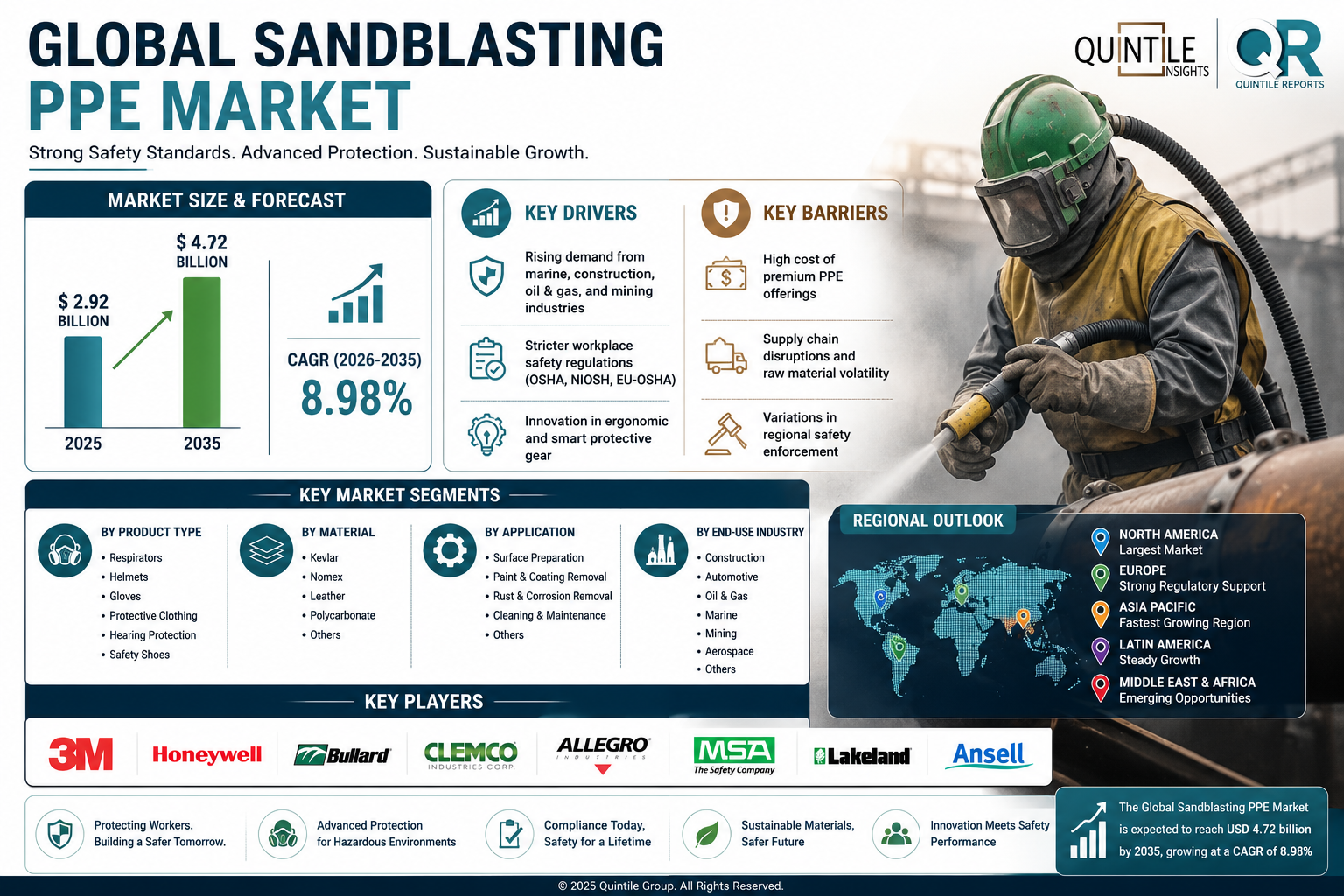
According to recent market insights, the global Sandblasting PPE Market was valued at USD 2.92 billion in 2025 and is projected to reach approximately USD 4.72 billion by 2035, registering a CAGR of 8.98% during the forecast period.
The increasing use of abrasive blasting across construction, automotive, shipbuilding, mining, oil & gas, aerospace, and industrial manufacturing sectors continues to drive demand for advanced protective equipment. As awareness regarding silica dust exposure and workplace hazards rises, companies are making substantial investments in protective technologies that enhance worker safety while ensuring compliance with evolving regulatory frameworks.
Request Sample PDF Report: https://www.quintilereports.com/request-sample/1276-sandblasting-ppe-market/
Growing Safety Concerns Fuel Market Expansion
Sandblasting remains one of the most hazardous industrial processes due to exposure to airborne silica particles, abrasive materials, flying debris, and high noise levels. Workers engaged in blasting operations face serious health risks, including silicosis, respiratory illnesses, hearing loss, skin injuries, and eye damage.
As a result, organizations across industries are increasingly adopting comprehensive PPE solutions that include:
- Respirators
- Blast helmets
- Protective clothing
- Gloves
- Safety footwear
- Hearing protection systems
- Face shields and goggles
The growing emphasis on occupational health and worker well-being has made PPE an essential component of industrial operations rather than an optional safety measure.
Regulatory Standards Creating New Opportunities
Government agencies and workplace safety organizations are playing a critical role in driving market growth. Regulatory authorities such as OSHA, NIOSH, and EU-OSHA have implemented stringent standards regarding worker exposure to hazardous materials during abrasive blasting activities.
In the United States, OSHA’s Respirable Crystalline Silica Standard has significantly strengthened employer obligations concerning dust exposure control. Companies are increasingly investing in high-performance respiratory systems and protective clothing to comply with these regulations.
Similarly, European countries have introduced stricter safety protocols and limitations on silica-based blasting materials. Germany’s restrictions on silica-containing abrasive materials have encouraged industries to adopt safer alternatives while simultaneously increasing demand for specialized PPE equipment.
Special Discount: https://www.quintilereports.com/request-discount/1276-sandblasting-ppe-market/
Japan has also established some of the world’s most stringent occupational exposure limits for respirable crystalline silica, further boosting the need for advanced worker protection systems.
As regulatory oversight continues to strengthen globally, manufacturers of safety equipment are expected to benefit from rising compliance-related spending.
Technological Advancements Reshaping PPE Design
Innovation remains one of the strongest growth catalysts in the Sandblasting PPE market. Modern industrial workers increasingly demand protective equipment that balances safety, comfort, durability, and productivity.
Manufacturers are introducing next-generation PPE solutions featuring:
- Lightweight materials
- Enhanced airflow systems
- Anti-fog face shields
- Flame-resistant fabrics
- Smart sensor integration
- Improved communication systems
- Ergonomic respirator designs
- Temperature management technology
Materials such as Kevlar, Nomex, advanced polycarbonate composites, and specialized fabric blends are improving durability while reducing worker fatigue.
Smart PPE technologies are also gaining momentum. Integrated sensors capable of monitoring air quality, environmental conditions, and worker exposure levels are creating new opportunities for manufacturers seeking product differentiation.
These innovations not only improve safety outcomes but also increase user acceptance and long-term compliance among workers.
Construction and Infrastructure Development Driving Demand
Rapid infrastructure development worldwide continues to generate significant opportunities for the sandblasting PPE industry.
Construction projects rely heavily on abrasive blasting for:
- Surface preparation
- Rust removal
- Concrete restoration
- Structural maintenance
- Protective coating applications
Emerging economies in Asia-Pacific, Latin America, and the Middle East are investing heavily in transportation networks, industrial facilities, energy infrastructure, and urban development projects.
As construction activity expands, the need for worker protection equipment is expected to increase proportionally, supporting long-term market growth.
Buying Now: https://www.quintilereports.com/request-enquiry/1276-sandblasting-ppe-market/
Oil & Gas and Marine Industries Remain Key Consumers
The oil & gas sector remains one of the largest consumers of sandblasting PPE products. Maintenance of pipelines, offshore platforms, storage tanks, and processing facilities frequently requires abrasive blasting operations.
Given the hazardous working environments within these facilities, employers prioritize high-performance PPE solutions that provide superior respiratory protection and resistance to harsh operating conditions.
Similarly, the marine industry depends extensively on sandblasting for ship maintenance, corrosion control, and surface treatment applications. Shipyards worldwide continue to invest in advanced worker protection systems as they seek to improve safety performance and meet increasingly stringent regulations.
Regional Analysis
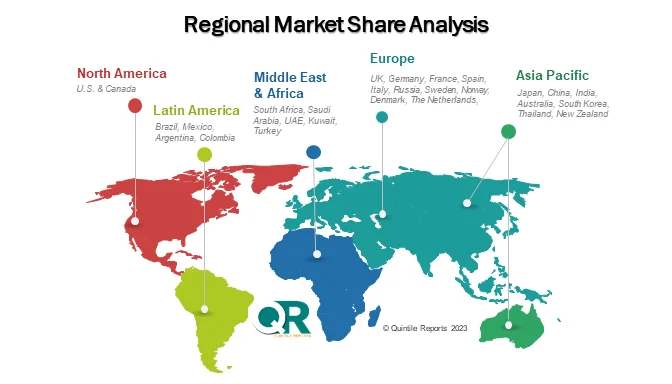
North America
North America continues to dominate the Sandblasting PPE market due to strong industrial activity and comprehensive workplace safety regulations.
The region benefits from:
- Mature industrial infrastructure
- High awareness regarding worker safety
- Strong regulatory enforcement
- Early adoption of advanced PPE technologies
The United States remains the largest market contributor, supported by extensive construction, automotive, oil & gas, and manufacturing operations.
Europe
Europe maintains a robust market position driven by strict safety standards and sustainability initiatives.
Countries such as Germany, France, and the United Kingdom are increasingly adopting environmentally friendly PPE materials and advanced respiratory protection systems. Sustainability considerations are becoming a key purchasing factor across industrial sectors.
Asia-Pacific
Asia-Pacific represents the fastest-growing regional market.
Rapid industrialization across China, India, Japan, and Southeast Asia is creating substantial demand for worker safety equipment. Expanding manufacturing activities, infrastructure investments, and mining operations are expected to support strong growth throughout the forecast period.
Improving regulatory awareness and rising workplace safety standards are further accelerating adoption rates across the region.
Latin America
Mining, energy, and construction projects continue to drive demand in Latin America. Countries such as Brazil, Mexico, and Argentina are witnessing increased adoption of respiratory protection systems and industrial safety clothing.
Middle East & Africa
The Middle East & Africa region is emerging as a promising market, particularly due to expanding oil & gas projects and large-scale construction activities.
Countries including Saudi Arabia, UAE, and South Africa are investing heavily in industrial safety programs, creating favorable conditions for market expansion.
Key Challenges Facing the Market
Despite strong growth prospects, several challenges remain.
High Product Costs
Advanced protective equipment often requires specialized materials and engineering. Premium respirators, blast helmets, and flame-resistant suits can represent a significant investment, particularly for small and medium-sized businesses.
Supply Chain Disruptions
Global supply chain challenges continue to impact availability and pricing of essential raw materials, including specialty fabrics, filtration components, and electronic sensor technologies.
Training and Compliance Issues
The effectiveness of PPE depends heavily on proper selection, fitting, maintenance, and worker training. Inadequate safety education can reduce equipment effectiveness and hinder adoption.
Manufacturers and employers must continue investing in training programs to maximize safety outcomes.
Competitive Landscape
The Sandblasting PPE market remains highly competitive, with leading manufacturers focusing on innovation, regulatory compliance, and customer-centric product development.
Major industry participants include:
- 3M Company
- Honeywell International Inc.
- RPB Safety LLC
- Bullard
- MSA Safety Inc.
- Lakeland Industries Inc.
- Ansell Ltd.
- Delta Plus Group
- DuPont
- Uvex Safety Group
- Kimberly-Clark Corporation
These companies continue to invest in research and development aimed at improving product performance, user comfort, and operational efficiency.
Recent product launches featuring modular respirator systems, lightweight blast helmets, advanced airflow technologies, and integrated communication capabilities demonstrate the industry’s commitment to innovation.
Future Outlook
The future of the Sandblasting PPE market appears highly promising as industries increasingly prioritize worker protection, regulatory compliance, and operational efficiency.
Growing awareness regarding occupational health risks, coupled with stricter government regulations and continuous technological innovation, will remain key growth drivers over the next decade.
As infrastructure development accelerates globally and industrial safety standards continue to evolve, demand for advanced sandblasting PPE solutions is expected to remain strong. Manufacturers that focus on innovation, sustainability, and user-centric product design will be best positioned to capitalize on emerging opportunities and maintain a competitive advantage in this rapidly evolving market.
Frequently Asked Questions (FAQs)
1. What is driving growth in the Sandblasting PPE Market?
Growing workplace safety regulations, increasing awareness of silica dust hazards, industrial expansion, and technological advancements in protective equipment are major growth drivers.
2. What is the projected market size by 2035?
The global Sandblasting PPE Market is expected to reach approximately USD 4.72 billion by 2035.
3. Which industries are the largest users of sandblasting PPE?
Construction, mining, oil & gas, marine, automotive, aerospace, and manufacturing industries are among the largest consumers.
4. Which region is growing the fastest?
Asia-Pacific is expected to register the fastest growth due to rapid industrialization and infrastructure development.
5. What types of PPE are commonly used in sandblasting?
Common products include respirators, blast helmets, gloves, protective clothing, hearing protection equipment, face shields, and safety footwear.
6. How do regulations impact market growth?
Stringent workplace safety regulations compel organizations to invest in certified PPE equipment, driving consistent demand.
7. What technological trends are shaping the industry?
Smart PPE systems, lightweight materials, anti-fog technologies, integrated communication tools, and environmental monitoring sensors are emerging trends.
8. Who are the leading companies in the market?
Major players include 3M, Honeywell, RPB Safety, Bullard, MSA Safety, Lakeland Industries, Ansell, DuPont, and Delta Plus Group.
Our Latest Publication:
Sandblasting PPE Market (2026-2036)
Superconductor Motors Market to Reach USD 1.87 Billion by 2035 Amid Clean Energy Revolution

Adarsh
Business Strategy — Quintile Reports
Adarsh is a Business Strategy professional focused on transforming market insights into actionable growth plans. He supports strategic initiatives through market analysis, competitive intelligence, and data-driven decision-making to help drive long-term business success.
His core skills include strategic planning, market research, growth opportunity assessment, trend analysis, performance tracking, stakeholder communication, cross-functional collaboration, and critical problem-solving.