
The global logistics and bulk packaging industry is undergoing a remarkable transformation as businesses seek more efficient, sustainable, and cost-effective methods for transporting liquid products across international markets.
At the center of this evolution is the growing adoption of flexi bags, flexible bulk liquid transportation systems that are reshaping global supply chains.
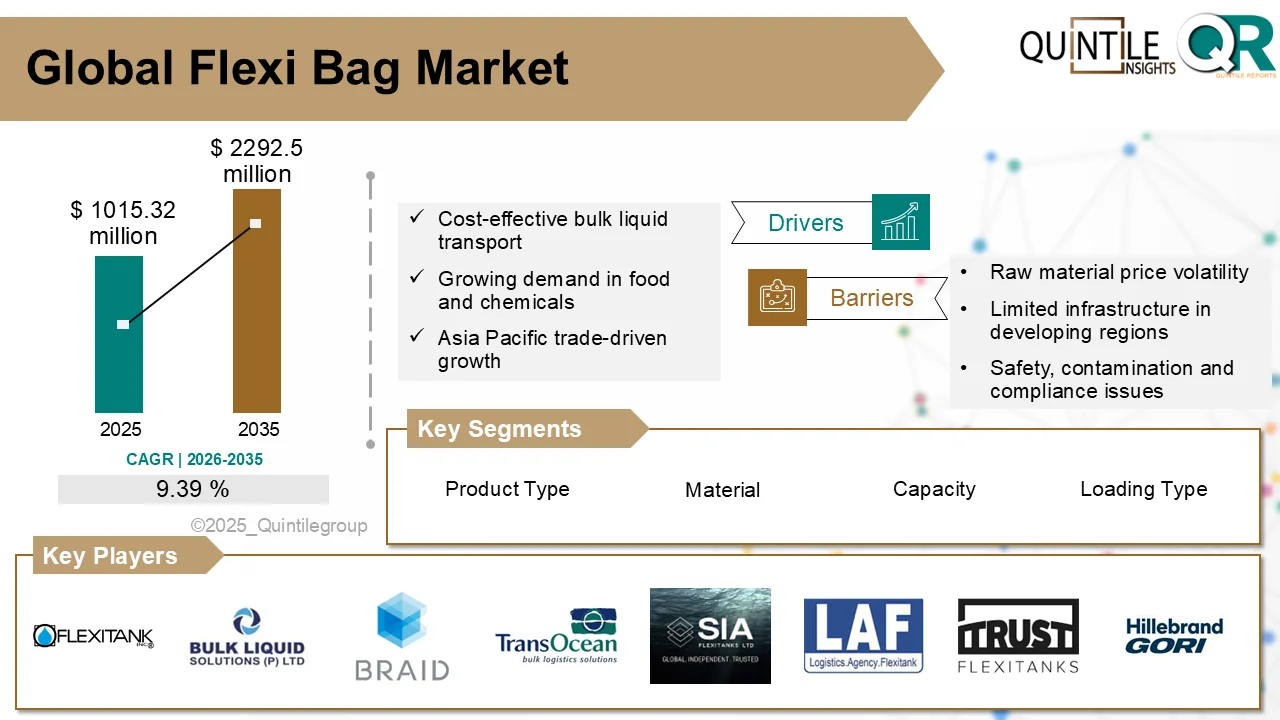
According to recent market analysis, the Global Flexi Bag Market was valued at USD 1,015.32 million in 2025 and is projected to reach USD 2,292.5 million by 2035, expanding at a robust CAGR of 9.39% during the forecast period. The impressive growth trajectory reflects increasing demand for bulk liquid transportation solutions across industries including food and beverages, chemicals, pharmaceuticals, agriculture, lubricants, and industrial liquids.
As global trade volumes continue to rise and sustainability becomes a strategic priority for organizations worldwide, flexi bags are emerging as one of the most efficient alternatives to traditional transportation methods such as drums, intermediate bulk containers (IBCs), and tank containers.
Request Sample PDF Report: https://www.quintilereports.com/request-sample/1272-flexi-bag-market/
Flexi Bags Revolutionizing Bulk Liquid Logistics
Flexi bags, also known as flexitanks, are large flexible containers manufactured using multiple layers of polyethylene, polypropylene, and reinforced materials. Installed inside standard 20-foot shipping containers, these systems enable the safe transportation of non-hazardous liquids in large quantities.
Unlike conventional packaging solutions, flexi bags maximize container utilization by allowing significantly larger liquid payloads to be transported within a single shipment. Modern systems can carry up to 24,000 liters or more, helping businesses reduce logistics costs while improving transportation efficiency.
This capability has made flexi bags particularly attractive for industries that rely on large-scale international movement of edible oils, wine, fruit juices, industrial chemicals, liquid fertilizers, lubricants, and pharmaceutical ingredients.
Special Discount: https://www.quintilereports.com/request-discount/1272-flexi-bag-market/
By minimizing packaging requirements and maximizing container space, flexi bags are helping companies streamline operations while improving overall supply chain performance.
Cost Efficiency Drives Market Adoption
One of the strongest drivers behind the growth of the flexi bag market is its substantial economic advantage over traditional bulk liquid transportation methods.
Conventional drums and IBCs require significant investments in packaging materials, handling equipment, storage space, and labor. In contrast, flexi bags offer a lightweight and highly efficient solution that reduces transportation costs per unit of liquid transported.
Exporters and logistics providers increasingly recognize that flexi bags can lower freight expenses, reduce loading and unloading times, and improve operational efficiency throughout the supply chain.
These advantages are particularly valuable in highly competitive industries where transportation costs directly impact profit margins and market competitiveness.
As international trade volumes continue expanding, the demand for cost-effective logistics solutions is expected to remain a key growth catalyst for the flexi bag industry.
Sustainability Becomes a Competitive Advantage
Environmental sustainability is increasingly influencing purchasing decisions and logistics strategies across global industries.
Organizations are actively seeking packaging solutions that reduce waste, lower carbon emissions, and support circular economy objectives. Flexi bags align closely with these goals due to their lightweight construction and efficient use of shipping capacity.
Compared to traditional rigid containers, flexi bags reduce the number of shipments required to transport equivalent liquid volumes, resulting in lower fuel consumption and reduced greenhouse gas emissions.
Buying Now: https://www.quintilereports.com/request-enquiry/1272-flexi-bag-market/
Many manufacturers are also investing in recyclable materials, biodegradable components, and environmentally friendly production methods to further enhance sustainability performance.
These developments are particularly important in regions such as Europe, where stringent environmental regulations and corporate sustainability commitments are accelerating the transition toward greener logistics solutions.
As environmental concerns continue shaping global supply chains, sustainability is expected to remain a major factor driving flexi bag adoption.
Global Trade Expansion Creates New Opportunities
The increasing international trade of liquid products is creating significant growth opportunities for flexi bag manufacturers and logistics providers.
Exports of edible oils, wines, fruit concentrates, industrial chemicals, lubricants, and specialty liquids continue to grow, particularly from emerging economies in Asia-Pacific and Latin America.
Countries such as China, India, Brazil, Argentina, and Southeast Asian nations are expanding production capabilities and strengthening export infrastructure to serve growing global demand.
As exporters seek more efficient methods for transporting bulk liquids across long distances, flexi bags are becoming an increasingly attractive option due to their scalability, affordability, and operational flexibility.
The growing interconnectedness of global trade networks is expected to further strengthen demand throughout the forecast period.
Technology Enhances Product Reliability
Technological innovation is playing a critical role in advancing flexi bag performance and expanding application possibilities.
Manufacturers are investing heavily in research and development to create next-generation solutions featuring improved durability, leak prevention, contamination control, and cargo protection.
Recent innovations include:
- Multi-layer barrier films for enhanced product safety
- Chemical-resistant liners for specialty liquid transport
- Integrated heating systems for temperature-sensitive cargo
- GPS-enabled tracking technologies
- Smart monitoring solutions for real-time shipment visibility
- Advanced valve systems designed to minimize leakage risks
These technological improvements are increasing customer confidence while enabling flexi bags to be used in more demanding applications.
Industries handling sensitive products such as pharmaceuticals, specialty chemicals, and premium food ingredients are increasingly adopting advanced flexi bag systems due to their improved reliability and quality assurance capabilities.
Food and Beverage Industry Leads Demand
The food and beverage sector remains one of the largest consumers of flexi bag solutions globally.
Manufacturers and exporters of edible oils, fruit juices, wine, syrups, liquid sweeteners, and food ingredients rely heavily on efficient transportation systems to move products across international markets.
Flexi bags provide several benefits for food-grade transportation, including contamination prevention, reduced packaging waste, and improved cargo capacity.
The wine industry, in particular, has emerged as a significant growth contributor. Bulk wine exports are increasingly utilizing flexi bags to reduce shipping costs while maintaining product quality during transit.
As consumer demand for food and beverage products continues to expand worldwide, transportation requirements are expected to generate sustained market growth.
Pharmaceutical and Chemical Applications Expand
The pharmaceutical and chemical industries are also becoming important end users of flexi bag technology.
Manufacturers transporting non-hazardous liquid chemicals, pharmaceutical ingredients, industrial fluids, and specialty compounds require packaging solutions that ensure safety, consistency, and regulatory compliance.
Advancements in material science and quality control systems are enabling flexi bags to meet increasingly stringent industry standards.
The development of specialized liners, contamination-resistant materials, and enhanced sealing technologies is opening new opportunities in higher-value applications where product integrity is critical.
As these industries continue expanding globally, demand for advanced bulk liquid transportation solutions is expected to increase accordingly.
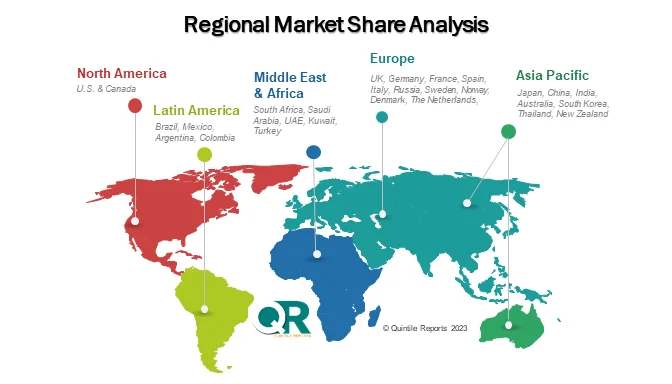
Regional Market Trends
Asia-Pacific Emerges as Growth Leader
Asia-Pacific is expected to remain the fastest-growing region within the global flexi bag market.
Rapid industrialization, manufacturing expansion, export growth, and infrastructure development are driving adoption throughout China, India, Japan, and Southeast Asia.
The region’s strong position in food processing, chemicals, pharmaceuticals, and industrial manufacturing creates substantial demand for efficient liquid transportation solutions.
Government investments in logistics infrastructure and international trade corridors further support regional market growth.
Europe Prioritizes Sustainable Logistics
Europe continues to demonstrate strong demand for flexi bags due to its commitment to sustainable transportation and environmental responsibility.
Countries such as Germany, France, and the Netherlands are promoting eco-friendly logistics practices and encouraging the adoption of recyclable packaging systems.
The region’s mature food processing, wine production, and chemical industries provide a stable foundation for ongoing market expansion.
North America Maintains Steady Growth
North America remains a significant market supported by advanced transportation infrastructure and established manufacturing sectors.
The United States and Canada continue to utilize flexi bags across food processing, industrial chemicals, agricultural products, and liquid commodity exports.
Growing sustainability initiatives and logistics optimization efforts are expected to sustain market demand.
Market Challenges Remain
Despite its strong outlook, the flexi bag industry faces several challenges.
Volatility in raw material prices remains a major concern for manufacturers. Polyethylene and polypropylene resin costs are closely linked to global energy markets, creating pricing uncertainty throughout the supply chain.
Environmental concerns surrounding plastic waste also present challenges. Although many flexi bags are recyclable, limited recycling infrastructure in certain regions can hinder sustainability efforts.
Quality assurance remains another critical issue. Leakage, contamination, and improper handling can result in cargo losses and reputational risks for logistics providers.
Manufacturers must continue investing in quality control, product innovation, and sustainability initiatives to address these concerns and maintain customer confidence.
Competitive Landscape Evolves
Competition within the flexi bag market is increasingly focused on innovation, sustainability, and value-added services.
Leading manufacturers are developing advanced material technologies, digital monitoring capabilities, reusable solutions, and customized products tailored to specific industry requirements.
Strategic partnerships among packaging companies, logistics providers, material suppliers, and technology firms are accelerating product development and market expansion.
Recent collaborations focused on next-generation polyethylene materials, enhanced heating systems, and smart monitoring technologies demonstrate the industry’s commitment to continuous improvement.
Outlook Through 2035
The future of the flexi bag market appears highly promising as global trade, sustainability initiatives, and logistics optimization continue to shape industrial supply chains.
Increasing adoption across food, beverage, chemical, pharmaceutical, and industrial sectors will provide strong demand momentum over the coming decade.
Technological advancements, improved recycling capabilities, and enhanced cargo protection systems will further expand application opportunities and strengthen market competitiveness.
With market value expected to surpass USD 2.29 billion by 2035, flexi bags are positioned to become an increasingly important component of global bulk liquid transportation infrastructure, helping businesses achieve greater efficiency, sustainability, and operational flexibility in an evolving global economy.
1. What is the projected size of the global Flexi Bag Market by 2035?
The market is expected to reach USD 2,292.5 million by 2035, growing at a CAGR of 9.39%.
2. What are flexi bags used for?
Flexi bags are used for transporting non-hazardous bulk liquids such as edible oils, wine, juices, chemicals, lubricants, pharmaceuticals, and industrial fluids.
3. Why are flexi bags becoming popular in logistics?
They offer higher payload capacity, lower transportation costs, reduced packaging waste, and improved container utilization compared to traditional packaging methods.
4. Which industries are driving demand for flexi bags?
Food & beverages, chemicals, pharmaceuticals, industrial liquids, wine & spirits, agriculture, and lubricant industries are major end users.
5. What sustainability benefits do flexi bags offer?
Flexi bags reduce packaging materials, optimize cargo space, lower transportation emissions, and can be manufactured using recyclable materials.
6. Which region is growing fastest in the Flexi Bag Market?
Asia-Pacific is expected to be the fastest-growing region due to increasing exports, industrialization, and logistics infrastructure investments.
7. What technological innovations are shaping the market?
Multi-layer barrier films, chemical-resistant liners, leak-proof valves, GPS tracking systems, smart monitoring technologies, and integrated heating solutions.
8. What challenges does the industry face?
Challenges include raw material price volatility, recycling limitations, quality assurance concerns, and regulatory compliance requirements.
Our Latest Publication:
Flexi Bag Market (2026-2036)
Flame and Detonation Arrestors Market Approaches USD 4.71 Billion by 2036

Adarsh
Business Strategy — Quintile Reports
Adarsh is a Business Strategy professional focused on transforming market insights into actionable growth plans. He supports strategic initiatives through market analysis, competitive intelligence, and data-driven decision-making to help drive long-term business success.
His core skills include strategic planning, market research, growth opportunity assessment, trend analysis, performance tracking, stakeholder communication, cross-functional collaboration, and critical problem-solving.