
India has expressed serious concern over the escalating conflict in the Middle East following military strikes involving the United States, Israel, and Iran. The government warned that continued instability in the Gulf region could significantly affect India’s economy, trade routes, and energy supplies.
India expresses concern over escalating Middle East conflict
In an official statement, India’s Ministry of External Affairs (MEA) said the country has been closely monitoring the situation since the first reports of attacks in the region on February 28. At the time, India urged all sides to exercise restraint and avoid further escalation.
However, the situation has worsened in recent days, with the conflict expanding across parts of West Asia. The government noted that the violence has intensified even during the holy month of Ramadan, increasing concerns about regional stability.
India reiterated its call for dialogue and diplomacy, emphasizing the need for an immediate end to the conflict.

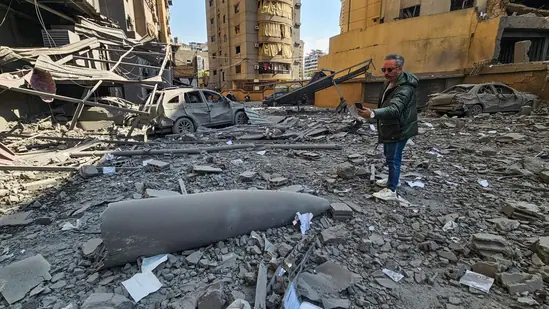
People inspect the damage at a site in Beirut following an Israeli airstrike as tensions escalate in the ongoing US-Iran conflict.
Safety of Indians in Gulf region a priority
The Indian government highlighted that nearly one crore Indian citizens live and work in Gulf countries, making their safety a top priority.
Officials said that any instability in the region could directly affect Indian nationals, trade routes, and shipping operations. Reports have also indicated that some Indian citizens have been killed or gone missing following recent attacks on merchant ships in the region.
Indian embassies and consulates in affected countries are maintaining constant contact with the Indian community and issuing advisories to ensure their safety.
Gulf region crucial for India’s economy and energy supply
The Gulf and wider West Asian region play a critical role in India’s economic and strategic interests. A large portion of India’s energy imports, maritime trade routes, and commercial shipping passes through this region.
According to the MEA, any major disruption in these corridors could lead to serious economic consequences for India, including rising energy costs and delays in trade.
The ongoing conflict has already raised concerns about global oil prices and shipping disruptions.
India calls for diplomacy to end the crisis
India has strongly urged all parties involved to resolve the crisis through dialogue and diplomatic engagement.
The government said that the ongoing conflict has resulted in significant destruction and loss of life, while normal economic activities in several areas have come to a halt.
Prime Minister Narendra Modi and External Affairs Minister S. Jaishankar have reportedly been in contact with leaders and key international partners to discuss the evolving situation.
Government monitoring developments closely
The government confirmed that it will continue to closely monitor the situation in West Asia and take necessary steps to protect India’s national interests and citizens abroad.
Authorities also assured that assistance will be provided to Indians stranded due to the conflict through embassies and diplomatic channels.
Our Latest News:

Adarsh
Business Strategy — Quintile Reports
Adarsh is a Business Strategy professional focused on transforming market insights into actionable growth plans. He supports strategic initiatives through market analysis, competitive intelligence, and data-driven decision-making to help drive long-term business success.
His core skills include strategic planning, market research, growth opportunity assessment, trend analysis, performance tracking, stakeholder communication, cross-functional collaboration, and critical problem-solving.