
The global large scale bearing market is entering a decisive growth phase, fueled by accelerating industrialization, rising infrastructure investments, and the rapid expansion of renewable energy projects worldwide.
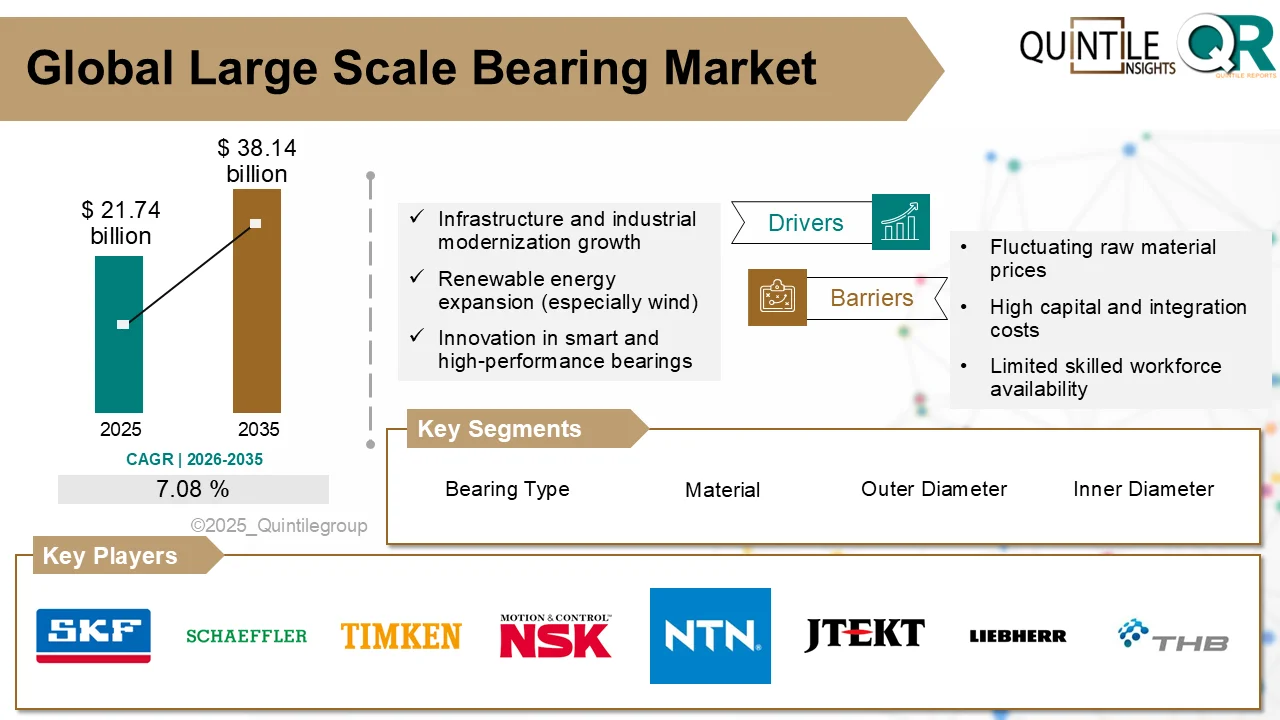
According to recent industry insights, the market was valued at USD 21.74 billion in 2025 and is projected to reach USD 38.14 billion by 2035, registering a steady CAGR of 7.08% during the forecast period.
Large scale bearings, typically defined as bearings with outer diameters exceeding 500 mm, are essential components in heavy-duty machinery used across industries such as energy, mining, construction, marine, and transportation. Their ability to handle high loads, extreme conditions, and continuous operational cycles makes them indispensable in modern industrial ecosystems.
Download Free Sample PDF of the Report: https://www.quintilereports.com/request-sample/1273-large-scale-bearing-market/
Industrial Expansion Driving Core Demand
The primary growth engine for the large scale bearing market is global industrial expansion. Rapid infrastructure development across emerging economies, particularly in Asia-Pacific, the Middle East, and Africa, is significantly increasing demand for heavy machinery. From bridges and railways to power plants and mining operations, these sectors rely heavily on durable and high-performance bearing systems.
Countries such as India and China are at the forefront of this expansion, investing heavily in smart cities, highways, and industrial corridors. These projects require robust machinery equipped with large bearings capable of ensuring operational stability and longevity.
Get Discount On The Purchase Of This Report: https://www.quintilereports.com/request-discount/1273-large-scale-bearing-market/
Additionally, the revival of manufacturing sectors in developed economies is contributing to market growth. Automation, robotics, and advanced production technologies are increasing the need for precision-engineered bearings that can support high-speed and high-load applications.
Renewable Energy Revolution Reshaping the Market
One of the most transformative factors influencing the large scale bearing market is the global shift toward renewable energy. Wind energy, in particular, is emerging as a major driver of demand.
Large scale bearings play a critical role in wind turbines, especially in components such as yaw systems, pitch mechanisms, and main shafts. As countries push to reduce carbon emissions and transition to cleaner energy sources, wind farm installations—both onshore and offshore—are expanding rapidly.
In regions like North America and Europe, government incentives and policy support are accelerating renewable energy adoption. Similarly, Asia-Pacific countries are investing heavily in wind and solar infrastructure, further boosting demand for high-performance bearing solutions.
Solar tracking systems, which adjust panel orientation to maximize sunlight exposure, also utilize large bearings. This diversification of applications is broadening the market’s scope and creating new growth opportunities.
The market report includes accurate forecasts, segment analysis, and key player profiles for actionable insights: https://www.quintilereports.com/request-enquiry/1273-large-scale-bearing-market/
Technological Innovation Transforming Bearings
The large scale bearing industry is undergoing a technological transformation, driven by advancements in materials, design, and digital integration.
Modern bearings are increasingly being developed using advanced materials such as ceramics and composite alloys, which offer improved durability, reduced friction, and enhanced resistance to extreme temperatures. These innovations are extending the operational lifespan of bearings and reducing maintenance requirements.
Another major trend is the integration of smart technologies. IoT-enabled bearings equipped with sensors can monitor parameters such as temperature, vibration, and load in real time. This data-driven approach enables predictive maintenance, allowing operators to identify potential issues before they lead to equipment failure.
Such innovations are particularly valuable in industries where downtime can result in significant financial losses, such as energy generation, mining, and aerospace.
Aftermarket Services and Lifecycle Value
Beyond manufacturing, the aftermarket segment is becoming increasingly important in the large scale bearing market. Services such as maintenance, repair, replacement, and remanufacturing are gaining traction as companies seek to maximize the lifecycle value of their equipment.
Predictive maintenance solutions, supported by sensor-integrated bearings, are helping organizations reduce downtime and optimize operational efficiency. This shift toward service-based models is creating additional revenue streams for manufacturers and strengthening customer relationships.
Furthermore, sustainability considerations are encouraging the adoption of remanufactured bearings and recycled materials, aligning with global efforts to reduce environmental impact.
Challenges Hindering Market Growth
Despite its promising outlook, the large scale bearing market faces several challenges that could impact growth.
One of the primary concerns is the high cost of raw materials. Bearings require premium-grade steel, alloys, and specialized components, making production expensive. Fluctuations in raw material prices can significantly affect profit margins for manufacturers.
Precision manufacturing is another challenge. Producing large bearings with micrometer-level accuracy requires advanced machinery and skilled labor, which increases operational complexity and costs.
Supply chain disruptions also pose a risk. Geopolitical tensions, trade restrictions, and logistical constraints can lead to delays in material procurement and product delivery, affecting overall market stability.
Additionally, stringent environmental regulations are forcing manufacturers to adopt more sustainable production practices. While this is beneficial in the long term, it requires significant investment in new technologies and processes.
Competition from Alternative Technologies
The market is also experiencing competition from alternative bearing technologies. Magnetic bearings and fluid-film bearings are gaining popularity in certain high-performance applications due to their unique advantages, such as reduced friction and minimal maintenance requirements.
Moreover, the influx of low-cost products from emerging markets is intensifying price competition, particularly in developing regions. Established players must balance cost efficiency with quality and innovation to maintain their competitive edge.
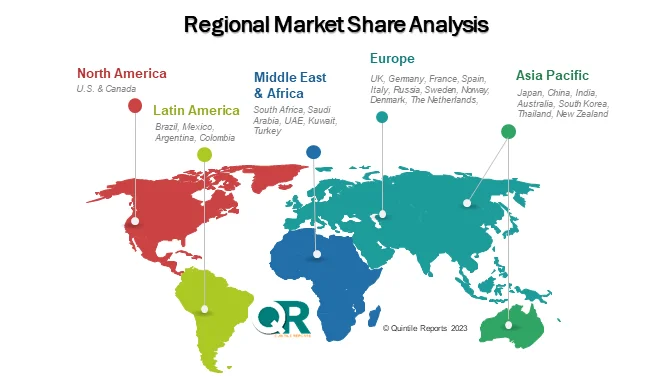
Regional Insights
Asia-Pacific: The Growth Powerhouse
Asia-Pacific is the largest and fastest-growing market for large scale bearings. Rapid industrialization, infrastructure development, and increasing energy demand are driving growth in this region. Countries like China, India, and Japan are leading contributors, supported by government initiatives and investments in renewable energy.
North America: Innovation and Renewable Energy
North America holds a significant share of the market, driven by advancements in automation and strong investments in renewable energy. The United States, in particular, is witnessing increased demand for bearings used in wind turbines and industrial machinery.
Europe: Sustainability and Engineering Excellence
Europe’s market is characterized by its focus on sustainability and high-quality manufacturing. Countries such as Germany, France, and the UK are investing in energy-efficient technologies and advanced industrial systems, boosting demand for innovative bearing solutions.
Latin America and Middle East & Africa
These regions are experiencing steady growth, supported by mining, oil and gas, and infrastructure projects. While their market share is smaller compared to other regions, increasing investments are expected to drive future expansion.
Competitive Landscape
The large scale bearing market is highly competitive, with key players focusing on innovation, strategic partnerships, and mergers to strengthen their market position.
Leading companies are investing heavily in research and development to introduce advanced products such as hybrid bearings, self-lubricating systems, and energy-efficient designs. The integration of digital solutions, including predictive maintenance platforms, is also becoming a key differentiator.
Strategic collaborations between manufacturers and technology providers are enabling the development of integrated ecosystems that combine hardware with software solutions. This approach is helping companies deliver comprehensive value to customers and stay ahead in a competitive market.
Future Outlook
Looking ahead, the large scale bearing market is poised for sustained growth, driven by a combination of industrial expansion, renewable energy adoption, and technological innovation.
The increasing focus on sustainability and energy efficiency will continue to shape product development and manufacturing processes. Companies that prioritize innovation, operational agility, and customer-centric strategies are likely to emerge as leaders in this evolving landscape.
As industries continue to modernize and embrace digital transformation, the demand for advanced bearing solutions will only grow stronger, reinforcing the market’s long-term growth potential.
Q1. What is driving the growth of the large scale bearing market?
The market is primarily driven by industrialization, infrastructure development, and the rapid expansion of renewable energy projects, especially wind energy.
Q2. Which industries are the biggest users of large scale bearings?
Key industries include energy (wind and thermal), mining, construction, marine, aerospace, and heavy manufacturing.
Q3. How is technology impacting the bearing industry?
Technological advancements such as IoT-enabled smart bearings, advanced materials, and predictive maintenance systems are transforming performance and efficiency.
Q4. What are the major challenges in this market?
High raw material costs, precision manufacturing complexities, supply chain disruptions, and regulatory pressures are key challenges.
Q5. Which region offers the highest growth potential?
Asia-Pacific is the fastest-growing region due to rapid industrialization and infrastructure expansion.
Q6. How important is sustainability in this market?
Sustainability is becoming increasingly important, with manufacturers focusing on energy-efficient designs, recycled materials, and eco-friendly production processes.
Q7. What role do smart bearings play in the future?
Smart bearings enable real-time monitoring and predictive maintenance, reducing downtime and improving operational efficiency.
Q8. Are alternative technologies a threat to traditional bearings?
Yes, technologies like magnetic and fluid-film bearings pose competition in specific high-performance applications.
Our Latest Publication:
Large Scale Bearing Market (2026-2036)
Piezoelectric Motor Market Set to Reach USD 1.1B by 2035 | Growth, Trends & Insights

Adarsh
Business Strategy — Quintile Reports
Adarsh is a Business Strategy professional focused on transforming market insights into actionable growth plans. He supports strategic initiatives through market analysis, competitive intelligence, and data-driven decision-making to help drive long-term business success.
His core skills include strategic planning, market research, growth opportunity assessment, trend analysis, performance tracking, stakeholder communication, cross-functional collaboration, and critical problem-solving.