
The global hydraulic filter market is witnessing steady growth as industries increasingly prioritize equipment efficiency, predictive maintenance, and operational reliability.
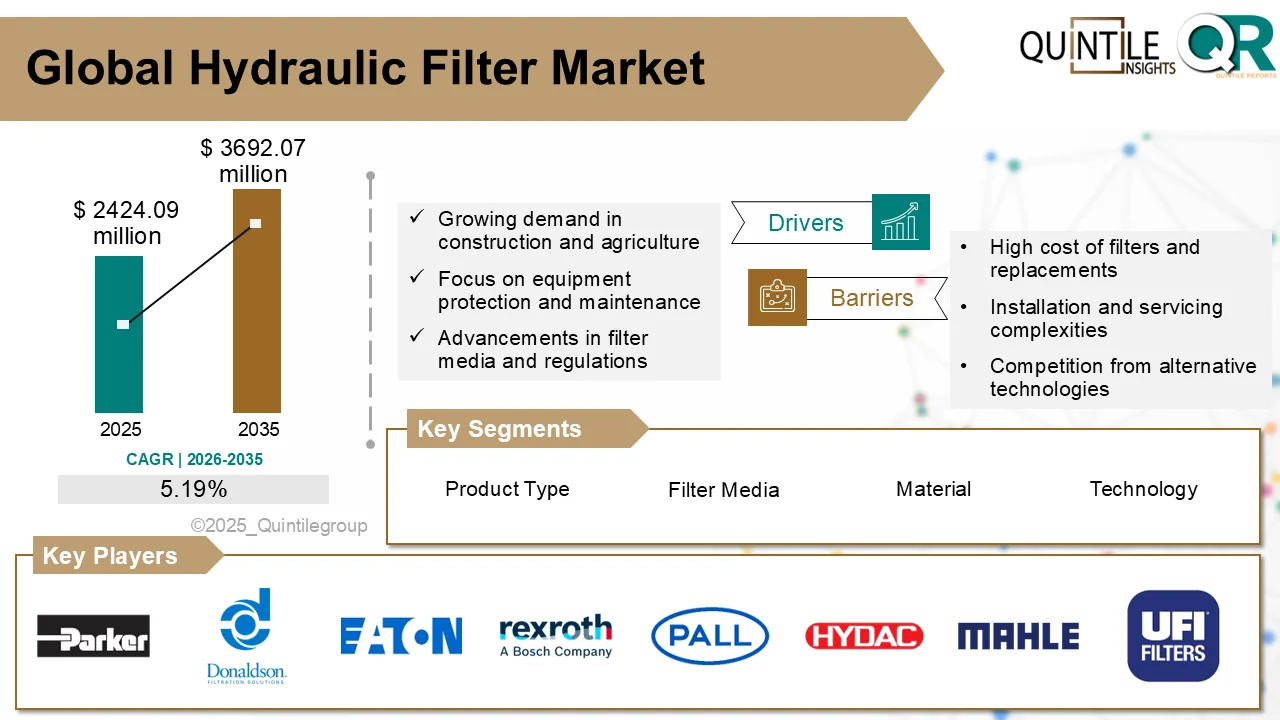
Valued at USD 2,424.09 million in 2025, the market is projected to reach USD 3,692.07 million by 2035, expanding at a CAGR of 5.19% during the forecast period.
Hydraulic filters play a critical role in maintaining the performance and longevity of hydraulic systems by removing contaminants such as dirt, metal particles, and water from fluids. These components are indispensable across industries including construction, mining, agriculture, oil & gas, aerospace, and manufacturing.
Request PDF Sample Report: https://www.quintilereports.com/request-sample/1236-hydraulic-filter-market/
One of the primary growth drivers is the expansion of the oil & gas sector, where hydraulic systems operate under extreme conditions and demand high-performance filtration solutions. Additionally, the rapid rise of industrial automation and smart manufacturing is accelerating the adoption of advanced filtration technologies. As machinery becomes more sophisticated, the need for clean hydraulic fluid to prevent downtime and component failure becomes increasingly crucial.
Limited-Time Discount: https://www.quintilereports.com/request-discount/1236-hydraulic-filter-market/
Another key trend shaping the market is the integration of IoT-enabled smart filtration systems. These advanced filters offer real-time monitoring, predictive maintenance alerts, and enhanced system efficiency. Companies are investing in digital solutions to reduce operational costs and improve uptime, aligning with Industry 4.0 initiatives.
Infrastructure development, particularly in emerging economies across Asia-Pacific, is further fueling demand. Large-scale projects such as highways, smart cities, and industrial plants require heavy machinery, which in turn drives the need for reliable hydraulic filtration systems. Countries like China and India are leading this growth due to rapid urbanization and industrial expansion.
However, the market is not without challenges. High raw material costs and manufacturing complexities continue to impact pricing and profit margins. Additionally, supply chain disruptions and global economic uncertainties have created volatility in material availability. Manufacturers must also navigate stringent environmental regulations while maintaining product performance and cost efficiency.
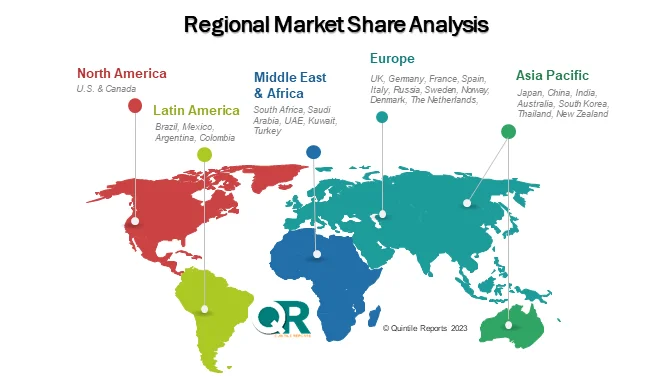
Regionally, Asia-Pacific dominates the market, driven by strong industrial activity and infrastructure investments. North America and Europe follow closely, supported by advanced manufacturing ecosystems and strict regulatory frameworks. Meanwhile, Latin America and the Middle East & Africa are emerging as promising markets due to increasing investments in mining and energy sectors.
Buy Now to Access: https://www.quintilereports.com/request-enquiry/1236-hydraulic-filter-market/
Leading players such as Parker Hannifin, Donaldson, Eaton, Bosch Rexroth, and HYDAC are focusing on innovation, sustainability, and digital integration to strengthen their market position. Recent developments include the launch of smart filter solutions and enhanced product databases for better maintenance support.
Looking ahead, the hydraulic filter market is expected to benefit from continued technological advancements, increased awareness of equipment maintenance, and the growing need for energy-efficient systems. Companies that prioritize innovation, customization, and digital transformation will be best positioned to capitalize on future opportunities.
Q1. What is a hydraulic filter and why is it important?
A: A hydraulic filter removes contaminants like dirt, metal particles, and water from hydraulic fluid. It is crucial for protecting system components, improving efficiency, and extending equipment lifespan.
Q2. What are the main types of hydraulic filters available in the market?
A: Key types include suction filters, pressure filters, return line filters, off-line filters, in-tank breather filters, and spin-on filters—each designed for specific system requirements.
Q3. Which industries are the largest consumers of hydraulic filters?
A: Major end-use industries include construction, mining, agriculture, oil & gas, manufacturing, aerospace, marine, and automotive sectors.
Q4. How does industrial automation influence hydraulic filter demand?
A: Automation increases reliance on precision machinery, which requires clean hydraulic fluid to operate efficiently—driving higher demand for advanced filtration systems.
Q5. What role does predictive maintenance play in this market?
A: Predictive maintenance uses smart filters with sensors to monitor fluid condition in real-time, reducing unexpected failures and lowering maintenance costs.
Q6. What materials are commonly used in hydraulic filter manufacturing?
A: Common materials include synthetic fibers, cellulose, microglass, stainless steel mesh, fiberglass, and plastic, depending on filtration needs.
Q7. What are the key challenges impacting market growth?
A: High production costs, raw material price fluctuations, supply chain disruptions, and strict environmental regulations are major challenges.
Q8. How are environmental regulations shaping the hydraulic filter market?
A: Regulations are pushing manufacturers to develop eco-friendly, energy-efficient, and recyclable filtration solutions with reduced environmental impact.
Q9. What is the future outlook for the hydraulic filter market?
A: The market is expected to grow steadily through 2035, driven by technological advancements, smart filtration adoption, and rising industrialization globally.
Q10. Who are the key players in the hydraulic filter market?
A: Leading companies include Parker Hannifin, Donaldson Company, Eaton Corporation, Bosch Rexroth, HYDAC, Pall Corporation, and Mahle GmbH.
Q11. What is the significance of aftermarket sales in this market?
A: Aftermarket sales are significant as filters require regular replacement, creating consistent demand beyond original equipment manufacturer (OEM) sales.
Q12. How does Asia-Pacific contribute to market growth?
A: Asia-Pacific leads due to rapid infrastructure development, industrial expansion, and increasing demand for construction and manufacturing equipment.
Our Latest Publication:
Hydraulic Filter Market 2026-2036
Commercial Drone Services Market Set to Soar Beyond $31 Billion by 2035

Adarsh
Business Strategy — Quintile Reports
Adarsh is a Business Strategy professional focused on transforming market insights into actionable growth plans. He supports strategic initiatives through market analysis, competitive intelligence, and data-driven decision-making to help drive long-term business success.
His core skills include strategic planning, market research, growth opportunity assessment, trend analysis, performance tracking, stakeholder communication, cross-functional collaboration, and critical problem-solving.