
The global eugenol market is entering a period of sustained expansion as industries increasingly adopt natural, plant-derived ingredients to meet changing consumer preferences and regulatory expectations.
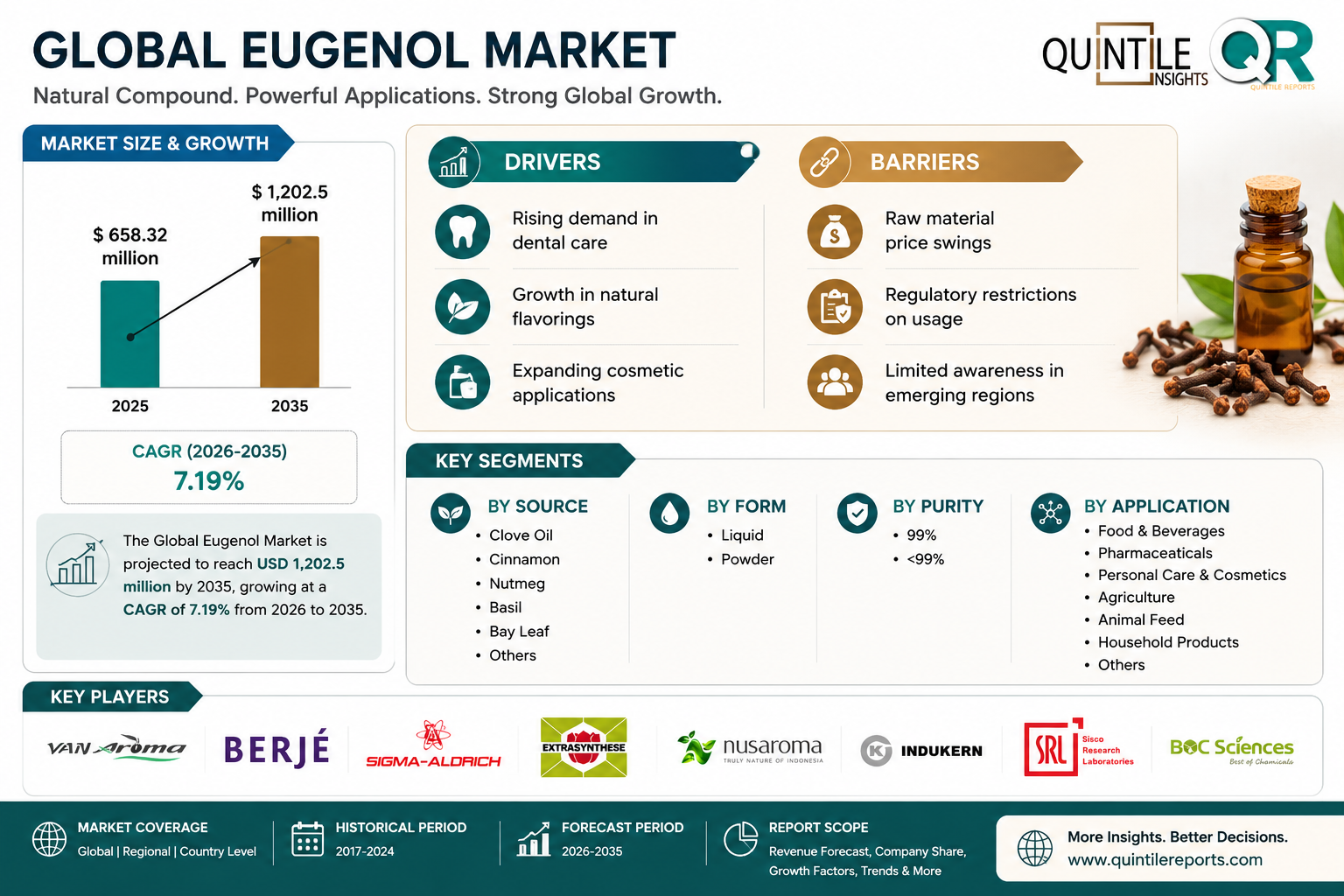
According to recent market insights, the global eugenol market was valued at approximately USD 658.32 million in 2025 and is forecast to reach USD 1.20 billion by 2035, growing at a CAGR of 7.19% during the forecast period.
Eugenol, a naturally occurring aromatic compound primarily extracted from clove oil, cinnamon, basil, bay leaves, and nutmeg, has emerged as a versatile ingredient with applications spanning pharmaceuticals, food and beverages, cosmetics, personal care, agriculture, and household products. Its unique combination of antimicrobial, antioxidant, anti-inflammatory, and analgesic properties positions it as a valuable component in industries seeking safer and more sustainable alternatives to synthetic chemicals.
Natural Ingredient Revolution Fuels Market Expansion
The growing global shift toward clean-label products is one of the most significant factors driving the eugenol market. Consumers today are increasingly scrutinizing ingredient lists and demanding transparency from manufacturers. This trend has accelerated the adoption of plant-based compounds across multiple industries.
Request Sample PDF Report: https://www.quintilereports.com/request-sample/1128-eugenol-market/
Eugenol benefits directly from this transformation. Derived from natural botanical sources, it aligns perfectly with consumer preferences for ingredients perceived as safe, sustainable, and environmentally responsible. Manufacturers in food processing, personal care, and healthcare sectors are incorporating eugenol into product formulations to strengthen natural product positioning and enhance brand appeal.
As awareness regarding synthetic preservatives and chemical additives continues to rise, the demand for naturally derived alternatives is expected to remain robust throughout the next decade.
Expanding Applications in Dental and Healthcare Industries
One of the most established applications of eugenol remains in dental care. For decades, dentists have utilized eugenol-based formulations in temporary fillings, root canal sealants, and dental cements due to their analgesic and antiseptic properties.
The increasing prevalence of oral health awareness worldwide is contributing significantly to market growth. Governments, healthcare organizations, and private dental providers are investing in oral hygiene campaigns that encourage preventive care and regular dental treatment.
As dental infrastructure expands in developing economies and advanced restorative procedures become more common globally, demand for eugenol-containing products is expected to strengthen. The compound’s ability to provide pain relief while supporting infection control makes it particularly valuable in clinical dental applications.
Researchers are also exploring new therapeutic applications for eugenol, including neuroprotective, antifungal, antioxidant, and anti-inflammatory uses. While regulatory approvals vary by region, ongoing scientific investigations continue to expand the compound’s commercial potential.
Food Preservation Industry Creates New Growth Opportunities
The food and beverage sector is becoming an increasingly important end-user of eugenol. Food manufacturers face growing pressure to reduce synthetic additives while maintaining product quality, safety, and shelf life.
Eugenol’s antimicrobial characteristics offer a compelling solution. The compound helps inhibit microbial growth and supports food preservation, making it attractive for active packaging technologies and natural preservative systems.
Discount Now: https://www.quintilereports.com/request-discount/1128-eugenol-market/
Innovations in food packaging are creating additional demand. Companies are developing smart packaging materials infused with natural antimicrobial compounds such as eugenol to extend shelf life and reduce food waste. As sustainability becomes a strategic priority for food producers, the adoption of natural preservation technologies is expected to accelerate.
Furthermore, eugenol’s aromatic profile makes it useful as a flavoring ingredient in beverages, confectionery products, and specialty food formulations, further broadening its market reach.
Cosmetics and Personal Care Sector Drives Product Innovation
The cosmetics and personal care industry represents another key growth avenue for eugenol manufacturers. Consumers increasingly seek products formulated with naturally sourced ingredients that provide both functional and sensory benefits.
Eugenol contributes fragrance, antimicrobial protection, and antioxidant activity to numerous personal care products, including soaps, creams, lotions, perfumes, and oral care solutions. Its botanical origin enables manufacturers to support natural branding strategies while enhancing product performance.
Premium beauty brands are especially focused on ingredient transparency and sustainability, trends that favor the continued adoption of plant-derived compounds. As consumers become more environmentally conscious, companies are reformulating products to eliminate controversial synthetic ingredients and embrace naturally sourced alternatives such as eugenol.
Supply Chain Dynamics Shape Competitive Landscape
While demand fundamentals remain strong, the eugenol market faces challenges related to raw material availability and supply chain stability.
Clove oil remains the dominant source of commercial eugenol production. As a result, market participants are heavily influenced by agricultural conditions affecting clove cultivation. Weather events, seasonal variations, geopolitical developments, and trade disruptions can all impact supply availability and pricing.
Indonesia and India continue to play critical roles in the global supply chain due to their significant clove production capabilities. Producers in these regions are investing in extraction technologies and quality improvement initiatives to strengthen competitiveness and meet growing international demand.
Supply chain diversification and sustainable sourcing practices are becoming strategic priorities for major manufacturers seeking to reduce risk and ensure long-term stability.
Regulatory Developments Influence Market Direction
Regulatory frameworks remain an important factor shaping market growth. While eugenol enjoys broad acceptance in many applications, authorities continue to monitor its use due to potential allergenic and sensitization concerns.
Several regions have established concentration limits for cosmetics, fragrances, and food products containing eugenol. These regulations aim to balance consumer safety with the benefits offered by natural ingredients.
In the United States, eugenol maintains Generally Recognized As Safe (GRAS) status for specific food applications, supporting its use across various food formulations. European regulatory agencies continue refining labeling requirements to improve consumer awareness regarding allergenic substances.
Recent regulatory updates concerning essential oils and fragrance ingredients have encouraged manufacturers to invest in transparency, traceability, and quality assurance programs. These initiatives are helping build consumer trust while ensuring compliance with evolving standards.
Regional Analysis Highlights Diverse Growth Patterns
North America currently maintains a strong position within the global eugenol market, driven by growing demand for natural food preservatives, oral healthcare products, and premium personal care formulations. Regulatory clarity and advanced research capabilities further support market development across the region.
Europe remains a major consumer of eugenol due to its emphasis on sustainability, clean-label products, and plant-based ingredients. Manufacturers throughout the region continue investing in traceable and environmentally responsible supply chains.
Buying Now: https://www.quintilereports.com/request-enquiry/1128-eugenol-market/
Asia-Pacific is expected to witness some of the fastest growth rates during the forecast period. Countries such as China, India, and Japan combine strong production capabilities with expanding domestic demand. Traditional medicine systems, food processing industries, and cosmetics manufacturing contribute significantly to regional consumption.
Latin America and the Middle East & Africa are also emerging as promising growth markets as awareness of natural ingredients continues to expand and consumer purchasing power improves.
Innovation and Technology Create Future Opportunities
Technological advancements are opening new possibilities for eugenol commercialization. Researchers are exploring encapsulation technologies, nano-formulations, and advanced delivery systems designed to improve stability, efficacy, and application versatility.
Nano-encapsulated eugenol formulations are attracting attention in pharmaceutical, dental, and food applications due to their enhanced performance characteristics. These innovations could help address challenges associated with volatility and controlled release.
Strategic partnerships between ingredient suppliers, research institutions, and consumer product manufacturers are accelerating innovation. Companies that successfully combine sustainability, scientific validation, and regulatory compliance are likely to gain a competitive advantage.
Outlook Through 2035
The future of the global eugenol market appears highly promising. Rising demand for natural ingredients, increasing oral healthcare awareness, expansion of clean-label food products, and continued innovation in personal care formulations are expected to support long-term growth.
Although challenges related to supply chain volatility and regulatory compliance remain, the market’s strong fundamentals position it for steady expansion over the coming decade.
As industries increasingly prioritize sustainability, transparency, and consumer safety, eugenol is expected to become an even more important ingredient across multiple sectors. Companies that invest in advanced extraction technologies, responsible sourcing practices, and innovative product development will be well-positioned to capitalize on emerging opportunities in this rapidly evolving market.
Q1. What is eugenol and why is it important?
A: Eugenol is a naturally occurring aromatic compound primarily extracted from clove oil, cinnamon, basil, and bay leaves. It is valued for its antimicrobial, antioxidant, anti-inflammatory, and analgesic properties, making it useful in food preservation, dental care, pharmaceuticals, and personal care products.
Q2. What is driving growth in the global eugenol industry?
A: Growth is being driven by rising consumer demand for natural ingredients, increasing use in dental applications, expanding adoption in food preservation, and growing interest in plant-based cosmetics and personal care products.
Q3. How large is the global eugenol market expected to become by 2035?
A: Industry projections indicate that the market could reach approximately USD 1.2 billion by 2035, supported by sustained demand across multiple end-use industries.
Q4. Which source accounts for the majority of commercial eugenol production?
A: Clove oil remains the primary commercial source due to its naturally high concentration of eugenol and widespread availability in major producing countries.
Q5. How is eugenol used in the healthcare sector?
A: It is commonly used in dental cements, temporary fillings, root canal sealants, oral care products, and research applications due to its antiseptic and pain-relieving properties.
Q6. Why is the food and beverage industry adopting eugenol?
A: Food manufacturers use it as a natural flavoring and preservative because its antimicrobial properties help extend shelf life while supporting clean-label product development.
Q7. What role does eugenol play in cosmetics and personal care products?
A: Eugenol contributes fragrance, antioxidant activity, and antimicrobial protection in products such as perfumes, soaps, lotions, creams, and oral care formulations.
Q8. Which region currently leads global demand?
A: North America remains a major market due to strong demand for natural ingredients in food, healthcare, and personal care products, supported by well-established regulatory frameworks.
Q9. Why is Asia-Pacific considered a high-growth region?
A: Asia-Pacific benefits from abundant raw material availability, strong clove production, expanding healthcare infrastructure, and increasing demand from food processing and personal care industries.
Q10. What challenges could affect future industry growth?
A: Key challenges include raw material price volatility, seasonal fluctuations in clove production, regulatory restrictions, and concerns regarding allergenic reactions at higher concentrations.
Q11. Are there regulatory restrictions on eugenol usage?
A: Yes. Various countries regulate concentration levels in food, cosmetics, and fragrance products to ensure consumer safety and minimize sensitization risks.
Q12. What technological innovations are shaping the industry?
A: Advances such as nano-encapsulation, controlled-release delivery systems, and enhanced extraction technologies are improving stability, performance, and application versatility.
Q13. Who are the major companies operating in this sector?
A: Leading participants include Van Aroma, Berje Inc., Sigma-Aldrich Co. LLC, Extrasynthese, Nusaroma Indonesia Essential Oil, Indukern, Merck KGaA, Prinova Group LLC, and Vallabh Industries.
Q14. How does sustainability influence industry development?
A: Sustainability is becoming a key competitive factor, with manufacturers focusing on responsible sourcing, traceability, environmentally friendly extraction methods, and reduced supply chain emissions.
Q15. What opportunities are expected to emerge through 2035?
A: Opportunities include growth in natural preservatives, functional food ingredients, advanced dental materials, clean-label cosmetics, and innovative pharmaceutical applications utilizing plant-derived compounds.
Our Latest News:
Eugenol Market (2026 – 2035)
Truck Refrigeration Unit Market Gains Momentum as Smart Cold-Chain Logistics Transform Global Transportation

Adarsh
Business Strategy — Quintile Reports
Adarsh is a Business Strategy professional focused on transforming market insights into actionable growth plans. He supports strategic initiatives through market analysis, competitive intelligence, and data-driven decision-making to help drive long-term business success.
His core skills include strategic planning, market research, growth opportunity assessment, trend analysis, performance tracking, stakeholder communication, cross-functional collaboration, and critical problem-solving.