
The global sesame oil market is entering a transformative growth phase as consumers increasingly prioritize healthier lifestyles, natural ingredients, and functional food products.
Once considered a staple ingredient primarily within Asian households, sesame oil has evolved into a globally recognized premium edible oil with applications spanning food processing, nutraceuticals, pharmaceuticals, cosmetics, and personal care products.
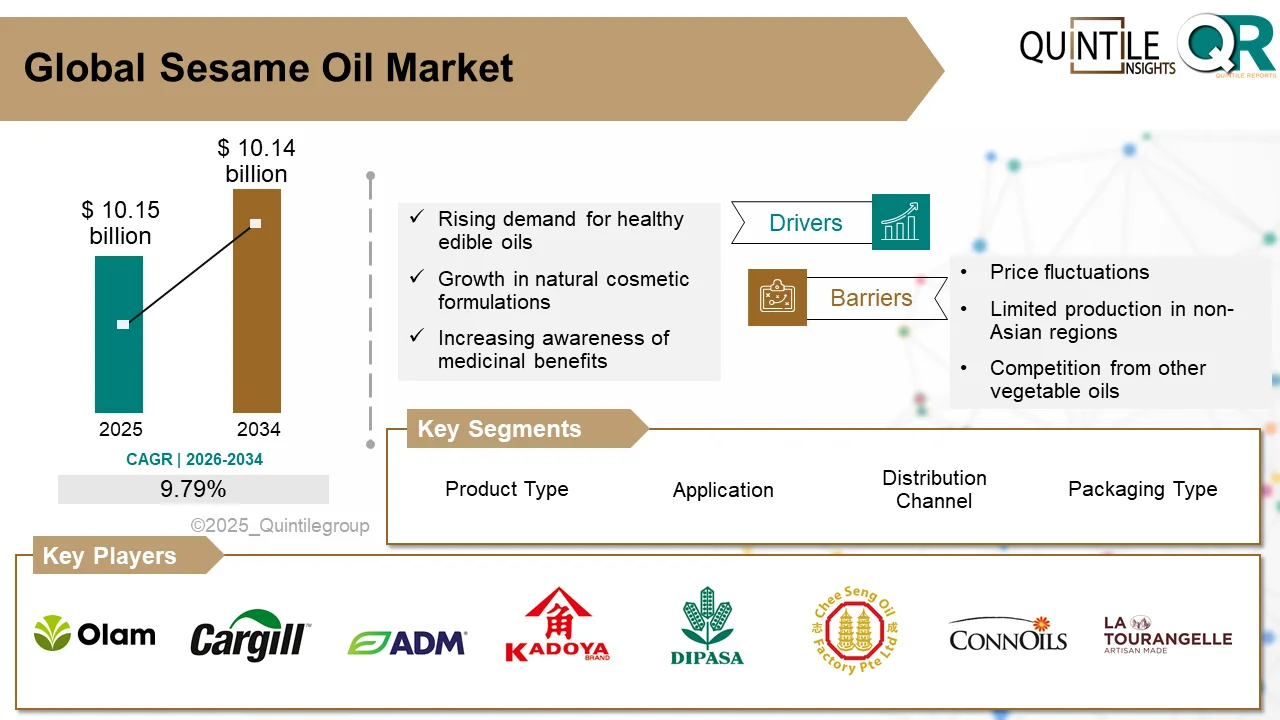
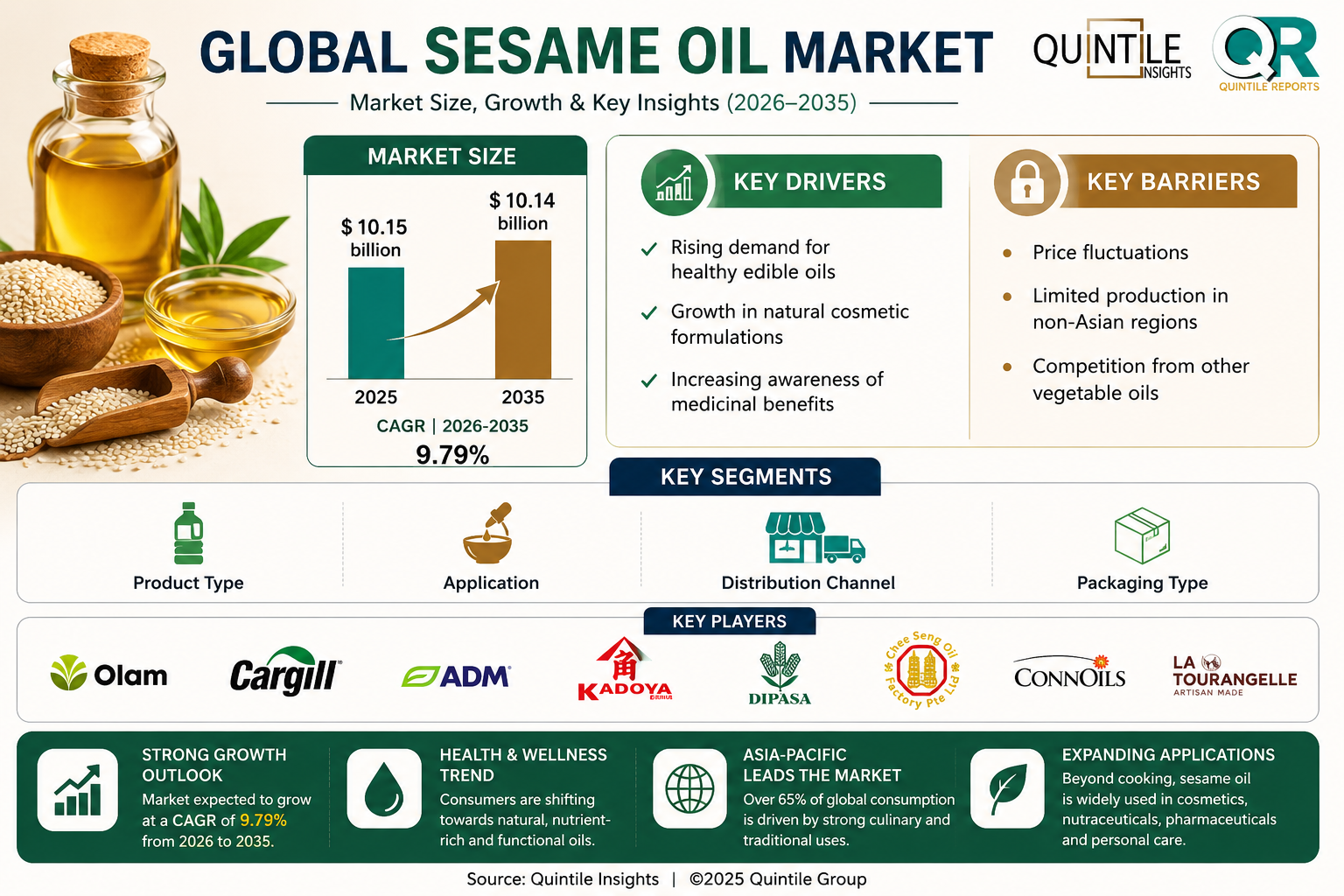
According to recent industry analysis, the global sesame oil market was valued at approximately USD 10.15 billion in 2025 and is projected to maintain significant momentum through 2035. The sector’s growth trajectory is being fueled by changing dietary habits, expanding interest in plant-based nutrition, and growing awareness regarding the therapeutic properties of sesame-derived products.
As the wellness economy continues to expand worldwide, sesame oil is increasingly being viewed not only as a cooking ingredient but also as a functional product capable of delivering nutritional, cosmetic, and medicinal benefits.
Request Sample PDF Report: https://www.quintilereports.com/request-sample/1215-sesame-oil-market/
Ancient Ingredient Meets Modern Consumer Preferences
Sesame is one of the oldest cultivated oilseed crops in human history. The oil extracted from sesame seeds has been used for thousands of years across Asia, Africa, and the Middle East for culinary, medicinal, and cosmetic purposes.
Today, scientific research highlighting the oil’s nutritional composition is helping to validate many of its traditional uses. Sesame oil contains a high concentration of unsaturated fatty acids, vitamin E, and naturally occurring lignans such as sesamin and sesamol. These compounds are associated with antioxidant, anti-inflammatory, and antimicrobial properties, making sesame oil increasingly attractive to health-conscious consumers.
The convergence of traditional wellness practices with modern nutritional science is creating new opportunities for manufacturers seeking to develop premium products aligned with consumer preferences for natural and minimally processed ingredients.
Health-Conscious Consumption Drives Market Expansion
One of the primary factors supporting market growth is the rising global demand for healthier alternatives to conventional cooking oils.
Consumers are becoming increasingly selective about the ingredients they incorporate into their daily diets. Concerns surrounding cardiovascular health, obesity, cholesterol management, and overall wellness have encouraged many households to explore alternatives perceived as healthier and more functional.
Sesame oil’s reputation as a heart-friendly cooking oil has positioned it favorably among consumers seeking nutritional benefits without sacrificing flavor. The oil’s rich antioxidant profile further contributes to its appeal, particularly among individuals interested in preventative health and long-term wellness.
As awareness continues to spread through social media, health influencers, nutrition experts, and wellness publications, market penetration is expected to improve significantly in both developed and emerging economies.
Asian Cuisine Continues to Influence Global Food Markets
The globalization of food culture has become another major catalyst for sesame oil consumption.
Asian cuisine has experienced remarkable growth across North America, Europe, Latin America, and parts of the Middle East. Restaurants specializing in Chinese, Japanese, Korean, Thai, Vietnamese, and other Asian culinary traditions have introduced millions of consumers to sesame oil’s distinctive flavor profile.
Discount Now: https://www.quintilereports.com/request-discount/1215-sesame-oil-market/
Whether used in stir-fries, marinades, salad dressings, noodles, sauces, or specialty dishes, sesame oil plays an essential role in authentic Asian cooking.
The expansion of international foodservice chains, online recipe platforms, cooking shows, and food delivery services has further increased consumer familiarity with sesame oil. Consequently, many households that previously had limited exposure to the ingredient are now incorporating it into their everyday cooking routines.
This culinary diversification is expected to remain a long-term growth driver for the industry.
Growing Popularity of Functional Foods and Nutraceuticals
Beyond culinary applications, sesame oil is finding increasing acceptance within the rapidly expanding functional food and nutraceutical sectors.
Consumers today are seeking foods and supplements that offer benefits beyond basic nutrition. Ingredients associated with anti-inflammatory properties, immune system support, cardiovascular health, and metabolic wellness are experiencing heightened demand.
Sesamin and sesamol, two of sesame oil’s most notable bioactive compounds, are attracting significant attention from supplement manufacturers and health product developers.
As research into plant-based bioactive ingredients continues to advance, sesame oil and sesame-derived compounds are likely to become more prominent within preventive healthcare strategies and wellness-focused product portfolios.
This trend presents substantial opportunities for innovation across dietary supplements, fortified foods, and specialized nutrition products.
Cosmetics and Personal Care Industry Creates New Revenue Streams
The beauty and personal care industry represents another important growth avenue for sesame oil producers.
Consumers increasingly prefer skincare and haircare products formulated with natural, plant-based ingredients. Sesame oil’s moisturizing, antioxidant, and nourishing properties make it particularly suitable for a variety of cosmetic applications.
Manufacturers are incorporating sesame oil into facial serums, body lotions, massage oils, shampoos, conditioners, soaps, and Ayurvedic wellness products. The growing popularity of clean-label beauty products is accelerating adoption across premium cosmetic categories.
Natural beauty trends are particularly strong in Europe, North America, Japan, South Korea, and India, where consumers are demonstrating willingness to pay premium prices for products perceived as safer and more sustainable.
As demand for botanical ingredients continues to rise, sesame oil suppliers are expected to benefit from increasing partnerships with cosmetic and personal care brands.
Premium and Cold-Pressed Oils Gain Consumer Attention
Premiumization remains a defining trend across the edible oils industry.
Consumers are showing growing interest in cold-pressed, organic, single-origin, and minimally processed oils. These products are often perceived as retaining more nutrients and offering superior flavor profiles compared to highly refined alternatives.
Cold-pressed sesame oil has emerged as one of the fastest-growing product categories within the broader market. Manufacturers are responding by expanding premium product portfolios, introducing eco-friendly packaging solutions, and emphasizing transparency regarding sourcing and production methods.
Premium positioning not only enhances brand differentiation but also allows producers to achieve higher profit margins, supporting long-term value creation within the industry.
Buying Now: https://www.quintilereports.com/request-enquiry/1215-sesame-oil-market/
Regional Market Outlook
Asia-Pacific Maintains Leadership
Asia-Pacific remains the largest and most established sesame oil market globally. Countries such as China, India, Japan, South Korea, and several Southeast Asian nations continue to drive substantial consumption.
Deep cultural integration of sesame oil in traditional cooking, wellness practices, and personal care applications ensures consistent demand across the region.
North America Records Strong Growth
North America is emerging as one of the fastest-growing regional markets. Increased adoption of Asian cuisine, growing health awareness, and expanding demand for organic products are supporting sales growth.
Specialty food retailers, wellness-focused brands, and e-commerce platforms are helping expand product availability across the region.
Europe Embraces Natural Wellness
European consumers continue to embrace clean-label food products and natural beauty solutions. Countries including Germany, the United Kingdom, and France are witnessing growing demand for organic and cold-pressed sesame oils.
Stringent quality standards and regulatory frameworks are also encouraging manufacturers to invest in premium product development.
Latin America and Middle East & Africa Show Potential
Although still developing, markets across Latin America and the Middle East & Africa present attractive long-term opportunities. Increasing health awareness, urbanization, and changing dietary preferences are expected to support future demand growth.
Challenges Remain Despite Positive Outlook
While market prospects remain highly favorable, several challenges require attention.
Raw material price volatility continues to impact profitability. Sesame cultivation remains vulnerable to weather conditions, climate variability, and limited agricultural mechanization in key producing regions.
Additionally, consumer awareness remains relatively limited in certain Western markets where sesame oil still represents a niche category compared to olive, sunflower, and canola oils.
Regulatory requirements related to allergen labeling have also increased compliance obligations for manufacturers operating in international markets.
Addressing these challenges will require strategic investments in consumer education, supply chain resilience, and product innovation.
Competitive Landscape Intensifies
The sesame oil market remains moderately fragmented, with competition centered on quality, sourcing, extraction techniques, certification standards, and brand reputation.
Leading companies continue to invest in premium product offerings, sustainable sourcing initiatives, and innovative packaging solutions. Organic certification, pharmaceutical-grade processing, and traceability programs are becoming important competitive differentiators.
Recent product launches from major consumer brands demonstrate growing confidence in the category’s long-term potential and reinforce expectations for continued market expansion.
Looking Ahead
The future of the global sesame oil market appears exceptionally promising as consumer priorities increasingly align with the product’s nutritional, functional, and natural attributes.
Growing interest in preventive healthcare, clean-label products, plant-based nutrition, and traditional wellness practices is creating a favorable environment for sustained industry growth. At the same time, the expansion of global food cultures and premium cooking oil segments continues to broaden market opportunities.
For manufacturers, retailers, investors, and healthcare stakeholders, sesame oil represents a compelling category positioned at the intersection of health, nutrition, beauty, and sustainability.
As innovation accelerates and awareness spreads globally, sesame oil is expected to strengthen its role as one of the most versatile and valuable natural oils in the modern marketplace.
1. What is driving the growth of the global sesame oil market?
The market is primarily driven by increasing consumer demand for healthier edible oils, expanding Asian cuisine adoption, growth in natural cosmetics, and rising interest in functional foods and nutraceuticals.
2. Which regions dominate sesame oil consumption?
Asia-Pacific remains the largest consumer market, accounting for the majority of global consumption, followed by growing demand in North America and Europe.
3. Why is cold-pressed sesame oil gaining popularity?
Consumers perceive cold-pressed oils as more natural and nutrient-rich because they undergo minimal processing while retaining flavor and beneficial compounds.
4. What role does sesame oil play in the cosmetics industry?
Sesame oil is widely used in skincare, haircare, massage oils, and Ayurvedic formulations due to its moisturizing and antioxidant properties.
5. What challenges could impact market growth?
Key challenges include sesame seed price volatility, allergen labeling regulations, limited awareness in some regions, and supply chain disruptions.
6. Which product segment is expected to grow fastest?
Cold-pressed, organic, and premium sesame oil variants are expected to experience the strongest growth due to rising consumer preference for natural and clean-label products.
7. How is the nutraceutical industry influencing sesame oil demand?
Sesame oil contains bioactive compounds such as sesamin and sesamol, which are increasingly incorporated into supplements targeting cardiovascular health, inflammation, and metabolic wellness.
8. What opportunities exist for market participants through 2035?
Opportunities include premium product development, expansion into emerging markets, sustainable sourcing initiatives, e-commerce growth, and innovation in functional food applications.
Our Latest Publication
Sesame Oil Market (2026 – 2035)
Recreational Vehicles Market Accelerates Toward a New Era of Mobile Travel and Outdoor Living

Adarsh
Business Strategy — Quintile Reports
Adarsh is a Business Strategy professional focused on transforming market insights into actionable growth plans. He supports strategic initiatives through market analysis, competitive intelligence, and data-driven decision-making to help drive long-term business success.
His core skills include strategic planning, market research, growth opportunity assessment, trend analysis, performance tracking, stakeholder communication, cross-functional collaboration, and critical problem-solving.