
The global meatainers market is entering a transformative phase as food safety regulations, cold chain expansion, and increasing international meat trade continue to reshape packaging requirements across the meat processing industry.
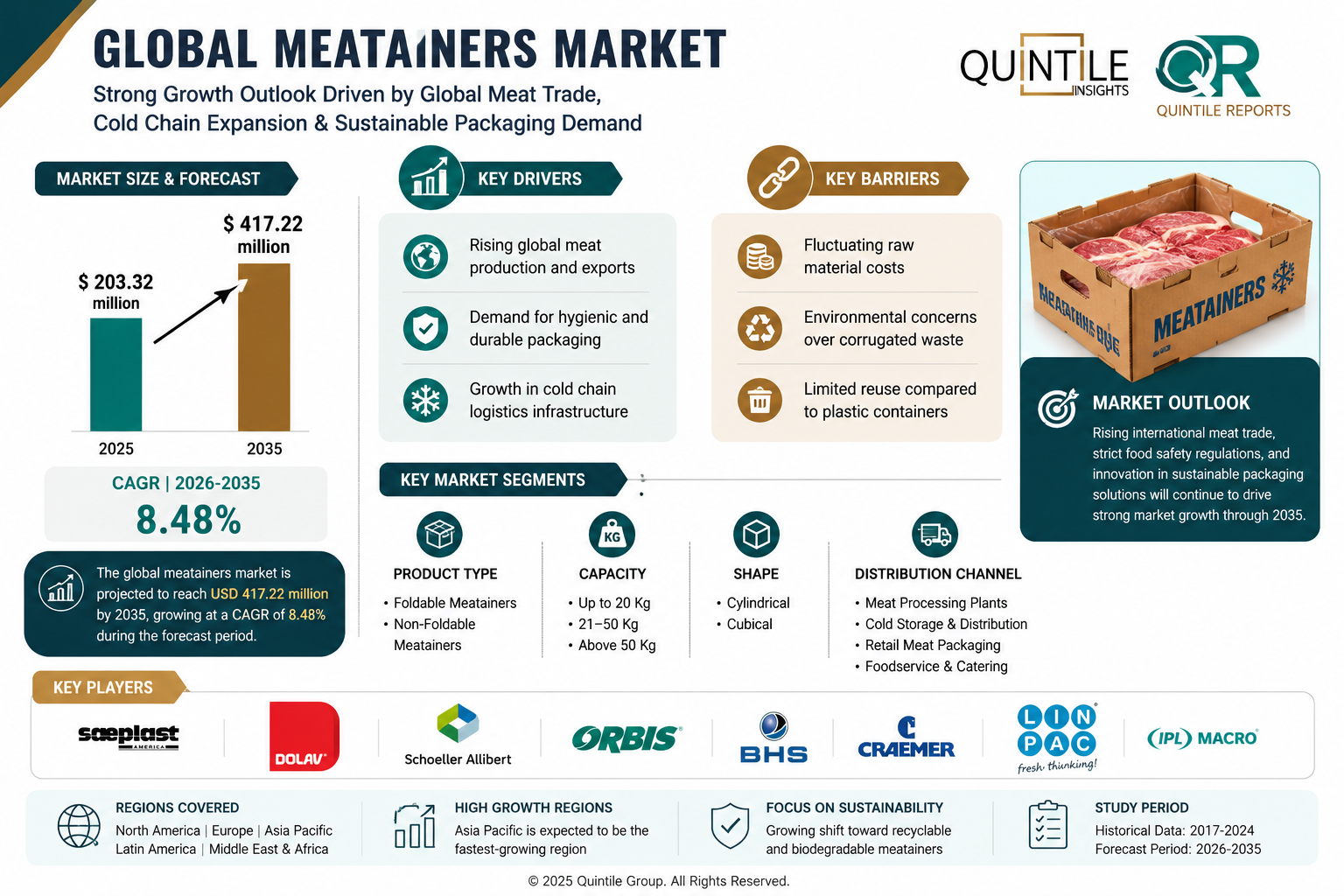
According to recent industry analysis, the market was valued at USD 203.32 million in 2025 and is projected to reach USD 417.22 million by 2035, expanding at a robust CAGR of 8.48% during the forecast period.
Meatainers have become an indispensable component of modern meat logistics, serving as specialized packaging containers designed specifically for transporting and storing fresh, chilled, and frozen meat products. As consumer expectations for food safety rise and global supply chains become increasingly interconnected, demand for durable, hygienic, and environmentally responsible packaging solutions is accelerating across developed and emerging economies alike.
Global Meat Industry Fuels Packaging Demand
The rapid expansion of the global meat industry remains one of the most influential factors supporting market growth. International trade in beef, pork, poultry, and processed meat products has grown significantly over the past decade, requiring advanced packaging systems capable of preserving product integrity throughout extended transportation cycles.
Request Sample PDF Report: https://www.quintilereports.com/request-sample/1263-meatainers-market/
Meatainers are specifically engineered to address these challenges. Their moisture-resistant construction, leak-proof designs, and food-grade materials help maintain product quality while minimizing contamination risks. These features make them particularly valuable for exporters shipping products across continents where transit durations may extend several days or even weeks.
As meat consumption continues to rise in developing nations and premium meat exports increase worldwide, packaging suppliers are witnessing greater demand for solutions that meet strict transportation and hygiene requirements.
Food Safety Regulations Driving Adoption
Food safety remains a top priority for governments, regulators, retailers, and consumers. Regulatory agencies across North America, Europe, and Asia-Pacific have introduced increasingly stringent requirements for meat handling, storage, and transportation.
These regulations require packaging systems capable of preventing contamination, reducing leakage, and ensuring safe product handling throughout the supply chain. Meatainers have emerged as a preferred packaging format because they are designed to comply with food-grade standards while supporting temperature-controlled logistics.
The United States Department of Agriculture (USDA), European food safety authorities, and various international regulatory organizations continue emphasizing hygienic packaging solutions. Consequently, meat processors and distributors are investing heavily in certified meatainers that support compliance while improving operational efficiency.
The growing emphasis on traceability and quality assurance is further strengthening the market, as packaging providers integrate labeling, tracking, and identification capabilities into their products.
Expansion of Cold Chain Infrastructure Creates Opportunities
Global investment in cold chain logistics is creating significant opportunities for meatainer manufacturers. The expansion of refrigerated warehouses, temperature-controlled transportation fleets, and automated distribution centers is enabling broader distribution of meat products across domestic and international markets.
Cold chain systems require packaging that can withstand moisture, low temperatures, stacking pressure, and prolonged storage conditions. Meatainers provide these essential characteristics, making them a critical element of refrigerated logistics operations.
Special Discount: https://www.quintilereports.com/request-discount/1263-meatainers-market/
Emerging economies, particularly in Asia-Pacific and Latin America, are investing aggressively in cold storage infrastructure to support growing urban populations and changing dietary preferences. As these logistics networks mature, demand for specialized meat packaging is expected to increase substantially.
The rise of e-commerce grocery platforms and direct-to-consumer meat delivery services has further intensified the need for reliable cold-chain packaging solutions that ensure freshness from processing facilities to consumers’ homes.
Sustainability Reshaping Packaging Innovation
Environmental sustainability is rapidly becoming a defining trend within the meatainers market. While traditional packaging formats often relied on wax-coated or plastic-lined materials, growing pressure to reduce packaging waste is encouraging innovation in recyclable and biodegradable alternatives.
Packaging manufacturers are increasingly developing paper-based meatainers equipped with advanced water-based coatings that provide moisture resistance without compromising recyclability. These innovations align with corporate sustainability goals and evolving regulatory frameworks aimed at reducing plastic waste.
European markets have emerged as leaders in sustainable packaging adoption. Retailers and food processors throughout Germany, France, and the Netherlands are actively seeking environmentally friendly meat packaging solutions that comply with both food safety requirements and sustainability mandates.
This shift is creating new competitive opportunities for companies capable of delivering eco-friendly products without sacrificing performance, durability, or cost-effectiveness.
Quick Service Restaurants and Retail Growth Supporting Market Expansion
The rapid growth of quick-service restaurants (QSRs), supermarkets, hypermarkets, and organized retail chains is contributing significantly to meatainer demand. These businesses rely on efficient and standardized packaging systems to manage high volumes of meat products while maintaining strict quality standards.
Meatainers facilitate safe handling, efficient stacking, and streamlined transportation within complex food distribution networks. Their ability to protect products during refrigerated storage and transport makes them particularly valuable for large-scale retail operations.
The expansion of foodservice chains across Asia-Pacific, the Middle East, and Latin America is expected to generate substantial opportunities for packaging manufacturers over the coming decade.
Additionally, consumer preferences for packaged and ready-to-cook meat products are increasing the need for reliable transport and storage solutions throughout the supply chain.
Challenges Impacting Market Development
Despite strong growth prospects, the meatainers market faces several challenges that industry participants must address.
Buying Now: https://www.quintilereports.com/request-enquiry/1263-meatainers-market/
One significant concern involves recyclability limitations associated with certain coating materials. While many meatainers are manufactured from paper-based materials, wax and plastic coatings can complicate recycling processes and increase disposal costs.
Competition from alternative packaging formats also presents a challenge. Reusable plastic containers, insulated crates, and thermoformed packaging solutions offer advantages in specific applications, creating competitive pressure within the market.
Furthermore, transportation damage remains a concern. Packaging failures resulting from excessive moisture exposure, heavy loads, or improper handling can lead to product loss and contamination risks. As a result, manufacturers must continually improve packaging strength and durability.
Compliance with varying international food packaging standards adds another layer of complexity. Manufacturers serving global markets often need to adapt products to meet region-specific regulations, increasing production and certification costs.
Regional Market Outlook
North America Maintains Market Leadership
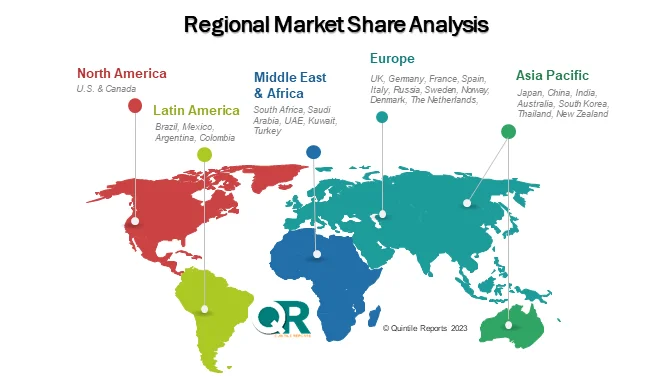
North America currently represents the largest regional market, supported by extensive meat processing operations and strong export activity. The United States and Canada possess highly developed cold-chain networks and strict food safety regulations, creating consistent demand for advanced packaging solutions.
Growing exports to Asia and the Middle East continue to drive investment in high-performance meatainers capable of maintaining product quality during long-distance transportation.
Europe Emphasizes Sustainable Packaging
Europe remains a major growth market due to its focus on sustainability and environmental responsibility. Regulatory initiatives aimed at reducing plastic waste are encouraging widespread adoption of recyclable and biodegradable packaging alternatives.
Countries including Germany, France, and the Netherlands are investing heavily in innovative packaging technologies that balance environmental performance with food safety requirements.
Asia-Pacific Emerges as Fastest-Growing Region
Asia-Pacific is expected to witness the highest growth rate during the forecast period. Rising disposable incomes, urbanization, and increasing meat consumption are fueling demand across China, India, Southeast Asia, Australia, and New Zealand.
Growing meat exports from Australia and New Zealand, combined with expanding domestic meat processing industries throughout Asia, are creating substantial opportunities for packaging suppliers.
Latin America and Middle East Show Promising Potential
Brazil and Argentina continue to strengthen their positions as major meat exporters, generating increasing demand for export-grade packaging solutions. Meanwhile, Gulf nations are expanding meat imports, driving adoption of temperature-resistant and leak-proof packaging systems.
Although infrastructure challenges remain in parts of Africa, growing awareness of food safety and logistics modernization is expected to support gradual market expansion.
Competitive Landscape
The competitive environment includes a combination of global packaging leaders, regional manufacturers, and specialized material suppliers. Companies are increasingly differentiating themselves through innovation, sustainability initiatives, and customer-focused solutions.
Several industry participants are investing in advanced coating technologies, recyclable materials, and customized packaging designs that align with modern cold-chain requirements.
Strategic partnerships between packaging providers, meat processors, and logistics companies are becoming increasingly important. These collaborations enable the development of tailored solutions designed to improve operational efficiency, regulatory compliance, and environmental performance.
Recent industry developments highlight this trend. In 2025, Schoeller Allibert partnered with Tetra Pak to introduce transport crates manufactured using recycled beverage carton materials. Earlier, Saeplast Americas launched the PE DMPC1450 meat log container, specifically designed to improve handling efficiency within meat processing facilities.
Future Outlook
The outlook for the meatainers market remains highly positive as food safety concerns, sustainability objectives, and global meat trade continue to evolve. Demand for advanced packaging solutions capable of supporting modern cold-chain logistics is expected to increase steadily throughout the forecast period.
Companies that prioritize recyclable materials, innovative barrier technologies, and customized customer solutions are likely to gain competitive advantages in the years ahead. Meanwhile, continued investments in cold storage infrastructure and international food distribution networks will further strengthen long-term growth opportunities.
As global meat supply chains become increasingly sophisticated, meatainers will play a critical role in ensuring product quality, regulatory compliance, and sustainable logistics performance, positioning the market for sustained expansion through 2035.
Q1. What is driving the growth of the global meatainers market?
The market is primarily driven by increasing global meat exports, stricter food safety regulations, expansion of cold chain logistics, and rising demand for sustainable food packaging solutions.
Q2. What market size is expected by 2035?
The global meatainers market is forecast to reach USD 417.22 million by 2035 from USD 203.32 million in 2025.
Q3. What is the projected CAGR during 2026-2035?
The market is expected to register a CAGR of 8.48% during the forecast period.
Q4. Which material type segment is gaining the most attention?
Corrugated cardboard meatainers with recyclable moisture-resistant coatings are gaining significant traction due to sustainability initiatives.
Q5. Which region currently dominates the market?
North America leads the market due to its large meat processing industry, strong export volumes, and advanced cold-chain infrastructure.
Q6. Why are sustainable meatainers becoming important?
Environmental regulations and corporate sustainability goals are pushing companies toward recyclable and biodegradable packaging alternatives.
Q7. What challenges are impacting market growth?
Key challenges include recyclability issues with coated packaging, competition from alternative packaging formats, and varying international compliance standards.
Q8. Which end-use sector generates the highest demand?
Meat processing plants and cold storage distribution facilities account for the largest share of meatainer consumption globally.
Our Latest Publication:
Meatainers Market 2026-2036
Autonomous Firefighting Drones Market to Reach USD 13.8 Billion by 2035 with AI Innovation

Adarsh
Business Strategy — Quintile Reports
Adarsh is a Business Strategy professional focused on transforming market insights into actionable growth plans. He supports strategic initiatives through market analysis, competitive intelligence, and data-driven decision-making to help drive long-term business success.
His core skills include strategic planning, market research, growth opportunity assessment, trend analysis, performance tracking, stakeholder communication, cross-functional collaboration, and critical problem-solving.