
The global Superconductor Motors Market is entering a transformative phase, fueled by rapid advancements in electrification, sustainability initiatives, and next-generation transportation systems.
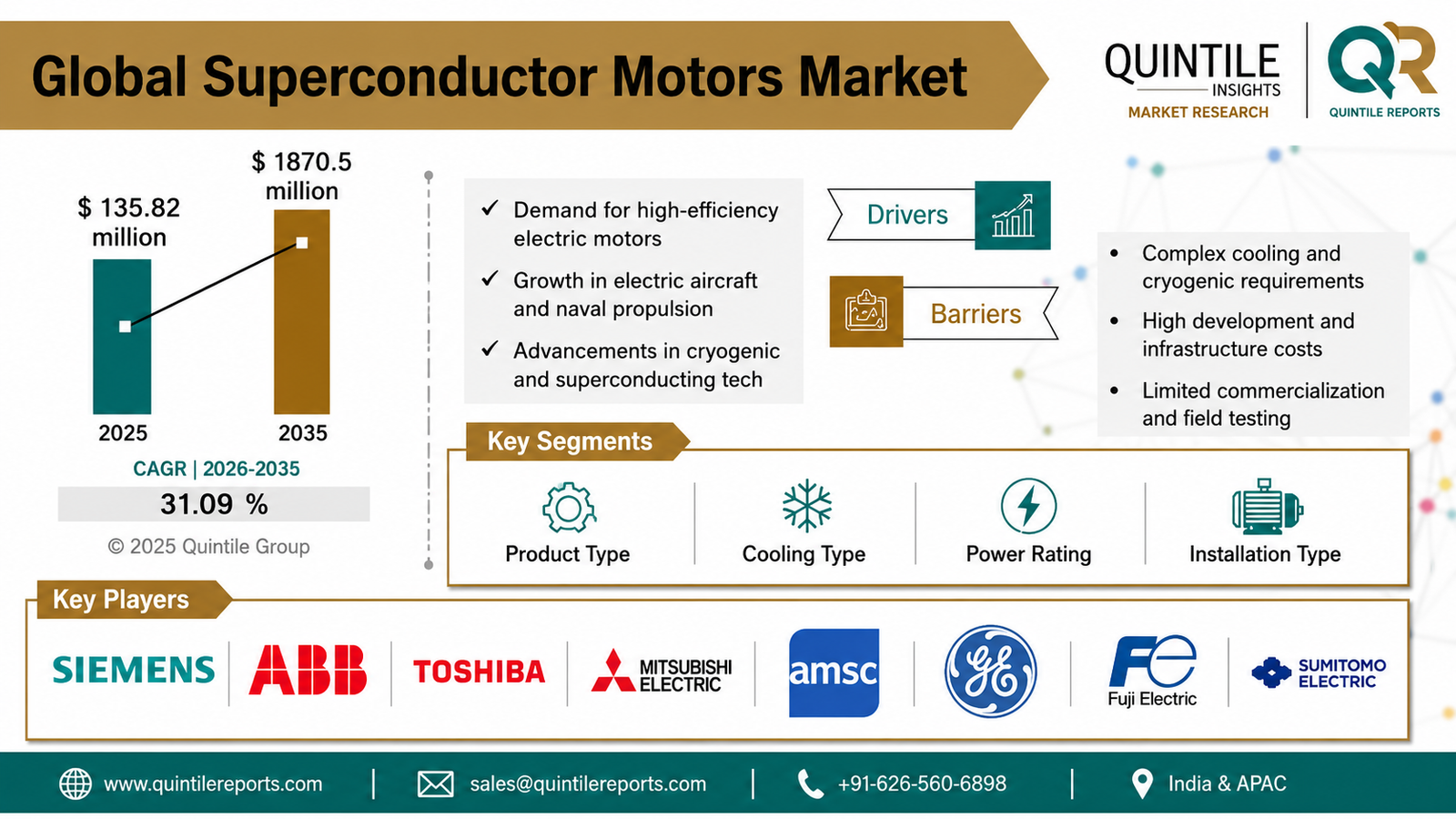
According to recent industry analysis, the market was valued at USD 135.82 million in 2025 and is projected to reach an impressive USD 1,870.5 million by 2035, expanding at a remarkable CAGR of 31.09% during the forecast period.
This extraordinary growth trajectory reflects the increasing demand for highly efficient motor technologies capable of delivering superior power density, reduced energy losses, and enhanced operational performance. As industries worldwide pursue carbon neutrality and energy optimization goals, superconductor motors are emerging as a critical technology enabling the next generation of industrial, transportation, and defense applications.
Understanding the Promise of Superconductor Motors
Superconductor motors represent a significant leap forward in electric motor technology. Unlike conventional motors that experience electrical resistance and energy loss during operation, superconducting motors utilize specialized superconducting materials that can conduct electricity with near-zero resistance under controlled temperature conditions.
The result is a motor system capable of delivering significantly greater torque and power output while occupying substantially less space. This combination of efficiency, compactness, and performance is creating new opportunities across sectors where traditional motor technologies face limitations.
Industries such as aerospace, naval propulsion, renewable energy, transportation, manufacturing, and utilities are increasingly evaluating superconducting motor systems as viable solutions for future infrastructure and mobility projects.
Request Sample PDF Report: https://www.quintilereports.com/request-sample/1262-superconductor-motors-market/
Global Electrification Trends Driving Market Expansion
One of the strongest growth drivers for the superconductor motors market is the accelerating global shift toward electrification. Governments, corporations, and technology developers are investing heavily in electric mobility solutions aimed at reducing carbon emissions and dependence on fossil fuels.
Electric aircraft development programs, high-speed rail networks, electric ships, and advanced industrial machinery all require motor technologies capable of delivering exceptional efficiency and performance. Superconductor motors meet these requirements by providing higher power output with lower energy consumption compared to conventional alternatives.
As nations continue implementing climate-focused policies and sustainability targets, the demand for advanced motor technologies is expected to increase substantially throughout the coming decade.
Aerospace and Defense Applications Creating New Opportunities
The aerospace and defense sectors represent some of the most promising opportunities for superconductor motor adoption. Aircraft manufacturers are exploring electric and hybrid-electric propulsion systems that can significantly reduce fuel consumption and environmental impact.
Superconducting motors offer unique advantages for aviation because they combine lightweight construction with high power density. These characteristics are particularly valuable in aircraft applications where every kilogram saved contributes to improved operational efficiency.
Special Discount: https://www.quintilereports.com/request-discount/1262-superconductor-motors-market/
Defense organizations are also investing in superconducting technologies for naval propulsion systems, unmanned platforms, and advanced energy management solutions. Several government-funded research initiatives are already supporting prototype development and field testing programs designed to accelerate commercialization.
The growing strategic importance of energy-efficient defense technologies is expected to remain a key contributor to market growth over the forecast period.
Renewable Energy Integration Expands Market Potential
The renewable energy sector is becoming another major catalyst for market expansion. Wind energy developers, grid operators, and power generation companies are actively seeking technologies that can improve efficiency and reliability while supporting larger-scale energy production.
Superconductor motors can enhance the performance of wind turbines by increasing power density and reducing system losses. Their ability to handle higher loads within a compact footprint makes them particularly attractive for offshore wind installations where space optimization and operational reliability are critical considerations.
In addition, superconducting technologies are increasingly being explored for smart grid applications, energy storage systems, and advanced power transmission infrastructure.
As renewable energy investments continue rising globally, demand for innovative motor technologies is expected to follow a similar trajectory.
High-Temperature Superconductors Transform Commercial Viability
Historically, one of the primary barriers to widespread adoption of superconducting motor technology has been the complexity and cost associated with cryogenic cooling systems.
Recent advances in High-Temperature Superconductors (HTS), however, are beginning to change this dynamic. HTS materials can operate at comparatively higher temperatures than traditional superconductors, reducing cooling requirements and simplifying system design.
Buying Now: https://www.quintilereports.com/request-enquiry/1262-superconductor-motors-market/
These technological breakthroughs are helping improve the commercial feasibility of superconducting motors across multiple industries. Lower cooling costs, enhanced reliability, and improved operational flexibility are encouraging manufacturers and end users to consider deployment on a larger scale.
Industry experts believe continued innovation in HTS materials will be a major factor influencing market growth over the next decade.
Challenges That Continue to Influence Market Development
Despite its impressive growth outlook, the superconductor motors market still faces several challenges that could affect adoption rates.
The high cost of superconducting materials remains one of the most significant barriers. Specialized wires, advanced cooling systems, and precision manufacturing processes contribute to higher upfront investment requirements compared to conventional motor technologies.
Operational complexity also presents challenges. Maintaining optimal temperature conditions requires sophisticated monitoring and cooling infrastructure. Organizations without specialized technical expertise may encounter difficulties during deployment and maintenance.
Additionally, large-scale commercialization remains relatively limited. While pilot projects and demonstration programs have proven the technology’s capabilities, broader industrial implementation is still in the early stages.
Supply chain constraints further impact market development. The number of manufacturers producing superconducting components remains relatively small, creating potential risks related to availability, pricing, and lead times.
Regional Landscape Highlights Emerging Growth Centers
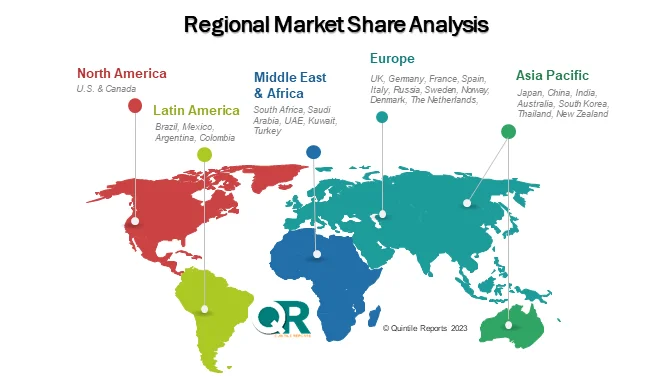
North America continues to maintain a leadership position in research, innovation, and early-stage deployment. The United States remains particularly active through defense, aerospace, and energy-sector investments supporting advanced motor technologies.
Europe is strengthening its position through aggressive sustainability initiatives and renewable energy programs. Countries including Germany, France, and the United Kingdom are supporting projects focused on electrified transportation, smart infrastructure, and industrial decarbonization.
Meanwhile, Asia-Pacific is rapidly emerging as a center for commercialization and manufacturing. Japan has demonstrated significant progress through successful testing of superconducting systems in transportation and industrial environments. China and South Korea are also increasing investments in domestic production capabilities and strategic research programs.
Latin America and the Middle East are gradually exploring opportunities associated with superconducting technologies, particularly in energy infrastructure modernization and future mobility initiatives.
Japan Leads Global Demonstration Efforts
Among all regional markets, Japan stands out as a global pioneer in practical superconducting motor deployment. The country has successfully integrated superconducting technologies into pilot transportation projects, industrial systems, and advanced research initiatives.
Japanese organizations continue focusing on compact, lightweight motor designs suitable for densely populated urban environments and advanced transportation networks.
Government support, strong industrial collaboration, and a culture of technological innovation have enabled Japan to establish a leadership position in the commercialization of superconducting motor systems.
These achievements provide valuable insights for other nations seeking to accelerate adoption and scale deployment.
Competitive Landscape Continues to Evolve
The competitive environment within the superconductor motors market is becoming increasingly dynamic as established industrial manufacturers and specialized technology companies pursue growth opportunities.
Major participants include General Electric, Siemens AG, ABB Ltd., Mitsubishi Electric Corporation, American Superconductor Corporation, Toshiba Corporation, Fuji Electric, Northrop Grumman, Sumitomo Electric Industries, Shanghai Superconductor Technology, and several specialized superconducting technology providers.
Companies are focusing on strategic partnerships, research collaborations, mergers and acquisitions, and product innovation initiatives aimed at strengthening market position and accelerating commercialization.
As market demand expands, competition is expected to intensify, driving further technological advancements and operational efficiencies.
Future Outlook: A Decade of Transformational Growth
Looking ahead, the superconductor motors market appears poised for a decade of extraordinary transformation. Rising investments in clean energy, sustainable transportation, defense modernization, and industrial electrification are creating favorable conditions for long-term expansion.
Technological advances in superconducting materials, cooling systems, and manufacturing processes are expected to improve affordability and scalability while addressing existing adoption challenges.
Organizations that invest early in research, strategic partnerships, and commercialization efforts are likely to gain competitive advantages as demand accelerates.
With projected revenues approaching USD 1.87 billion by 2035, superconductor motors are transitioning from experimental technology to a critical component of the future electrified economy. Their ability to deliver unprecedented efficiency, compactness, and performance positions them at the center of next-generation industrial and transportation innovation.
As industries continue pursuing sustainability and operational excellence, superconducting motor technology is expected to play an increasingly important role in shaping the future of global energy and mobility systems.
Q1. What is driving the rapid growth of the superconductor motors market?
The primary growth drivers include increasing demand for energy-efficient systems, electrification of transportation, renewable energy expansion, aerospace innovation, and advancements in high-temperature superconducting materials.
Q2. How large is the global superconductor motors market expected to become by 2035?
The market is projected to grow from USD 135.82 million in 2025 to approximately USD 1.87 billion by 2035.
Q3. Which industries are expected to be the largest adopters of superconductor motors?
Aerospace, defense, marine propulsion, renewable energy, industrial manufacturing, transportation, utilities, and power generation sectors are expected to drive adoption.
Q4. What advantages do superconductor motors offer over conventional motors?
They provide higher power density, lower energy losses, reduced size and weight, improved efficiency, and superior torque performance.
Q5. Why are high-temperature superconductors (HTS) important?
HTS materials reduce cooling requirements, lower operating costs, simplify system design, and improve commercial viability.
Q6. Which region currently leads the market?
North America leads in research and development, while Japan is recognized for practical deployment and demonstration projects.
Q7. What are the major barriers to widespread adoption?
High material costs, cooling infrastructure requirements, limited commercialization, operational complexity, and supply chain constraints remain key challenges.
Q8. How are governments supporting market growth?
Governments are funding R&D programs, defense projects, renewable energy initiatives, and transportation innovation programs focused on superconducting technologies.
Our Latest Publication:
Superconductor Motors Market 2026-2036
Water Cut Monitors Market to Reach USD 487.45 Million by 2036 Amid Oilfield Digitalization Boom

Adarsh
Business Strategy — Quintile Reports
Adarsh is a Business Strategy professional focused on transforming market insights into actionable growth plans. He supports strategic initiatives through market analysis, competitive intelligence, and data-driven decision-making to help drive long-term business success.
His core skills include strategic planning, market research, growth opportunity assessment, trend analysis, performance tracking, stakeholder communication, cross-functional collaboration, and critical problem-solving.