
The global portable tools market is entering a transformative growth phase, fueled by rapid advancements in battery technology, increasing demand across industries, and the widespread adoption of smart tools.
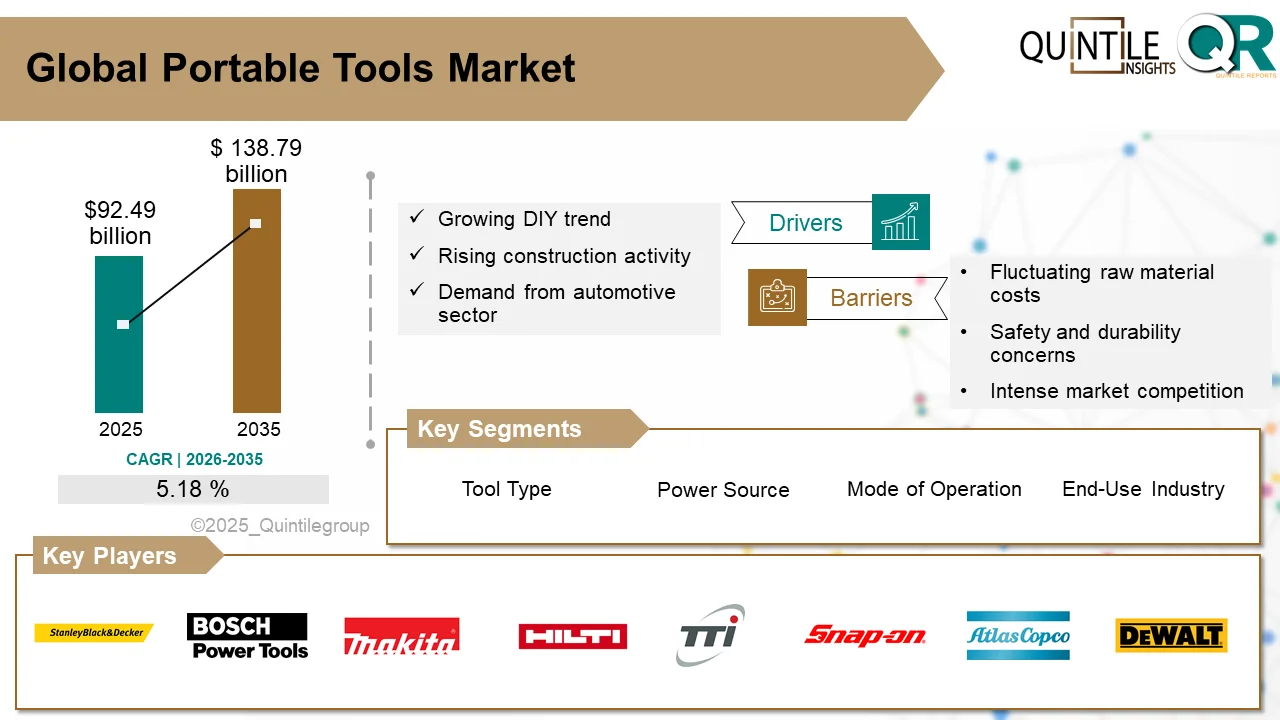
According to recent market analysis, the industry is projected to grow from USD 92.49 billion in 2025 to USD 138.79 billion by 2035, registering a steady CAGR of 5.18%.
Portable tools—ranging from drills and saws to grinders and sanders—have become indispensable across construction, manufacturing, automotive, and DIY sectors. Their compact design, mobility, and versatility make them essential for both professionals and home users. However, what is truly redefining the market landscape is the shift toward cordless, lithium-ion-powered tools.
Request Sample PDF Report: https://www.quintilereports.com/request-sample/1227-portable-tools-market/
Battery innovation has significantly enhanced tool performance, offering longer runtime, faster charging, and greater operational flexibility. Cordless tools are now preferred on job sites where mobility and safety are critical. This trend is further supported by the integration of smart technologies such as IoT-enabled diagnostics, Bluetooth tracking, and real-time performance monitoring.
The rise of Industry 4.0 is also playing a pivotal role in reshaping the portable tools ecosystem. Smart tools are increasingly being used for predictive maintenance and asset tracking, enabling businesses to improve efficiency and reduce downtime. Additionally, ergonomic designs and brushless motor technologies are enhancing durability, user comfort, and energy efficiency.
Get Discount On The Purchase Of This Report: https://www.quintilereports.com/request-discount/1227-portable-tools-market/
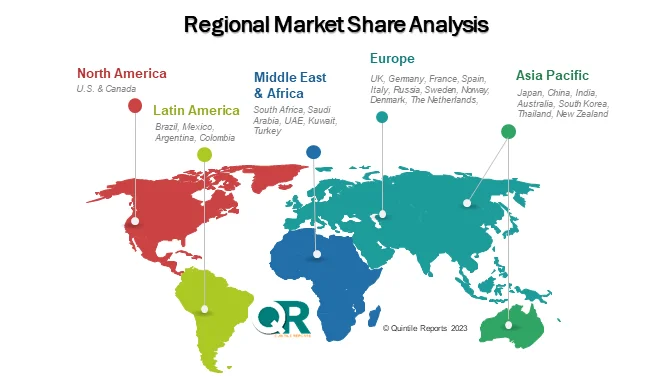
Regionally, Asia-Pacific is emerging as the fastest-growing market, driven by rapid urbanization, infrastructure development, and expanding manufacturing activities in countries like India, China, and Japan. Meanwhile, North America continues to lead in terms of technological adoption, supported by a strong DIY culture and home renovation trends.
Despite strong growth prospects, the market faces certain challenges. High initial costs of advanced tools, battery degradation issues, and environmental concerns related to battery disposal remain key restraints. Moreover, health risks such as vibration-related disorders among users necessitate stricter safety standards and improved tool design.
Leading companies including Stanley Black & Decker, Bosch Power Tools, Makita Corporation, and Hilti Group are investing heavily in research and development to stay ahead in this competitive landscape. Their focus on innovation, sustainability, and digital integration is expected to shape the future of the industry.
Looking ahead, the portable tools market is poised for sustained expansion, driven by technological advancements, evolving consumer preferences, and increasing demand for efficient and eco-friendly solutions. Companies that align their strategies with these trends will be well-positioned to capture long-term growth opportunities.
Buy Now: https://www.quintilereports.com/request-enquiry/1227-portable-tools-market/
1. What is driving the shift toward cordless portable tools?
The shift is primarily driven by advancements in lithium-ion battery technology, which provide longer runtime, faster charging, and greater mobility compared to traditional corded tools.
2. How is IoT influencing the portable tools market?
IoT integration enables features like real-time monitoring, predictive maintenance, and asset tracking, improving operational efficiency and reducing downtime.
3. Which region offers the highest growth potential?
Asia-Pacific is the fastest-growing region due to rapid industrialization, urbanization, and infrastructure development.
4. What are the key challenges for manufacturers?
High production costs, battery lifecycle limitations, environmental concerns, and compliance with safety regulations are major challenges.
5. How are sustainability trends impacting the market?
Manufacturers are focusing on energy-efficient designs, recyclable materials, and low-emission tools to meet environmental regulations and consumer expectations.
6. What role do brushless motors play in portable tools growth?
Brushless motors significantly improve efficiency, durability, and battery life. They reduce friction and heat generation, making tools more reliable and suitable for heavy-duty industrial applications.
7. How is the DIY trend influencing market demand?
The growing DIY culture, especially in developed regions, is increasing demand for user-friendly, affordable, and compact portable tools. Social media platforms and online tutorials are accelerating adoption among homeowners.
8. What impact do safety regulations have on product innovation?
Strict workplace safety standards are pushing manufacturers to integrate features like anti-vibration systems, automatic shut-off, dust control, and ergonomic designs, leading to safer and more advanced tools.
9. How are manufacturers addressing battery-related environmental concerns?
Companies are investing in battery recycling programs, developing longer-lasting batteries, and exploring eco-friendly materials to reduce environmental impact and comply with global sustainability regulations.
10. What is the importance of tool ecosystems in competitive strategy?
Tool ecosystems—where multiple tools operate on a shared battery platform—enhance customer convenience and brand loyalty. This strategy encourages repeat purchases and strengthens market positioning.
11. Which end-use industries are expected to generate the highest demand?
Construction, manufacturing, automotive, and energy sectors are expected to dominate demand due to increased infrastructure projects and industrial automation.
12. How is digitalization transforming sales channels in this market?
E-commerce platforms and digital marketplaces are expanding product accessibility, enabling direct-to-consumer sales, and offering detailed product comparisons, reviews, and virtual demonstrations.
13. What are the emerging trends in portable tool design?
Key trends include lightweight materials, compact designs, noise reduction, improved ergonomics, and integration of smart sensors for performance tracking and diagnostics.
14. How does urbanization contribute to market expansion?
Rapid urbanization increases construction activities, housing demand, and infrastructure development, all of which drive the need for efficient portable tools.
15. What strategic moves are companies adopting to stay competitive?
Leading players are focusing on mergers & acquisitions, R&D investments, smart tool integration, sustainability initiatives, and expanding distribution networks globally.
Our Latest Publication:
Portable Tools Market 2026-2035
Product Fall Protection Systems Market Accelerates with Rising Workplace Safety and Logistics Demand

Adarsh
Business Strategy — Quintile Reports
Adarsh is a Business Strategy professional focused on transforming market insights into actionable growth plans. He supports strategic initiatives through market analysis, competitive intelligence, and data-driven decision-making to help drive long-term business success.
His core skills include strategic planning, market research, growth opportunity assessment, trend analysis, performance tracking, stakeholder communication, cross-functional collaboration, and critical problem-solving.