
The global Autonomous Firefighting Drones Market is witnessing significant growth as artificial intelligence, thermal imaging, and autonomous navigation technologies transform how fires are
Detected, monitored, and controlled. These advanced unmanned aerial systems are increasingly being adopted by fire departments, industrial facilities, forestry agencies, and disaster management authorities to improve response time and reduce risk to human firefighters.
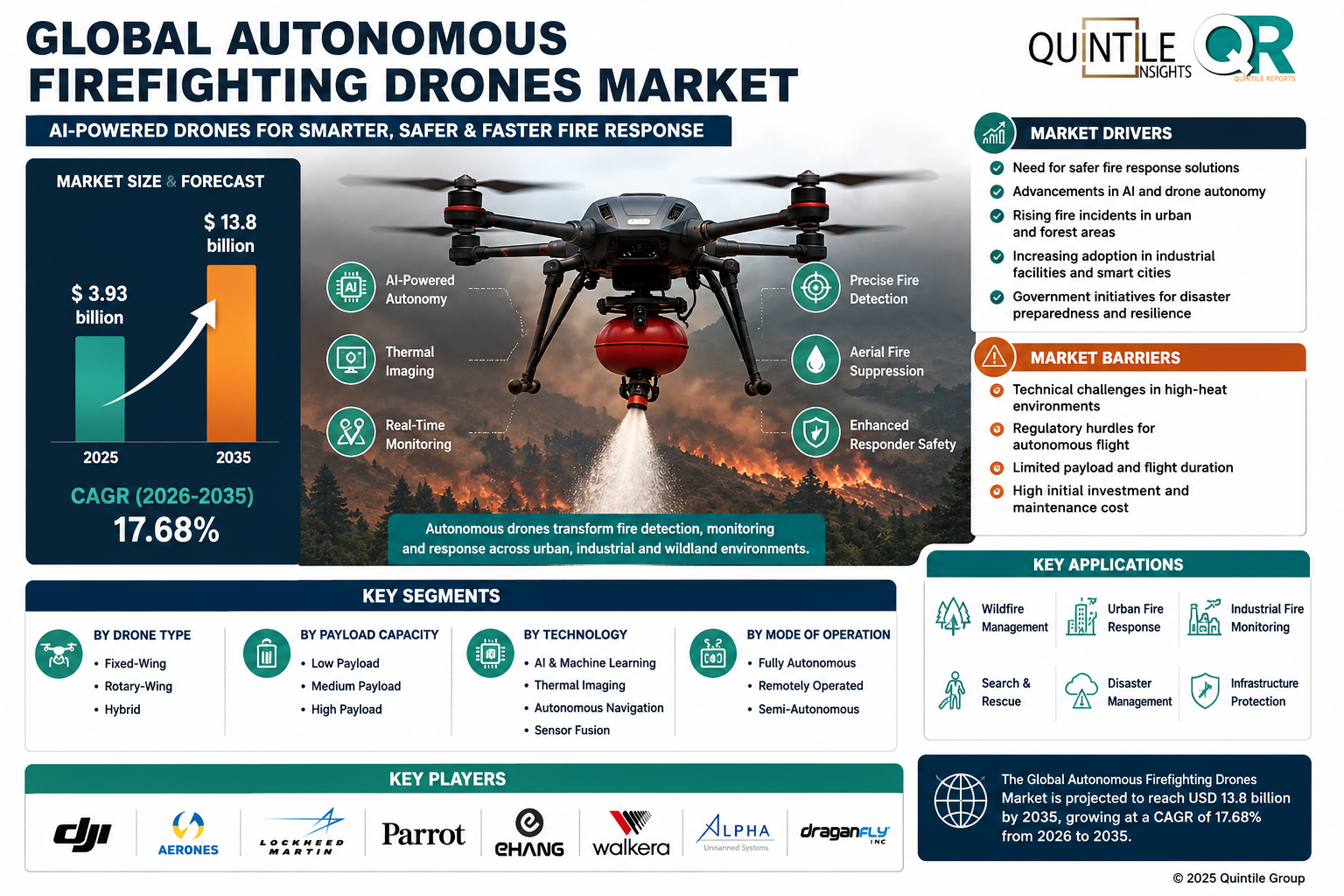
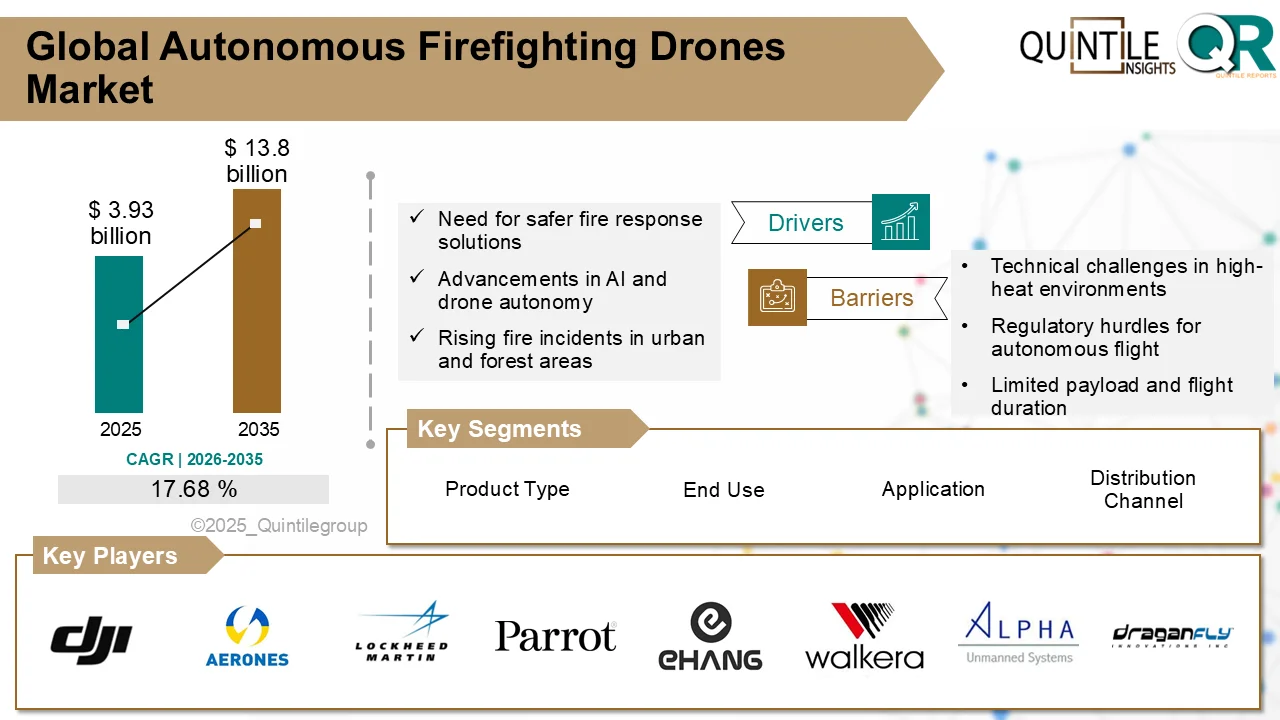
According to industry analysis, the market was valued at USD 3.93 billion in 2025 and is projected to reach USD 13.8 billion by 2035, growing at a CAGR of 17.68% during the forecast period. The rising frequency of wildfires, increasing industrial fire hazards, and rapid urbanization are among the major factors driving the demand for autonomous firefighting drone solutions globally.
Autonomous firefighting drones are equipped with thermal cameras, AI-based navigation systems, real-time video transmission, and fire-retardant payload systems. These drones can detect heat signatures, monitor fire spread, and support firefighting teams by providing real-time aerial intelligence. In high-risk environments such as chemical plants, oil refineries, offshore platforms, forests, and high-rise buildings, drones provide a safer and faster alternative to traditional firefighting methods.
Request Sample PDF Report: https://www.quintilereports.com/request-sample/1282-autonomous-firefighting-drones-market/
One of the major growth drivers for this market is the increasing number of wildfire incidents worldwide. Climate change, prolonged dry seasons, and rising global temperatures have significantly increased wildfire risks, especially in North America, Australia, and parts of Europe. Autonomous drones help in early fire detection, fire perimeter mapping, and aerial fire suppression, reducing the overall damage caused by large-scale fires.
Smart city initiatives are also contributing to market growth. Many municipal authorities are integrating drone-based emergency response systems into urban safety infrastructure. These drones can access rooftops, narrow streets, and difficult-to-reach areas, making them highly effective for urban firefighting operations and rescue missions.
Limited-Time Discount Available on the Complete Market Report: https://www.quintilereports.com/request-discount/1282-autonomous-firefighting-drones-market/
In industrial environments, autonomous drones are used for routine safety inspections to detect overheating equipment, gas leaks, and potential fire hazards before incidents occur. This preventive approach helps industries reduce operational risks and improve safety compliance.
Despite strong growth potential, the market faces certain challenges. Regulatory restrictions on drone flights, limited battery life, payload capacity constraints, and operational reliability in extreme weather conditions remain key concerns for industry stakeholders. However, ongoing advancements in battery technology, AI navigation, and drone communication systems are expected to address these challenges over the coming years.
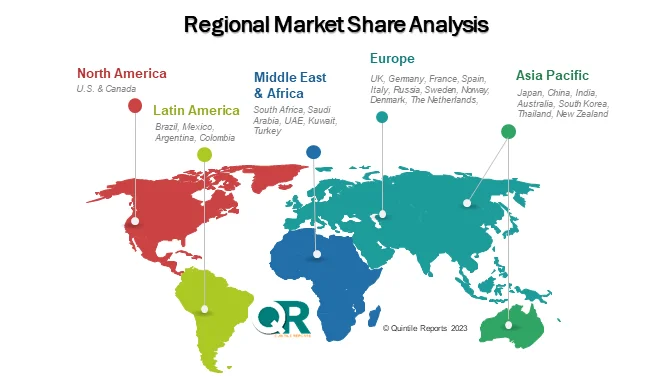
Regionally, North America leads the market due to high adoption of wildfire monitoring technologies and government investments in disaster management systems. Europe is focusing on smart city fire safety systems, while Asia-Pacific is emerging as a high-growth region due to rapid urbanization and increasing investment in disaster preparedness technologies.
Buy Now: https://www.quintilereports.com/request-enquiry/1282-autonomous-firefighting-drones-market/
Over the next decade, autonomous firefighting drones are expected to become an essential part of modern emergency response infrastructure. As technology continues to evolve, these drones will play a critical role in improving fire safety, reducing response time, and protecting both human lives and infrastructure.
Autonomous Firefighting Drones Market
Q1. What are autonomous firefighting drones?
Autonomous firefighting drones are unmanned aerial systems equipped with AI navigation, thermal imaging cameras, sensors, and fire suppression payloads that can detect, monitor, and assist in controlling fires with minimal human intervention. These drones are widely used in wildfire monitoring, industrial fire safety, and urban emergency response.
Q2. What is driving the growth of the Autonomous Firefighting Drones Market?
The market growth is driven by increasing wildfire incidents, rising industrial fire risks, smart city development, and advancements in artificial intelligence, thermal imaging, and real-time drone communication technologies.
Q3. What is the market size and future forecast?
The market was valued at USD 3.93 billion in 2025 and is projected to reach USD 13.8 billion by 2035, growing at a CAGR of 17.68% during the forecast period.
Q4. What are the major applications of autonomous firefighting drones?
The main applications include forest firefighting, urban firefighting, industrial fire monitoring, emergency response, and rescue operations.
Q5. Which technologies are used in autonomous firefighting drones?
Key technologies include thermal imaging, AI-based navigation, GPS tracking, real-time video streaming, heat detection sensors, and autonomous flight control systems.
Q6. Which regions are leading the market?
North America leads the market due to wildfire monitoring programs and government funding, followed by Europe and Asia-Pacific, where smart city projects and disaster management programs are driving adoption.
Q7. What challenges does the Autonomous Firefighting Drones Market face?
Major challenges include strict drone regulations, limited battery life, payload capacity limitations, and operational difficulties in extreme weather and fire conditions.
Q8. Who are the key end-users of autonomous firefighting drones?
Key end-users include fire departments, forestry agencies, industrial facilities, oil & gas companies, mining companies, and disaster management authorities.
Q9. What opportunities exist in this market?
Opportunities include AI-powered fire detection systems, drone-as-a-service models, smart city fire safety infrastructure, industrial inspection drones, and solar-powered long-endurance drones.
Q10. What is the future outlook for this market?
The market is expected to grow rapidly over the next decade due to increasing investment in disaster management technology, climate change-related wildfire risks, and advancements in autonomous drone systems.
Our Latest Publication:
Autonomous Firefighting Drones Market (2026-2036)
Oxygen Concentrator Market Gains Momentum as Home Healthcare and Portable Devices Surge

Adarsh
Business Strategy — Quintile Reports
Adarsh is a Business Strategy professional focused on transforming market insights into actionable growth plans. He supports strategic initiatives through market analysis, competitive intelligence, and data-driven decision-making to help drive long-term business success.
His core skills include strategic planning, market research, growth opportunity assessment, trend analysis, performance tracking, stakeholder communication, cross-functional collaboration, and critical problem-solving.