
The global livestock industry is undergoing a significant transformation, and at the center of this evolution lies one of the most critical components of animal nutrition—starter feed.
Designed specifically for young livestock during their earliest stages of development, starter feeds have become indispensable for improving animal health, accelerating growth rates, and maximizing long-term productivity.
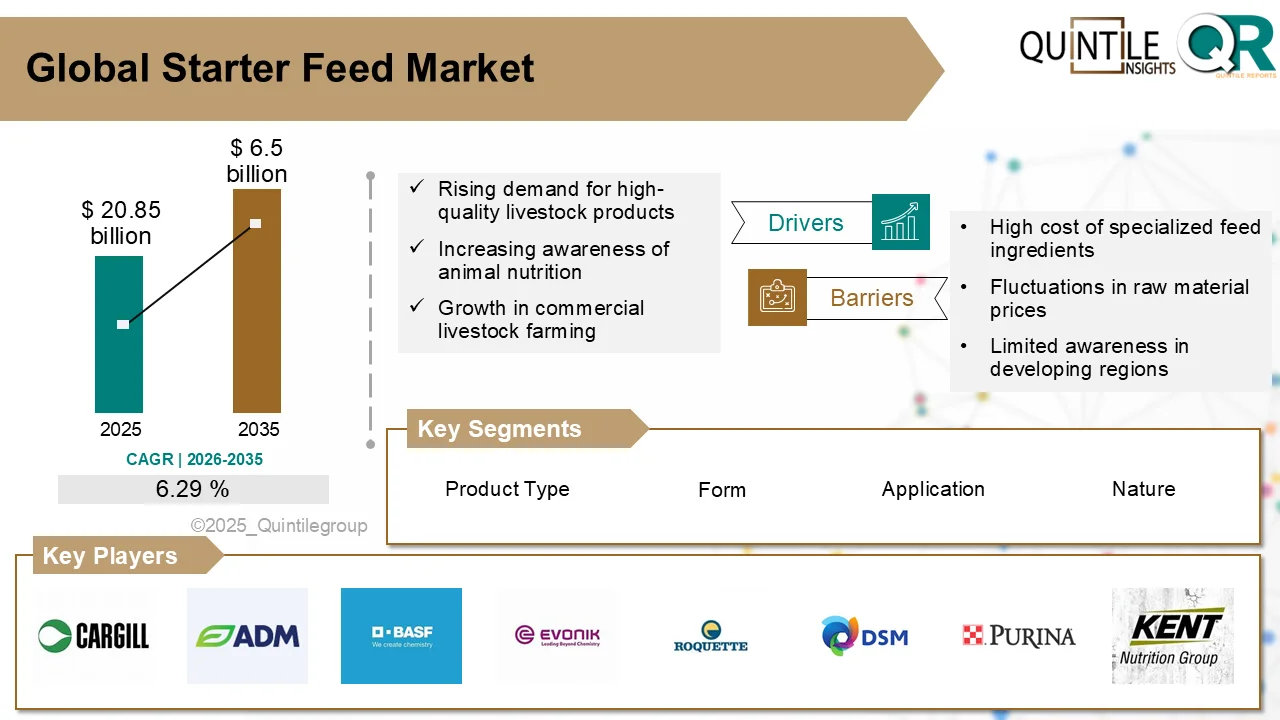
According to recent market analysis, the global Starter Feed Market was valued at approximately USD 20.85 billion in 2025 and is expected to witness substantial growth through 2035, driven by increasing demand for animal protein, advancements in feed technologies, and a growing emphasis on sustainable livestock production.
Request Sample PDF Report: https://www.quintilereports.com/request-sample/1196-starter-feed-market/
As livestock producers worldwide strive to meet rising consumer demand for meat, dairy, and poultry products, starter feed manufacturers are introducing innovative nutritional solutions that enhance animal welfare while improving farm profitability.
Why Starter Feed Matters More Than Ever
Starter feed represents the first solid nutritional source consumed by young animals after birth or weaning. Whether for poultry chicks, piglets, calves, aquatic species, or other livestock, early-life nutrition significantly influences future growth performance.
Modern starter feed formulations contain carefully balanced proteins, amino acids, vitamins, minerals, enzymes, and energy-rich ingredients that support digestive development, immune function, and healthy weight gain.
For poultry producers, starter feeds help establish strong skeletal and muscular development during the critical first weeks of life. In swine production, they reduce post-weaning stress and promote gut health. Calf starter feeds facilitate rumen development and improve feed conversion efficiency.
As commercial livestock operations become increasingly sophisticated, the role of scientifically formulated starter feed continues to expand.
Special Discount: https://www.quintilereports.com/request-discount/1196-starter-feed-market/
Rising Global Demand for Animal Protein Fuels Market Growth
One of the most significant drivers behind the growth of the starter feed market is the rising global appetite for animal-based protein.
Population growth, urbanization, and increasing disposable incomes across emerging economies are driving higher consumption of meat, eggs, milk, and seafood. Nations throughout Asia-Pacific, Latin America, and parts of Africa are witnessing rapid dietary transitions, creating substantial pressure on livestock producers to increase output.
To meet this demand, producers are investing heavily in nutrition programs that optimize animal performance from the earliest stages of development. Starter feeds have emerged as a crucial tool for reducing mortality rates, improving growth consistency, and maximizing production efficiency.
Industry experts emphasize that investments in early-life nutrition often generate long-term returns through improved feed conversion ratios and enhanced overall animal health.
Technological Innovation is Revolutionizing Feed Formulation
The starter feed industry is no longer solely focused on traditional grains and protein sources. Technological innovation is rapidly transforming feed development and manufacturing processes.
Advanced formulations now incorporate:
- Probiotics and prebiotics
- Enzyme supplementation
- Organic acids
- Functional amino acids
- Precision nutrient balancing
- Digestive health enhancers
Feed manufacturers are increasingly leveraging artificial intelligence, predictive analytics, and precision nutrition technologies to create highly customized feeding programs.
Buying Now: https://www.quintilereports.com/request-enquiry/1196-starter-feed-market/
These innovations enable producers to deliver targeted nutrition tailored to specific animal species, breeds, growth stages, and production objectives.
Automation technologies within feed mills are also improving consistency, quality control, and traceability, helping producers comply with increasingly stringent food safety and animal welfare standards.
Sustainability Becomes a Core Industry Priority
Environmental sustainability has become one of the most influential trends shaping the global starter feed market.
Consumers are paying closer attention to how animals are raised and fed, prompting producers to adopt more sustainable feeding practices. As a result, demand is growing for starter feeds that minimize environmental impact while maintaining optimal animal performance.
Manufacturers are responding through:
- Reduced antibiotic formulations
- Organic feed solutions
- Plant-based nutritional additives
- Sustainable ingredient sourcing
- Lower-emission production processes
Regulatory agencies worldwide are also encouraging reduced dependence on antibiotic growth promoters, accelerating the adoption of natural feed additives such as enzymes, probiotics, and phytogenic compounds.
This shift is creating opportunities for companies capable of balancing sustainability objectives with nutritional effectiveness.
Regional Markets Showcase Diverse Growth Patterns
North America Leads Through Innovation
North America remains one of the most technologically advanced starter feed markets globally.
Livestock producers across the United States and Canada are embracing precision feeding systems, data-driven nutrition programs, and antibiotic-free feed formulations.
Artificial intelligence and real-time farm monitoring technologies are helping producers optimize feed utilization while improving animal welfare outcomes.
Major industry participants continue investing in research and development to maintain competitive advantages in feed efficiency and nutritional innovation.
Europe Advances Sustainability and Regulation
Europe’s starter feed market is characterized by strict regulatory oversight and strong sustainability initiatives.
The region’s longstanding restrictions on antibiotic growth promoters have encouraged widespread adoption of probiotics, enzymes, and natural feed additives.
European livestock producers increasingly prioritize transparency, traceability, and certified sustainable feed ingredients.
Countries such as Germany, Spain, France, and the Netherlands continue to lead innovation in precision livestock nutrition and feed manufacturing efficiency.
Asia-Pacific Emerges as the Fastest-Growing Region
Asia-Pacific is expected to experience the highest growth rate during the forecast period.
Rapid urbanization, population expansion, and rising income levels are fueling demand for meat and dairy products across China, India, Southeast Asia, and other developing economies.
Government support for livestock modernization, increasing commercial farming operations, and expanding feed production infrastructure are creating favorable conditions for market growth.
Feed manufacturers are introducing species-specific starter feed solutions designed to address local production requirements and regional nutritional challenges.
Latin America and Middle East & Africa Present Strong Potential
Latin America continues to benefit from expanding poultry and livestock industries, particularly in Brazil, Mexico, and Argentina.
Meanwhile, countries across the Middle East and Africa are investing in agricultural modernization programs aimed at improving food security and domestic livestock production.
Although infrastructure limitations and supply chain challenges persist in certain markets, long-term growth opportunities remain substantial.
Industry Faces Several Challenges
Despite strong growth prospects, the starter feed market faces notable obstacles.
Raw material price volatility remains one of the industry’s most pressing concerns. Ingredients such as corn, soybean meal, wheat, and barley frequently experience price fluctuations due to weather conditions, geopolitical events, and global supply chain disruptions.
Regulatory compliance requirements also continue to grow more complex. Feed manufacturers must navigate evolving standards related to animal welfare, food safety, environmental sustainability, and ingredient traceability.
Additionally, emerging alternative protein sources—including insect-based proteins and novel feed ingredients—are introducing new competitive dynamics into the market.
Manufacturers must continue innovating to remain relevant in an increasingly sustainability-focused agricultural landscape.
Competitive Landscape Focuses on Nutritional Excellence
Competition within the starter feed industry extends far beyond pricing.
Leading companies are differentiating themselves through:
- Species-specific nutrition programs
- Advanced feed processing technologies
- Organic and antibiotic-free product portfolios
- Enhanced digestibility solutions
- Precision nutrition capabilities
- Sustainable sourcing initiatives
Global industry leaders including Cargill Incorporated, Archer Daniels Midland Company, BASF SE, Evonik Industries AG, DSM, Alltech, Nutreco, Purina Mills, and Charoen Pokphand Foods continue investing in research, acquisitions, and strategic partnerships.
Recent developments highlight the industry’s commitment to innovation. New feeding technologies, digital farm management platforms, and regional production partnerships are helping companies strengthen their market positions while addressing evolving customer needs.
Looking Ahead to 2035
The future of the starter feed market appears highly promising.
As livestock producers seek greater efficiency, sustainability, and profitability, demand for advanced starter feed solutions is expected to remain strong. Precision nutrition, digital agriculture, functional feed ingredients, and environmentally responsible production methods will continue shaping industry development throughout the forecast period.
Companies that successfully combine scientific innovation with sustainability and animal welfare objectives are likely to emerge as market leaders over the next decade.
With growing global demand for animal protein showing no signs of slowing, starter feed will remain a foundational component of modern livestock production and an essential driver of agricultural productivity worldwide.
1. What is starter feed and why is it important?
Starter feed is a specialized nutritional formulation designed for young livestock during their early growth stages. It supports immunity, digestive development, and healthy weight gain.
2. What is driving growth in the global starter feed market?
Growing demand for meat and dairy products, advancements in feed technology, increasing commercial livestock farming, and rising focus on animal health are key growth drivers.
3. Which livestock segments contribute most to starter feed demand?
Poultry, swine, cattle, ruminants, aquaculture, and companion animals are major application segments, with poultry and swine representing significant demand.
4. How are precision nutrition technologies impacting the market?
Precision nutrition allows producers to customize feed formulations based on animal species, age, health status, and production goals, improving efficiency and reducing waste.
5. What role do probiotics and enzymes play in starter feed?
These additives improve gut health, nutrient absorption, immunity, and overall animal performance while reducing reliance on antibiotics.
6. Which region is expected to witness the fastest market growth?
Asia-Pacific is projected to be the fastest-growing region due to increasing livestock production, urbanization, and rising protein consumption.
7. What challenges are currently affecting the industry?
Raw material price volatility, regulatory compliance requirements, supply chain disruptions, and emerging alternative protein sources remain key challenges.
8. How is sustainability influencing feed formulation strategies?
Manufacturers are adopting organic ingredients, antibiotic-free formulations, plant-based additives, and environmentally responsible sourcing practices.
9. Who are the major players in the starter feed market?
Key companies include Cargill, Archer Daniels Midland, BASF, Evonik, DSM, Alltech, Nutreco, Purina Mills, De Heus Animal Nutrition, and Charoen Pokphand Foods.
10. What opportunities are expected through 2035?
Opportunities include precision feeding solutions, functional feed ingredients, digital livestock management, sustainable protein alternatives, and expansion in emerging markets.
Our Latest Publication:
Starter Feed Market (2026 – 2035)
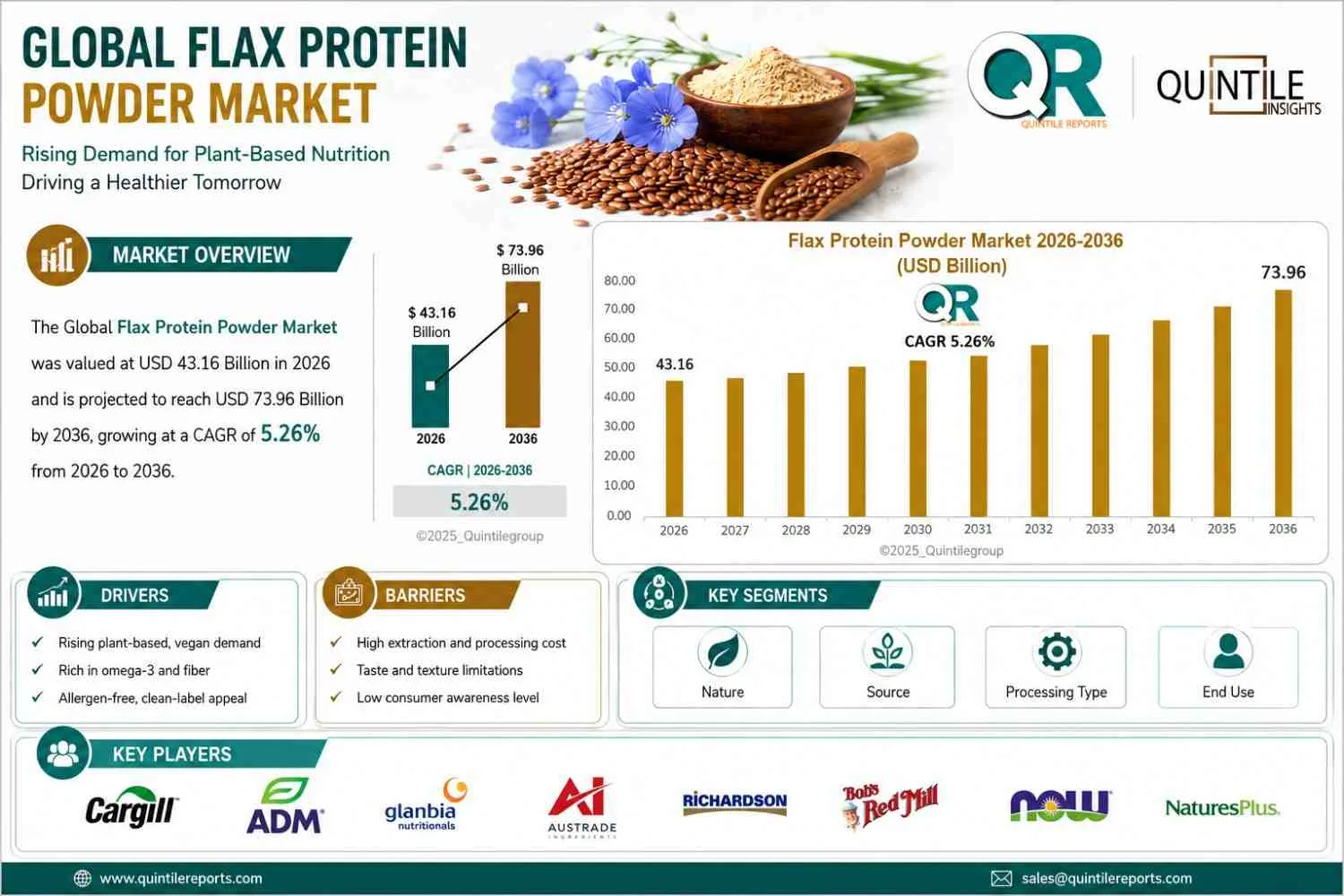
Flax Protein Powder Market Projected to Reach USD 73.96 Billion by 2036 Amid Growing Demand for Sustainable Plant-Based Nutrition

Adarsh
Business Strategy — Quintile Reports
Adarsh is a Business Strategy professional focused on transforming market insights into actionable growth plans. He supports strategic initiatives through market analysis, competitive intelligence, and data-driven decision-making to help drive long-term business success.
His core skills include strategic planning, market research, growth opportunity assessment, trend analysis, performance tracking, stakeholder communication, cross-functional collaboration, and critical problem-solving.