

The global companion animal diagnostics market is entering a phase of sustained and robust growth, driven by rising pet ownership, increasing awareness of preventive veterinary care, and rapid technological advancements in diagnostic solutions.
Valued at approximately USD 6.95 billion in 2025, the market is projected to reach USD 18.1 billion by 2035, expanding at a compound annual growth rate (CAGR) of 10.05% during the forecast period from 2026 to 2035. This strong outlook reflects the growing importance of diagnostics as a cornerstone of modern veterinary medicine, supporting early disease detection, chronic condition management, and personalized treatment for companion animals.
Companion animal diagnostics encompass a wide range of instruments, consumables, reagents, software, and services used to identify and monitor diseases in pets such as dogs, cats, horses, and exotic animals. Diagnostic modalities include clinical chemistry, hematology, immunodiagnostics, molecular diagnostics such as PCR and next-generation sequencing, urinalysis, imaging technologies like X-ray, ultrasound, CT, and MRI, as well as point-of-care (POC) testing. These solutions are widely used across veterinary clinics, animal hospitals, reference laboratories, and research institutions, generating revenue for both manufacturers and diagnostic service providers.
Request Sample PDF Report: https://www.quintilereports.com/request-sample/1212-companion-animal-diagnostics-market/
One of the key growth drivers is the global rise in pet ownership, which now exceeds one billion animals worldwide, with dogs and cats representing the largest share. Alongside this trend, the concept of “pet humanization” has significantly reshaped owner behavior. Pet owners today are increasingly willing to invest in advanced diagnostics and preventive screening, resulting in veterinary care spending that is estimated to be over 20% higher than a decade ago. This shift is particularly evident in developed markets, where routine wellness panels, genetic testing, and early cancer screening are becoming more common.
The growing prevalence of chronic and age-related diseases in pets further supports market expansion. Conditions such as cancer, diabetes, kidney disease, arthritis, and cardiovascular disorders are being diagnosed more frequently as pets live longer lives. For example, nearly one in four dogs is expected to develop cancer during its lifetime. Diagnostics play a critical role in managing these conditions by enabling early intervention and ongoing monitoring, thereby improving treatment outcomes and quality of life for animals.
Technological innovation is another major catalyst. Advances in molecular diagnostics, AI-assisted imaging, and compact in-clinic analyzers have significantly reduced turnaround times, allowing veterinarians to obtain results within minutes or hours rather than days. Point-of-care diagnostics have become a key competitive area, as clinics increasingly demand fast, accurate, and easy-to-use solutions that integrate seamlessly with digital records and decision-support tools. Growing pet insurance coverage, particularly in North America and Europe, is also lowering out-of-pocket costs and encouraging more comprehensive diagnostic testing.
Despite these positive trends, the market faces several challenges. High capital costs associated with advanced imaging equipment such as MRI and CT scanners limit adoption to large hospitals and specialty clinics. In addition, a global shortage of trained veterinarians and diagnostic specialists can lead to underutilization of available technologies, especially in rural and emerging regions. Regulatory requirements from authorities such as the FDA’s Center for Veterinary Medicine and the USDA can also extend development timelines and increase compliance costs.
Regionally, North America remains the largest and most advanced market, supported by high pet ownership rates, strong insurance penetration, and rapid adoption of AI-enabled and point-of-care diagnostics. Europe follows closely, with growth driven by preventive healthcare awareness and expanding molecular and genetic testing. Asia Pacific is expected to be the fastest-growing region, fueled by rising pet ownership in countries such as China and India and increasing investments in veterinary infrastructure. Latin America and the Middle East & Africa represent emerging opportunities, supported by gradual upgrades in veterinary services and growing demand for affordable, portable diagnostic solutions.
The competitive landscape is highly dynamic, with leading players focusing on innovation, ecosystem integration, and service-based differentiation. Companies such as IDEXX Laboratories, Zoetis, Heska, Fujifilm, and others are investing heavily in AI, cloud-based platforms, and molecular diagnostics. Recent developments, including acquisitions and new product launches, highlight the industry’s shift toward data-driven, recurring diagnostic service models.
Overall, the companion animal diagnostics market is well positioned for long-term growth. As pets increasingly receive human-equivalent healthcare, diagnostics will continue to play a central role in shaping the future of veterinary medicine worldwide.
Our Latest Publication
Companion Animal Diagnostics Market Size Estimation, Share & Future Growth Trends Analysis, By Product Type (Equipment, Accessories/Consumables, Software), By Imaging & Modality, By Animal Type, By Application and Regional Analysis, 2026-2035
Our Latest News:
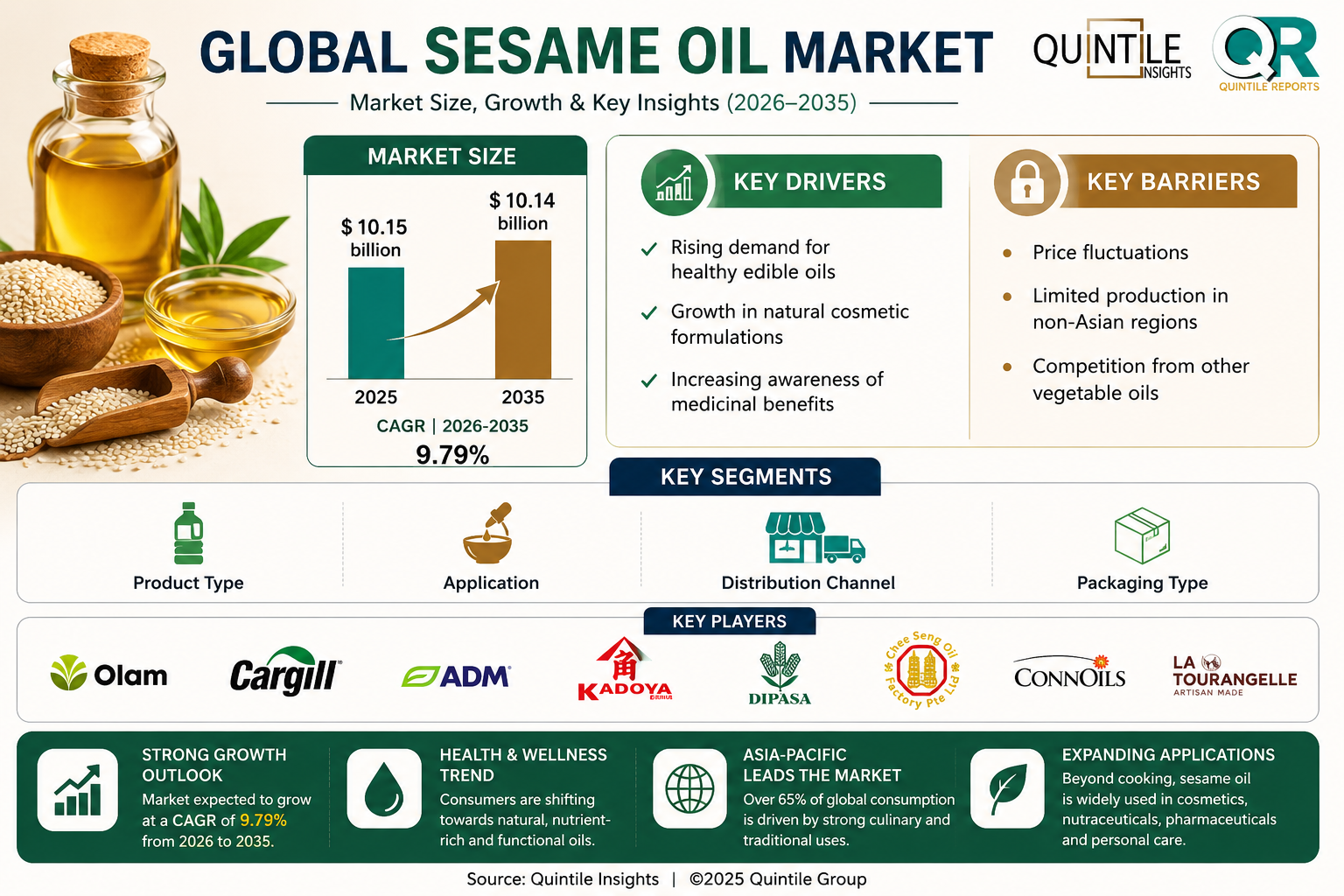
Sesame Oil Market Poised for Strong Growth Through 2035 on Rising Health, Culinary, and Wellness Demand

Adarsh
Business Strategy — Quintile Reports
Adarsh is a Business Strategy professional focused on transforming market insights into actionable growth plans. He supports strategic initiatives through market analysis, competitive intelligence, and data-driven decision-making to help drive long-term business success.
His core skills include strategic planning, market research, growth opportunity assessment, trend analysis, performance tracking, stakeholder communication, cross-functional collaboration, and critical problem-solving.