
India, 9 January, 2026 : Dutch food technology company The Protein Brewery has secured a €2.3 million ($2.7 million) grant from the European Union’s LIFE Programme to accelerate the commercialisation of its fungi-derived protein ingredient, Fermotein, with a strong focus on dairy alternative applications. The funding comes at a pivotal moment for the startup, as it moves closer to full regulatory clearance in the European Union.
The LIFE Programme is the EU’s flagship funding instrument for climate action and environmental innovation. It supports piot and demonstration projects that deliver measurable reductions in greenhouse gas emissions while helping sustainable technologies reach market readiness. For The Protein Brewery, the grant will be used to optimise and scale its fermentation-based production process, enabling Fermotein to meet the taste, texture, and functional requirements of plant-based milks, yoghurts, and other non-dairy products.
This latest grant follows another significant funding milestone for the company. Recently, The Protein Brewery and its consortium partners—Nizo Food Research, Wageningen Food & Biobased Research, and an undisclosed international food company—received €570,000 ($665,000) from EIT Food, an EU-backed food innovation accelerator. That funding is aimed at expanding Fermotein’s reach into health and wellness markets.
According to Jan Hendrik Van Gilst, CFO of The Protein Brewery, the combined support underscores the company’s long-term mission. He noted that the grants will help futureproof non-animal protein supply chains through advanced fungal fermentation technology, delivering ingredients that balance strong nutritional performance, appealing taste, and a significantly reduced environmental footprint.
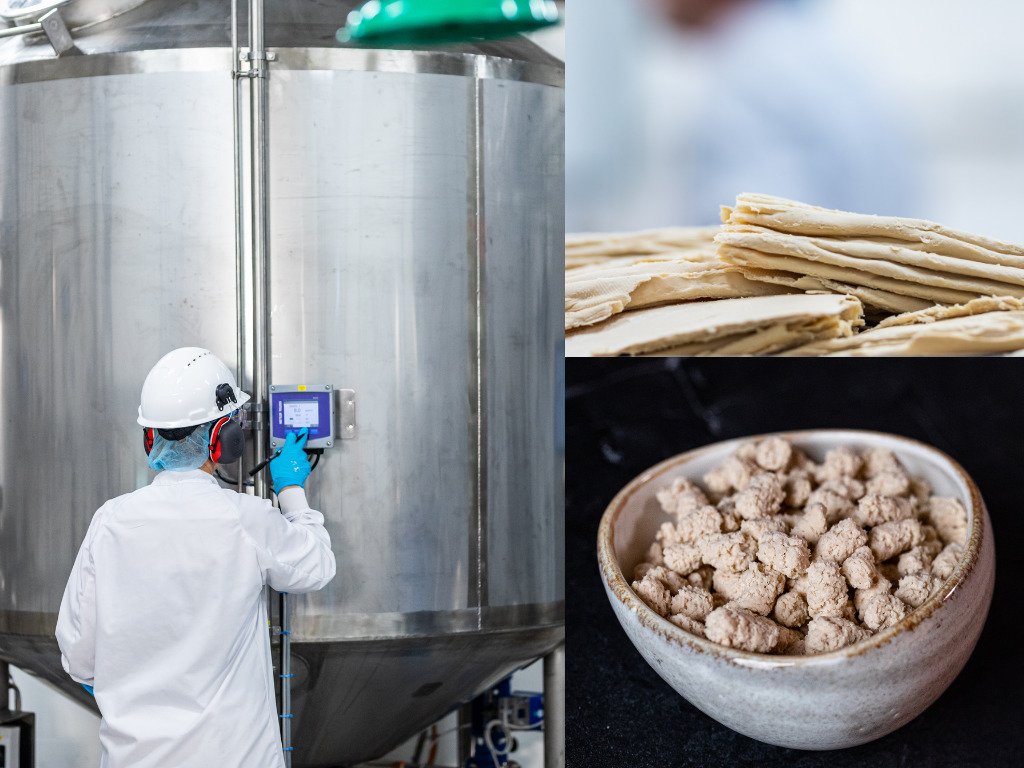
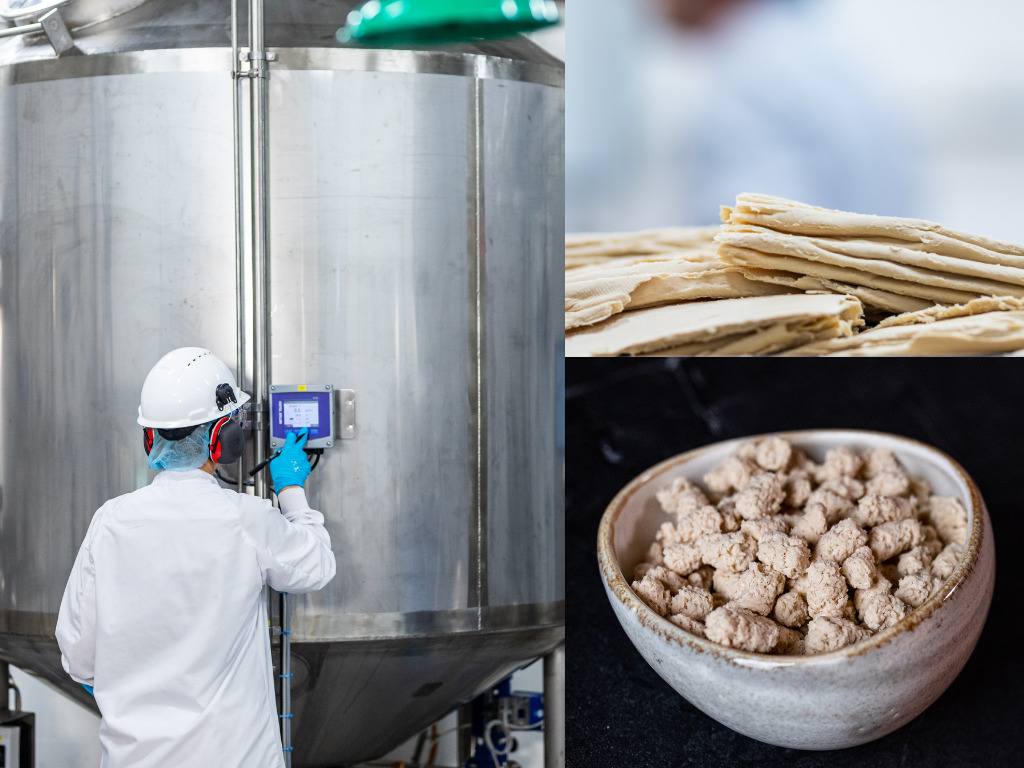
At the core of The Protein Brewery’s innovation is Fermotein, a whole-cell mycoprotein produced through biomass fermentation. The ingredient is derived from Rhizomucor pusillus, an extremophilic fungal strain capable of thriving in low pH environments and at high temperatures. The fungi are grown in fermentation tanks, then sieved, pasteurised, dried, and milled into a fine powder suitable for food applications.
Production currently takes place at the company’s pilot facility in Breda, the Netherlands, which has the capacity to produce around 100 kilograms of Fermotein per day. Despite its early-stage scale, Fermotein already stands out for its nutritional density and sustainability credentials. The ingredient contains a complete amino acid profile, is rich in prebiotic fibre and essential micronutrients, and delivers protein yields far exceeding many conventional sources. Compared with beef, Fermotein requires approximately 1% of the land, 5% of the water, and generates just 3% of the greenhouse gas emissions.
While Fermotein is being positioned for multiple end-use markets—including active nutrition, better-for-you snacks, and products aligned with the growing GLP-1 trend—the LIFE Programme grant is specifically targeted at alt-dairy applications. The company plans to work closely with established players in the dairy alternative sector to validate performance, consumer acceptance, and market readiness. In parallel, targeted health studies will assess the nutritional and functional benefits of Fermotein when used in non-dairy milk and yoghurt formulations.
Gilbert Verschelling, CTO of The Protein Brewery, stated that the funding will significantly accelerate the scaling of Fermotein and help improve both the sustainability and nutritional quality of dairy alternatives—an increasingly important category in the global food system.
From a regulatory standpoint, Fermotein is already approved for sale in Singapore and the United States. In late 2025, it also received a positive opinion from the European Food Safety Authority (EFSA), placing it one step away from full EU market authorisation. The company is already collaborating with manufacturers such as Nepra Foods and CK Ingredients to bring Fermotein-based products to consumers in North America and Europe.
To date, The Protein Brewery has raised approximately $60 million, including a $35 million Series B round in September backed by investors such as Novo Holdings, the parent company of Novo Nordisk. With expectations of significant revenue growth in 2026 and plans to expand fermentation capacity, the company is positioning itself as a key player in the next generation of sustainable protein ingredients.
Our Latest News
Global Mulching Carriers Market Analysis & Forecast

Adarsh
Business Strategy — Quintile Reports
Adarsh is a Business Strategy professional focused on transforming market insights into actionable growth plans. He supports strategic initiatives through market analysis, competitive intelligence, and data-driven decision-making to help drive long-term business success.
His core skills include strategic planning, market research, growth opportunity assessment, trend analysis, performance tracking, stakeholder communication, cross-functional collaboration, and critical problem-solving.