
The global Oligonucleotide Synthesis Market is witnessing significant momentum, driven by rapid advancements in biotechnology, expanding applications in precision medicine, and increasing investment in genomic research.
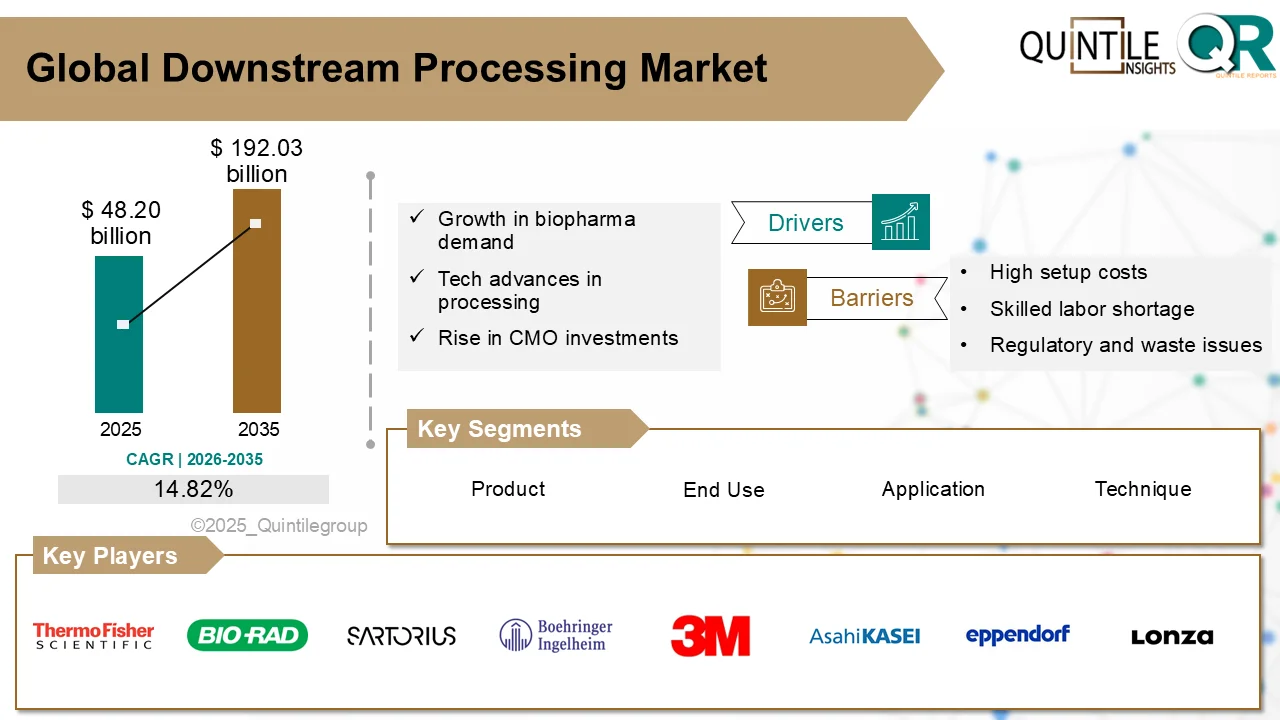
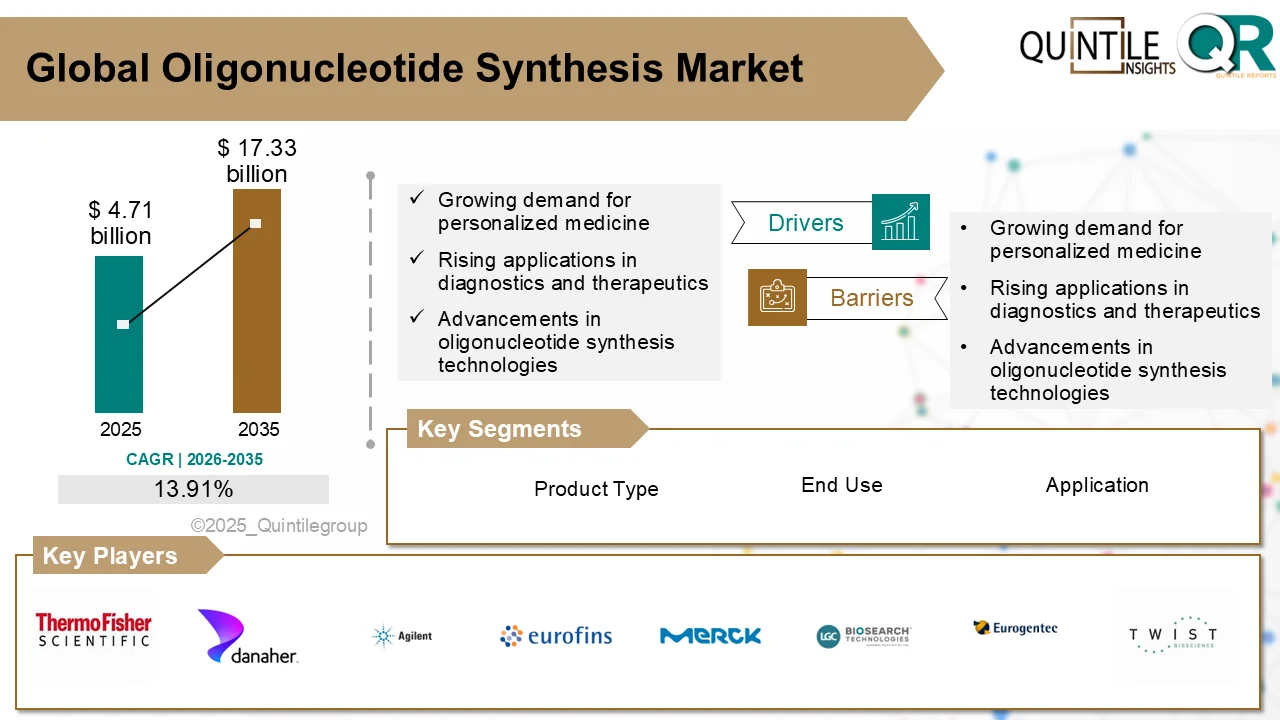
According to the latest analysis by Quintile Research, the market was valued at USD 4.71 billion in 2026 and is projected to reach USD 17.33 billion by 2035, growing at a strong CAGR of 13.91% during the forecast period.
Oligonucleotide synthesis involves the chemical production of short DNA or RNA sequences that serve as essential components in therapeutics, diagnostics, and life science research. These synthetic nucleotide chains play a foundational role in gene editing technologies such as CRISPR-Cas9, RNA interference (RNAi), polymerase chain reaction (PCR) diagnostics, and next-generation sequencing (NGS). As demand for personalized and targeted therapies rises, oligonucleotides have become indispensable tools across pharmaceutical and biotechnology ecosystems.
Request Sample PDF Report: https://www.quintilereports.com/request-sample/1087-oligonucleotide-synthesis-market/
One of the primary growth drivers is the increasing global burden of chronic and genetic diseases, including cancer, rare hereditary disorders, and neurodegenerative conditions. Oligonucleotide-based therapeutics, particularly antisense and RNA-based drugs, are gaining clinical acceptance due to their ability to precisely target disease-causing genes. The growing pipeline of RNA therapeutics and regulatory approvals is reinforcing confidence in this emerging treatment modality.
Technological innovation continues to reshape the competitive landscape. Companies are investing heavily in automated and high-throughput synthesis platforms that enhance scalability, accuracy, and turnaround times. Automation reduces operational complexity while improving reproducibility and cost efficiency. Furthermore, integration of artificial intelligence in oligo design is streamlining sequence optimization and accelerating research workflows.
Special Discount: https://www.quintilereports.com/request-discount/1087-oligonucleotide-synthesis-market/
The outsourcing trend toward contract development and manufacturing organizations (CDMOs) is another key contributor to market expansion. Pharmaceutical and biotech firms increasingly rely on specialized partners to minimize infrastructure investments and speed up commercialization timelines. Strategic collaborations and mergers and acquisitions are further strengthening supply chains and expanding production capacities worldwide.
Despite strong growth prospects, the market faces notable challenges. Oligonucleotide synthesis requires sophisticated chemical processes, high-quality raw materials such as phosphoramidites, and stringent quality controls. These factors contribute to elevated production costs and high entry barriers for smaller firms. Additionally, regulatory variations across regions can delay product approvals and increase compliance complexity. Supply chain disruptions and shortages of skilled professionals in molecular biology and synthetic chemistry also pose operational hurdles.
Regionally, North America maintains a leadership position due to strong R&D investment, advanced healthcare infrastructure, and early adoption of gene-editing and molecular diagnostic technologies. The United States, in particular, is home to major industry participants such as Thermo Fisher Scientific, Agilent Technologies, and Integrated DNA Technologies, which continue to innovate in synthesis platforms and therapeutic applications.
Buying Now: https://www.quintilereports.com/request-enquiry/1087-oligonucleotide-synthesis-market/
Europe represents a mature market supported by robust government funding in genomics and biotechnology. Germany plays a central role, with companies such as Merck KGaA and Eurofins Scientific contributing to research advancements and manufacturing capabilities. Meanwhile, Asia Pacific is emerging as the fastest-growing region, driven by expanding pharmaceutical production, increasing investments in biotechnology, and supportive government initiatives in countries such as China, Japan, South Korea, and India.
Looking ahead, sustained R&D spending, expanding therapeutic pipelines, and broader adoption of gene-based technologies are expected to propel the Oligonucleotide Synthesis Market through 2035. Companies that prioritize automation, regulatory compliance, strategic partnerships, and technological differentiation will be best positioned to capitalize on evolving opportunities in this high-growth sector.
Quintile Research concludes that as precision medicine and molecular diagnostics continue to redefine healthcare delivery, oligonucleotide synthesis will remain a cornerstone technology enabling next-generation therapies and innovative research applications worldwide.
1. What is the projected size of the Oligonucleotide Synthesis Market by 2035?
The global Oligonucleotide Synthesis Market is expected to reach USD 17.33 billion by 2035, growing from USD 4.71 billion in 2026, at a CAGR of 13.91% during the forecast period.
2. What is oligonucleotide synthesis?
Oligonucleotide synthesis is the chemical production of short DNA or RNA sequences used in therapeutics, diagnostics, and biotechnology research. These synthetic sequences are essential for gene editing, PCR testing, next-generation sequencing (NGS), antisense therapies, and RNA interference (RNAi).
3. What are the key drivers of the Oligonucleotide Synthesis Market?
Major growth drivers include:
-
Rising prevalence of cancer and genetic disorders
-
Expanding pipeline of RNA-based and antisense therapeutics
-
Technological advancements in CRISPR and NGS
-
Increasing outsourcing to CDMOs
-
Automation and high-throughput synthesis platforms
-
Growing investments in precision medicine
4. What challenges does the market face?
Key challenges include:
-
High production and raw material costs
-
Complex chemical synthesis processes
-
Regulatory variations across regions
-
Supply chain disruptions
-
Shortage of skilled professionals in molecular biology and synthetic chemistry
5. Which regions dominate the Oligonucleotide Synthesis Market?
North America leads due to strong R&D funding, biotechnology innovation, and advanced healthcare infrastructure. Europe follows as a mature market, while Asia-Pacific is the fastest-growing region due to increasing biotech investments and pharmaceutical manufacturing expansion.
6. Who are the major companies operating in this market?
Key players include:
-
Thermo Fisher Scientific
-
Integrated DNA Technologies
-
Merck KGaA
-
Eurofins Scientific
-
GenScript
These companies focus on automation, high-throughput platforms, novel chemistries, and regulatory compliance to strengthen market position.
7. What applications are covered in the Oligonucleotide Synthesis Market?
Applications include:
-
Antisense therapeutics
-
RNA interference (RNAi)
-
CRISPR gene editing
-
PCR diagnostics
-
Next-generation sequencing (NGS)
-
Molecular biology research
8. What is the base year and forecast period of the report?
-
Base Year: 2025
-
Historical Data: 2017–2024
-
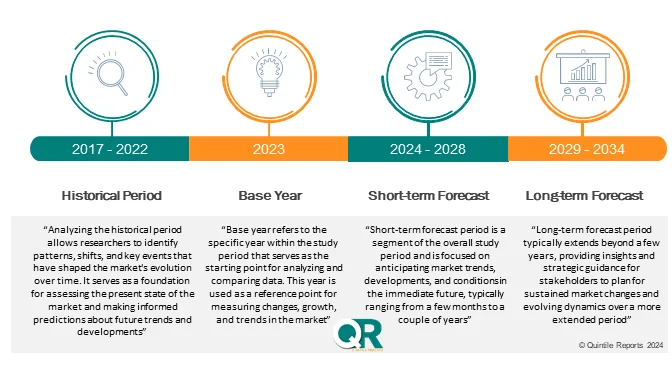
Forecast Period: 2026–2035
9. How is automation impacting the market?
Automation enhances synthesis speed, improves sequence accuracy, reduces human error, lowers production costs, and enables large-scale manufacturing for clinical and commercial needs.
10. Why should stakeholders invest in this market research report?
The report offers detailed insights into market size, growth trends, competitive landscape, regulatory framework, regional outlook, and strategic opportunities, enabling informed decision-making and long-term business planning in the rapidly evolving biotechnology sector.
Our Latest Publication
Oligonucleotide Synthesis Market (2026 – 2035)
Our Latest News:
Allergy Diagnostics Market Set to Reach USD 20.51 Billion by 2035, Driven by Rising Global Allergy Burden

Adarsh
Business Strategy — Quintile Reports
Adarsh is a Business Strategy professional focused on transforming market insights into actionable growth plans. He supports strategic initiatives through market analysis, competitive intelligence, and data-driven decision-making to help drive long-term business success.
His core skills include strategic planning, market research, growth opportunity assessment, trend analysis, performance tracking, stakeholder communication, cross-functional collaboration, and critical problem-solving.